
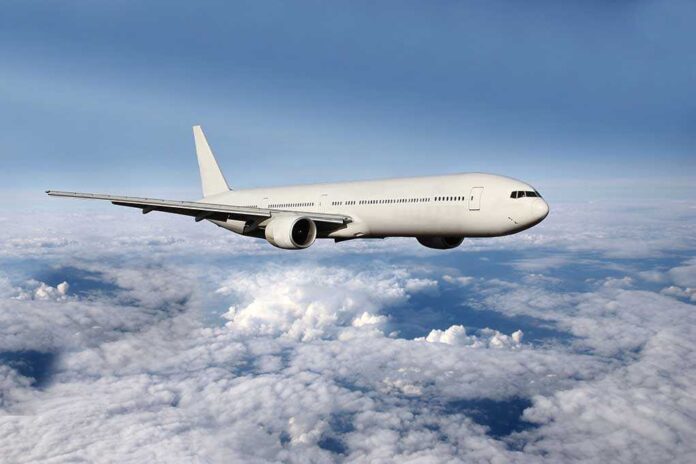
A JetBlue flight’s terrifying 100-foot plunge that injured 20 passengers was allegedly caused by cosmic rays from space interfering with the aircraft’s navigation systems, raising alarming questions about our aviation safety protocols against invisible threats from beyond Earth.
Story Highlights
- JetBlue Airbus A320 dropped 100 feet in 7 seconds due to suspected cosmic ray interference
- Twenty passengers sustained injuries during the sudden altitude loss over the Caribbean
- Cosmic radiation can disrupt aircraft electronics and navigation systems without warning
- Aviation authorities may be unprepared for increasing space weather threats to commercial flights
Cosmic Ray Strike Causes Emergency Descent
A JetBlue Airbus A320 experienced a catastrophic 100-foot altitude drop in just seven seconds while flying over the Caribbean, forcing an emergency landing and injuring twenty passengers. Aviation experts believe cosmic rays from space struck the aircraft’s electronic systems, causing critical navigation equipment to malfunction. The invisible high-energy particles, originating from deep space phenomena like supernovas, can penetrate aircraft hulls and interfere with sensitive avionics without any external warning signs.
The sudden plunge occurred when the flight’s autopilot system received conflicting altitude readings, likely triggered by cosmic particle interference with the aircraft’s sensors. Passengers described a terrifying experience as they were thrown against cabin walls and ceiling, with many suffering bruises, cuts, and minor fractures. Flight attendants struggled to maintain control as loose objects became projectiles throughout the cabin during the unexpected descent.
Growing Space Weather Threat to Aviation
Cosmic radiation poses an increasing threat to modern aviation as aircraft fly higher and rely more heavily on electronic systems. These high-energy particles from space can cause what experts call “single event upsets” in computer systems, leading to temporary malfunctions or permanent damage to critical flight instruments. Solar particle events and galactic cosmic rays have been linked to numerous aviation incidents, yet many travelers remain unaware of this invisible danger lurking at cruising altitude.
The Federal Aviation Administration has acknowledged cosmic ray interference as a legitimate concern, but current safety protocols may be inadequate for protecting passengers from space weather events. Commercial airlines typically fly at altitudes where cosmic radiation exposure is significantly higher than at ground level, with polar routes experiencing the most intense bombardment. Aviation safety experts warn that as solar activity increases during the current solar maximum cycle, more cosmic ray incidents affecting aircraft systems are likely to occur.
Aviation Industry Response and Passenger Safety
Following the JetBlue incident, aviation authorities are reviewing protocols for detecting and responding to cosmic ray interference with aircraft systems. Airlines may need to invest in radiation-hardened electronics and improved shielding to protect critical flight systems from space weather events. The incident highlights a gap in passenger awareness about cosmic radiation risks, as most travelers board flights without understanding the potential for space-based threats to their safety.
Industry officials stress that cosmic ray incidents remain relatively rare, but the severity of this particular event demonstrates the need for enhanced monitoring and mitigation strategies. Pilots receive minimal training on space weather awareness, and passengers have no warning systems to alert them when flights encounter elevated cosmic radiation levels. As our reliance on technology-dependent aircraft increases, the aviation industry must adapt to protect against threats originating millions of miles beyond Earth’s atmosphere.
Sources:
How cosmic rays grounded thousands of aircraft