
The Trump administration’s declaration of a “non-international armed conflict” against drug cartels marks a significant escalation in U.S. military involvement, raising constitutional and strategic questions.
Story Highlights
- President Trump authorizes military strikes against drug cartels in the Caribbean.
- Cartels are treated as foreign terrorist organizations, expanding the U.S. response.
- Experts predict potential shifts in trafficking routes as cartels adapt.
- Legal and diplomatic questions arise over U.S. military actions.
Escalation in U.S. Military Action Against Cartels
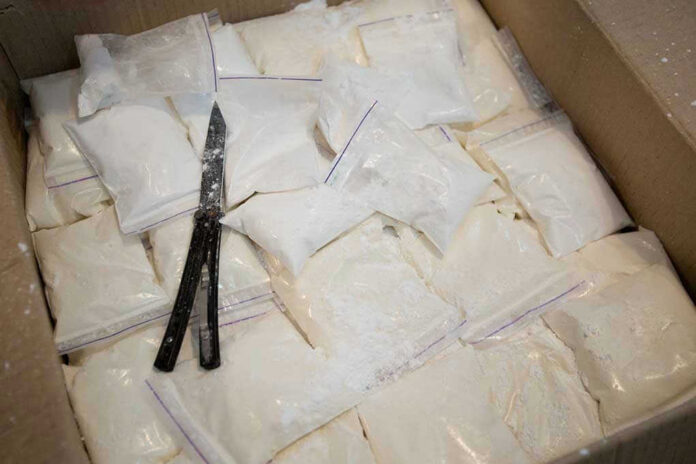
President Trump has taken unprecedented steps by authorizing military strikes against suspected drug cartel operations in the Caribbean. This marks the first time the U.S. has used lethal force against drug traffickers at sea, shifting from traditional law enforcement to military engagement. The administration’s strategy treats cartels as foreign terrorist organizations, aiming to dismantle their logistics and command networks.
The escalation follows several setbacks in traditional counter-narcotics efforts, with drug cartels increasingly using maritime routes to smuggle narcotics. The U.S. military, under the guidance of the Department of Defense and SOUTHCOM, has intensified operations in the region, conducting multiple strikes on suspected drug vessels. These actions align with the administration’s commitment to combat the opioid crisis and curtail the flow of synthetic opioids into the United States.
Legal and Diplomatic Ramifications
The decision to treat cartels as “unlawful combatants” raises significant legal and diplomatic concerns. The use of military force against non-state criminal organizations is controversial, with questions about its legality under international law. The designation of cartels as foreign terrorist organizations empowers U.S. agencies to target their financial networks, but it also risks escalating tensions with countries like Venezuela, which is accused of collaborating with these cartels.
Experts warn of potential unintended consequences, including the risk of mission creep and civilian harm. The administration’s aggressive stance may strain diplomatic relations and complicate international cooperation on counter-narcotics efforts. However, supporters argue that such measures are necessary to address the scale of the crisis and the threat posed by powerful cartel networks.
Strategic Implications and Future Outlook
The shift to a militarized approach is expected to disrupt cartel operations in the short term, increasing the risks for traffickers and potentially leading to cartel infighting. In the long term, cartels may adapt by altering their trafficking routes, possibly shifting activities to the Pacific or Atlantic Oceans. The U.S. military’s expanded role in counter-narcotics efforts could also divert resources from other strategic priorities, prompting debate over the effectiveness and sustainability of this approach.
The Trump administration’s strategy underscores a commitment to safeguarding American communities from the scourge of drug trafficking. By treating cartels as terrorist organizations, the administration aims to dismantle their networks and protect the nation from the devastating impact of illegal drugs.
Sources:
Fox News – Direct event reporting, expert interviews
ABC News – Official statements, video evidence
CSIS – Policy and legal analysis, strategic context