
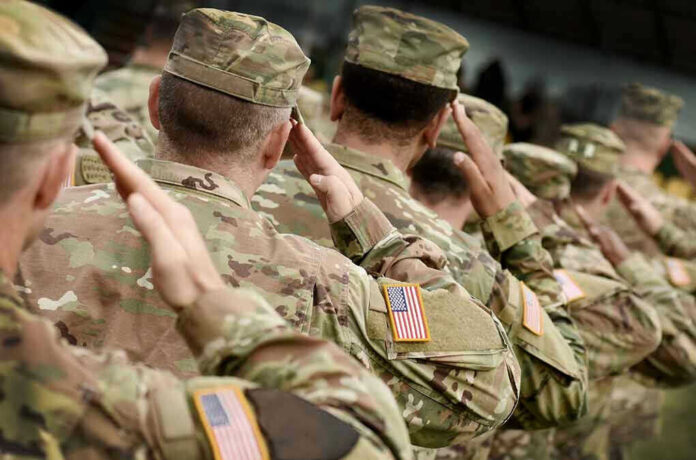
As New Orleans braces for New Year’s Eve, President Trump is quietly sending in 350 National Guard troops to restore order, secure the border pipeline, and undo years of permissive policies that left American cities exposed.
Story Snapshot
- Trump approves deployment of 350 National Guard members to New Orleans ahead of New Year’s Eve.
- Move coincides with an aggressive Border Patrol-led immigration crackdown targeting illegal crossings and cartel pipelines.
- Deployment signals a return to law-and-order federal leadership after years of lax enforcement and “sanctuary” politics.
- Many conservatives see the action as a defense of local families, property rights, and the rule of law.
National Guard Deployment Targets Holiday Crime and Border-Linked Chaos
President Trump’s approval of 350 National Guard members for New Orleans comes at a moment when the city is preparing for massive New Year’s gatherings and an influx of visitors. The deployment is designed to support local law enforcement, deter organized criminal activity, and ensure that overstretched agencies finally get backup after years of being asked to “do more with less.” For many residents, the Guard’s presence signals that Washington is again prioritizing safety over political optics.
New Orleans, like many Democrat-led cities, has struggled with spikes in violent crime, repeat offenders, and drug trafficking that often trace back to porous borders and transnational gangs. When the Trump administration ties National Guard support to concurrent immigration enforcement, it acknowledges the reality many on the ground already know: unchecked illegal immigration, cartel routes, and local crime are deeply connected. The timing, right before one of the year’s biggest party weekends, underscores that practical security, not symbolism, is driving the decision.
Border Patrol Crackdown Aligns City Security with National Sovereignty
At the same time as the Guard deployment, Border Patrol is leading an immigration crackdown that targets illegal crossings and the networks that move people, drugs, and weapons across the southern border. This converging strategy treats New Orleans not as an isolated crime hotspot but as part of a broader map of trafficking corridors running from the border into American communities. By linking local security operations to border enforcement, the administration is prioritizing national sovereignty and the safety of law-abiding citizens.
For conservatives who watched the previous administration loosen enforcement and embrace de facto open-border rhetoric, the New Orleans operation marks a clear reversal. Instead of tolerating sanctuary-style policies or looking the other way as illegal entrants dispersed into interior cities, federal authorities are now putting muscle behind immigration law. The result is a message that criminals exploiting weak borders can no longer count on large, overburdened cities as safe havens, especially during high-traffic holidays when families and businesses are most vulnerable.
Reasserting Law, Order, and Constitutional Responsibility
The deployment also reflects a broader philosophy about the federal government’s basic duties: defend the border, protect citizens, and respect constitutional limits. National Guard troops in New Orleans are not being used to push social experiments or surveil ordinary Americans; they are reinforcing police, securing public spaces, and helping prevent violent chaos. That function fits squarely within the federal responsibility to ensure domestic tranquility and guard against threats that local departments cannot handle alone, especially when tied to cross-border criminal networks.
Many conservative observers see this as a long-overdue course correction after years of federal energy being poured into ideological agendas such as DEI mandates, climate theatrics, or leniency toward illegal entrants. By contrast, sending trained Guardsmen to a city facing real, physical risks is a tangible use of government power that respects taxpayers and families. It reassures law-abiding gun owners and small business owners that the state views them as allies in public safety, not suspects to be regulated while criminals roam free.
What This Means for Other Cities and the Road Ahead
The New Orleans deployment will likely serve as a template for how the Trump administration handles other urban centers entangled in border-driven crime, human trafficking, and drug distribution. If the combination of National Guard support and Border Patrol crackdowns reduces incidents over the New Year period, pressure will grow on mayors and governors elsewhere to accept federal help and abandon soft-on-crime, sanctuary-style experiments. That shift would signal a broader rejection of policies that blurred the line between legal and illegal presence in the country.
For frustrated Americans who watched inflation soar, streets grow less safe, and illegal immigration explode under progressive leadership, this operation offers a glimpse of a different federal posture: unapologetically pro-border, pro-law enforcement, and pro-community. While details on long-term metrics are still developing, the core message is already clear. The federal government is again acting as a partner in public safety rather than a distant lecturer on ideology, and cities that once stood alone now have backup against the forces undermining their security.
Sources:
Guard invasion heads to New Orleans