
U.S. Secretary of State Marco Rubio declares Christian faith the unbreakable glue holding Western civilization together, delivering a stark warning against mass migration’s threat to our shared heritage.
Story Highlights
- Rubio’s Munich speech ties U.S.-Europe bonds to Christian faith, shared history, and culture, rejecting borderless globalism.
- He warns unchecked migration erodes social cohesion, urging stronger borders and national sovereignty.
- European leaders applaud, with Latvia’s president endorsing every word amid standing ovations.
- Trump administration pushes allies for industrial revival, defense spending, and self-reliance against Russia, China threats.
Rubio’s Bold Munich Address
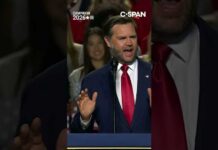
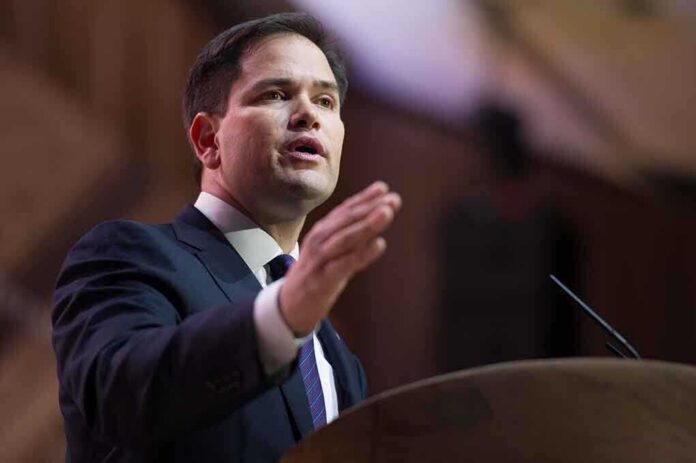
On February 14, 2026, Secretary of State Marco Rubio spoke at the Munich Security Conference plenary session. He emphasized Western civilization’s foundations in centuries of shared history, Christian faith, culture, heritage, language, and ancestry. Rubio highlighted icons like the Sistine Chapel and Cologne Cathedral as shaping law, universities, and scientific progress. The U.S., as “sons of Europe,” inherits this legacy from WWII victories and Cold War triumphs against communism. His words received sustained applause from the audience.
Warning Against Mass Migration
Rubio directly warned that unchecked mass migration threatens cultural continuity and social cohesion across the West. Post-Cold War assumptions of borderless commerce fueled deindustrialization, supply chain weaknesses, and migration pressures. He rejected the “world without borders” fantasy, advocating robust borders and national sovereignty. This stance aligns with conservative priorities of protecting family values and community stability from government overreach and globalist policies that dilute heritage.
Call for European Strength and Alliance
Rubio urged Europe to rebuild military and industrial power, increase defense spending, and secure critical minerals. He critiqued multilateral failures amid Ukraine and Gaza wars, Iran’s nuclear ambitions, and Venezuela’s crisis. The Trump administration prioritizes burden-sharing, continuing Ukraine weapons sales while pushing peace talks. Rubio addressed Q&A on Russia sanctions, India’s oil cuts from Moscow, and upcoming Trump-Xi meetings. European leaders like UK PM Keir Starmer echoed calls for hard power against Russia.
Latvian President Edgars Rinkēvičs endorsed “every single word” of Rubio’s speech. Ukraine’s Volodymyr Zelenskyy sought air defenses amid strikes, facing Trump pressure for war resolution. The State Department framed the address as a defense of Western civilization.
Implications for Conservative Values
Rubio’s speech signals a revitalized transatlantic alliance proud of Christian-rooted identity, countering guilt-ridden decline narratives. Short-term, it strengthens U.S. leverage on migration controls and NATO contributions. Long-term, it may reshape ties toward heritage-based solidarity, prioritizing individual liberty and limited government over universalism. Nationalists applaud this cultural defense, while it challenges open-border agendas that strain communities. Defense and tech sectors benefit from coordination on AI, space, and energy security.
Sources:
Marco Rubio says Christian faith, ‘shared history’ forged West (Christian Post)
Secretary of State Calls on European Leaders to Defend Western Civilization (U.S. State Department)
Latvian president agrees with every single word of Rubio’s Munich speech (LSM.lv)