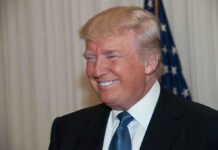


President Trump’s blunt warning that Iran’s new supreme leader “won’t last long” without U.S. approval signals a high-stakes shift from diplomacy to direct leverage over Tehran’s next move.
Story Snapshot
- Iran’s state media reported Mojtaba Khamenei, son of the late Ali Khamenei, has been selected as the country’s new Supreme Leader amid an expanding U.S.-Iran conflict.
- President Trump said he is “not happy” with the choice and suggested the new leader “won’t last long” without U.S. approval, framing succession as a strategic pressure point.
- The leadership transition follows U.S.-Israeli strikes that killed Ali Khamenei and hit key Iranian nuclear sites, including Natanz, Isfahan, and Fordow.
- U.S. casualties have been reported as the conflict enters its second week, while Iranian officials publicly vow continued resistance.
Trump’s Message: Iran’s Succession Is Now a Battlefield
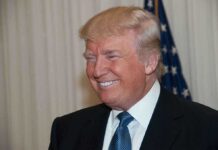
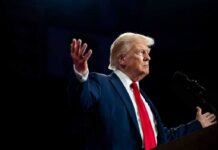
President Donald Trump’s reaction to Mojtaba Khamenei’s elevation was not subtle: he said he was “not happy,” called the new leader “unacceptable,” and warned Mojtaba “won’t last long” without U.S. approval. Those remarks, delivered across multiple interviews and networks, place Iran’s internal succession squarely inside America’s war aims. The administration’s posture ties leadership legitimacy to security outcomes—especially Iran’s nuclear trajectory and regional aggression.
Iran’s Supreme Leader is not a ceremonial figure; the role controls the military, judiciary, and broad national policy—power consolidated since the 1979 revolution. Ali Khamenei held that position for decades, and reporting describes Mojtaba as a behind-the-scenes hardliner long connected to Iran’s security apparatus and internal political influence. For Americans watching the region’s instability and energy shocks, the immediate question is whether Tehran is doubling down on the same ideology that fueled years of proxy conflict.
How the War Set the Stage for Mojtaba Khamenei’s Rise
The succession crisis follows a dramatic escalation: U.S. confirmations of strikes on Iran beginning Feb. 28 and subsequent reporting that Ali Khamenei was killed in U.S.-Israeli attacks. The strikes reportedly targeted major nuclear facilities at Natanz, Isfahan, and Fordow, as the U.S. and Israel sought to blunt Iran’s nuclear capabilities and wartime capacity. By March 8, Iranian state media was reporting Mojtaba as the selected successor, turning a battlefield event into a leadership turning point.
As the fighting continued into a second week, coverage described ongoing strikes and mounting costs, including reports of U.S. service member deaths. Iranian officials, meanwhile, issued public pledges to resist and to continue defending the Islamic Republic’s revolutionary system. Those statements matter because they indicate that leadership change did not automatically produce moderation or a pause in hostilities. If anything, the messaging suggests a regime trying to project unity after losing its top figure.
U.S. Leverage, “Unconditional Surrender,” and What’s Actually Confirmed
Trump’s public line has paired leadership pressure with maximal demands, including calls framed as “unconditional surrender” and repeated suggestions that Washington should have a decisive role in who governs Iran. Supporters see that approach as clarity after years when adversaries tested America under weak deterrence. The verifiable facts in the reporting are the statements themselves and the confirmed sequence: strikes, a leadership selection announcement, and Trump’s explicit refusal to endorse Mojtaba’s legitimacy.
What a Hardline Succession Could Mean for Americans at Home
For U.S. families already burned by the recent era’s inflation and global instability, a widening Middle East conflict has direct consequences—especially through energy markets when oil infrastructure is hit. Reports also describe broader regional impacts and volatility as Israel struck Iranian oil-related sites while the war continued. The strongest, most documentable takeaway is that the leadership shift has not de-escalated tensions. Americans should expect continued pressure on prices and ongoing security headlines as long as conflict operations persist.
President Trump says he's "not happy" about Iran's new supreme leader, Mojtaba Khamenei. https://t.co/Lp35pn00Fo
— CBS News (@CBSNews) March 9, 2026
At the same time, the situation highlights a recurring constitutional and governance question: how much open-ended foreign entanglement Americans are being asked to accept and for how long. The research does not provide a definitive end-state or timeline, and some proposals discussed in coverage—such as special operations scenarios around nuclear material—are presented as possibilities rather than confirmed plans. With limited verified detail beyond official remarks and battlefield reporting, the safest conclusion is that the administration is using leadership succession as leverage while the war’s costs continue to rise.
Sources:
Here’s What Trump Has Said About Iran’s New Supreme Leader Mojtaba Khamenei
Iran’s Supreme Leader won’t last long without Trump’s approval, President says
U.S.-Iran war live updates: Israel strikes regime targets
Trump warns Iran’s new leader won’t last long without his approval