
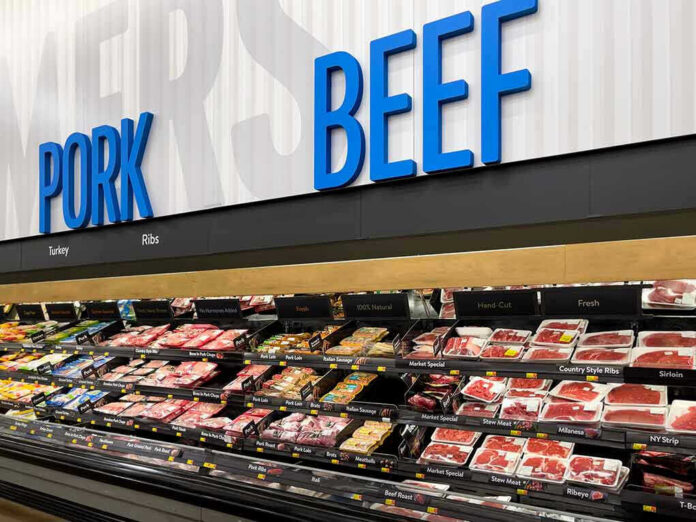
President Trump’s new executive order quadrupling Argentine beef imports betrays American ranchers while offering questionable relief to consumers, exposing a troubling departure from the administration’s America First principles.
Story Snapshot
- Trump signed an executive order on February 6, 2026, allowing 100,000 additional tons of beef imports from Argentina worth approximately $800 million annually
- National Cattlemen’s Beef Association strongly opposes the deal, calling it a “misguided effort” that harms domestic ranchers without meaningful consumer benefit
- U.S. beef prices peaked at $6.68 per pound in December 2025, the highest since 1984, creating political pressure for price relief
- The agreement contradicts Trump’s previous protectionist stance and risks alienating farm-state Republicans who form a key part of his political base
Breaking With America First on Agriculture
President Trump formalized the quadrupling of beef imports from Argentina through an executive order signed February 6, 2026, granting the South American nation unprecedented preferential access to U.S. markets. The agreement permits an additional 20,000 metric tons of beef imports quarterly, totaling 100,000 tons annually valued at approximately $800 million. This policy represents a stark reversal from Trump’s October 2025 position, when he credited his tariff policies for ranchers’ prosperity, stating they were doing well “for the first time in decades” because of his protective trade measures.
Ranchers Left Out to Pasture
The National Cattlemen’s Beef Association vehemently opposes this import expansion, with CEO Colin Woodall urging President Trump and Agriculture Secretary Brooke Rollins to “let the cattle markets work” rather than flooding domestic markets with foreign competition. American ranchers invested heavily in their operations based on Trump’s protectionist promises, only to face this sudden policy shift favoring foreign producers. The deal undermines the livelihoods of hardworking American families in farm states who supported Trump’s presidency, raising serious questions about whose interests are truly being served by this agreement.
Questionable Consumer Benefits
While the White House claims this deal will lower grocery store beef prices, industry experts dispute this rosy projection. Beef prices reached historic highs of $6.68 per pound in December 2025, the highest level since federal tracking began in 1984, creating genuine economic pain for American families. However, adding 100,000 tons of imports represents a fraction of total U.S. beef consumption, making the administration’s promise of meaningful price relief suspect. The National Cattlemen’s Beef Association directly challenges whether this volume will produce noticeable consumer savings, suggesting political theater rather than substantive economic policy.
Political Calculations Over Principled Policy
This trade deal appears driven more by Trump’s personal relationship with Argentine President Javier Milei than sound economic reasoning for American workers. Will Freeman from the Council on Foreign Relations noted the agreement was “accelerated by Milei’s public flattery of Trump,” suggesting diplomatic considerations trumped agricultural policy. U.S. Trade Representative Jamieson Greer framed the deal as advancing hemispheric security and economic cooperation, but this rationale rings hollow when domestic producers face increased foreign competition. Farm-state Republicans have criticized the proposal, creating tension within Trump’s political coalition at a time when unity should prevail.
Reciprocal Trade Framework Raises Concerns
The administration justifies this agreement within a broader reciprocal trade framework initiated by Trump’s April 2025 national emergency declaration addressing trade deficits. The deal includes reciprocal provisions allowing increased U.S. exports of poultry, pork, dairy, and beef products to Argentina, along with tariff eliminations on pharmaceutical ingredients and reviews of steel and aluminum tariffs. While the U.S. maintains a $2 billion trade surplus with Argentina, sacrificing domestic ranchers’ market share to expand this surplus represents misguided priorities. True reciprocity would protect American producers first, then negotiate from strength rather than undercutting our own agricultural sector.
The agreement includes a specified end date for the expanded imports, suggesting temporary rather than permanent measures, though the exact duration remains unclear. This uncertainty compounds the challenge for American ranchers trying to plan investments and operations amid shifting policy landscapes. Conservative principles dictate supporting American workers and producers over foreign competitors, especially when domestic industries remain viable and productive. This executive order unfortunately prioritizes questionable short-term political gains over the long-term health of American agriculture and the rural communities that depend on it.
Sources:
Trump to sign executive order quadrupling beef imports from Argentina – CBS News
Trump plans to increase beef imports as part of trade deal with Argentina – E&E News
Tracking Trump’s Trade Deals – Council on Foreign Relations