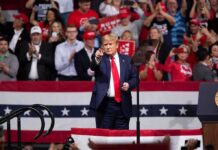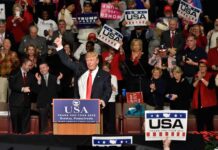

President Trump said his deportation policy “was too tough,” and that it likely hurt Republicans in the midterms, signaling a potential shift on one of his core issues.
Story Snapshot
- Trump told CBS that parts of his deportation policy “might be too tough,” citing workers with long ties.
- He linked that approach to Republican losses in the 2026 midterm elections.
- He contrasted removing violent offenders with deporting people who had jobs and paid taxes.
- No new directive has been announced; his remarks mark a political reassessment, not a formal policy change.
What Trump Said On National Television
On November 8, 2026, President Trump told CBS’s 60 Minutes that his deportation policy “was too tough,” and added it “might be too tough” when asked about removals that reached workers with long ties to their communities. He said he earned “high marks” for taking “the bad ones out,” but argued he “got hurt” for also removing people whose main violation was unlawful entry despite steady jobs and, in some cases, tax payments. He directly tied this judgment to the midterm outcome.
Trump pointed to examples like people employed by landscaping companies and hotels who had lived and worked in the United States for years. He argued that many voters saw a difference between deporting violent offenders and sweeping up nonviolent workers. He did not provide counts or agency data to show how many such workers were removed. Coverage by Bloomberg, Newsweek, and others framed the comments as a concession that enforcement breadth hurt Republicans politically.
Political Stakes After The Midterms
Trump said, “I think ultimately that hurt me,” linking the policy’s reach to the midterm losses for the Republican Party. That claim reflects his political read but does not, by itself, prove causation. The available reports do not include voter-file studies or precinct analyses to isolate deportation policy from other election factors. Still, the timing matters. Leaders often adjust messages after defeats, and immigration has long blended calls for security with concerns about families, jobs, and community ties.
Both right-leaning and left-leaning voters share a growing worry that Washington misses practical tradeoffs. Many conservatives want strong borders but dislike policies that pull reliable workers from farms, hotels, and construction sites overnight. Many liberals want humane treatment and stable families but also want clear rules. Trump’s comments touched that overlap: keep dangerous offenders out, but avoid one-size-fits-all actions that break workplaces and neighborhoods without clear safety gains.
How Enforcement Touches Communities And Markets
Recent research shows that large swings in removals can shake local labor markets. A Brookings review reports that higher deportations can lead to worse outcomes for United States-born workers, including lower employment in some sectors. Other work has found mixed results by wage level and time frame, suggesting that effects differ across places and jobs. These findings support why a policy that reaches long-time workers can spur backlash even in communities that value border control.
Trump admitted that his deportation policy is too tough. I am actually in shock rn.
— Tɪɴᴀ 🤍 (@AthenaMarley) November 9, 2026
The policy tension is not new. Politicians promise clear control, then face anger when enforcement sweeps past violent offenders and reaches people with steady jobs and families. Trump tried to draw that line on air, praising the removal of “the bad ones” while questioning removals of nonviolent workers with tax records. That line is easy to say and hard to run. It requires clear priorities, data tracking, and daily judgment calls by frontline officers.
What Could Change Next
As of now, Trump has not announced a new executive order or a Department of Homeland Security directive to narrow removals. His remarks amount to a political signal, not an operational shift. If the White House follows through, watch for written guidance that focuses on recent arrivals and people with serious criminal convictions, while using case-by-case reviews for long-term residents with jobs and no violent records. That sort of move would test whether Washington can balance security and stability.
Why This Matters For Everyday Americans
Local businesses depend on steady labor. Parents depend on predictable rules. Taxpayers expect safety and fairness. When policies swing from one extreme to another, regular people pay the price while national leaders trade blame. Trump’s on-air rethink nods to that reality. It also exposes a larger problem many Americans see: a federal government quick to score points, slow to fix systems, and too distant from the shop floors, schools, and churches where policies land.
Sources:
mediaite.com, cbsnews.com, abs-cbn.com, themirror.com, brookings.edu
© truetrendnews.com 2026. All rights reserved.