
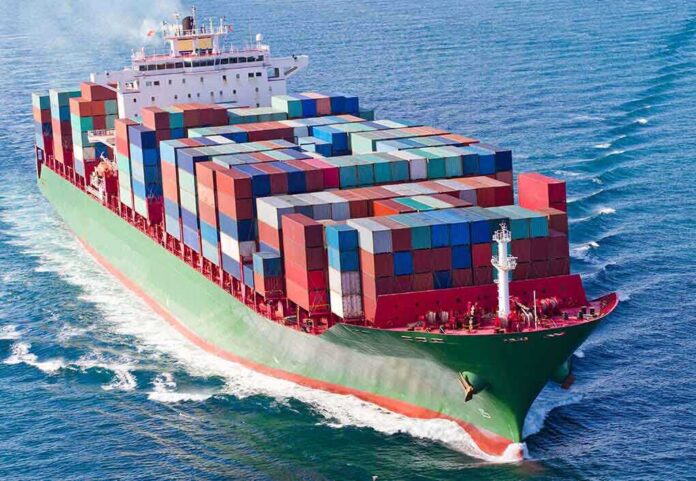
Nearly 70 shipping containers from a Chinese cargo vessel crashed into the water at America’s second-busiest port, exposing dangerous vulnerabilities in our critical supply chain infrastructure that could cripple domestic commerce.
Story Snapshot
- 67 containers fell from Portugal-flagged vessel “Mississippi” at Port of Long Beach during unloading operations
- Port operations suspended at Pier G, disrupting vital supply chains that handle 40% of U.S. container traffic
- Anti-pollution vessel STAX 2 struck by falling containers, highlighting safety failures
- Coast Guard investigation underway focusing on equipment failure and operational procedures
Major Port Disruption Halts Critical Operations
The Port of Long Beach suspended cargo operations at Pier G following the container collapse on September 9, 2025. This critical infrastructure handles approximately 40% of all U.S. shipping containers alongside the Port of Los Angeles, making any disruption a potential threat to American commerce and consumer goods availability. The Portugal-flagged vessel Mississippi had arrived from Yantian port in Shenzhen, China, carrying goods that American families and businesses depend on daily.
Infrastructure Failure Raises Safety Concerns
The dramatic collapse occurred during routine unloading operations around 9:00 a.m. local time, when 67 containers suddenly toppled into the harbor waters. The incident damaged the anti-pollution vessel STAX 2, demonstrating how cascading failures can multiply risks at these vital chokepoints. Maritime safety experts note that such large-scale incidents at berth are rare but highlight serious vulnerabilities in cargo handling systems that protect American supply chains from disruption.
Recovery operations remain ongoing as the Unified Command, including Coast Guard and port officials, works to secure the submerged containers. The investigation focuses on potential crane malfunctions, vessel stability issues, and human error during unloading procedures. These findings will be crucial for preventing future incidents that could threaten port operations and economic stability.
Economic Impact on American Commerce
The suspension of operations at one of America’s busiest cargo terminals creates ripple effects throughout the domestic economy. Cargo owners face potential delays and financial losses, while shipping companies must reroute vessels or wait for operations to resume. This incident underscores the fragility of supply chains that American consumers and businesses rely on for everything from electronics to household goods.
Investigation Targets Operational Failures
Coast Guard investigators are examining whether equipment failures, inadequate safety protocols, or operational pressures contributed to this unprecedented container loss. The focus on crane operations and vessel stability procedures reflects concerns about whether cost-cutting measures or rushed operations compromise safety standards. Industry experts worry that high-throughput demands at major ports may be pushing systems beyond safe operational limits.
Fortunately, no injuries or immediate pollution were reported, but the potential for environmental damage and worker casualties was significant. This near-miss should serve as a wake-up call for port authorities and shipping companies to prioritize robust safety measures over operational speed and cost savings that could endanger American workers and coastal communities.
Sources:
Multiple shipping containers fall off cargo ship into water at Port of Long Beach, California
Dozens of shipping containers fall off cargo ship at California port
Unified Command Responds to Fallen Containers at the Port of Long Beach