
Trump declared the Strait of Hormuz open and a peace deal done — but ship trackers tell a very different story.
Story Snapshot
- Trump announced a ceasefire and peace deal with Iran on June 14, 2026, saying the Strait of Hormuz would reopen toll-free.
- Shipping data shows traffic is still down more than 90%, with fewer than 10 ships per day moving through the strait versus 150-plus before the conflict.
- Iran created a new agency called the “Persian Gulf Authority” to collect tolls and approve ship transits — directly contradicting Trump’s “toll-free” claim.
- The U.S. launched “Project Freedom” to guide stranded ships out, but over 150 vessels remain stuck and insurance premiums are still 16 times normal rates.
Trump Announces Deal, but Ships Aren’t Moving
On June 14, 2026 — his 80th birthday — President Trump announced a ceasefire and peace deal with Iran, declaring the Strait of Hormuz would reopen for free navigation. Iran’s Deputy Minister Kaz Gharabadi confirmed hostilities would stop. But within hours, ship tracking data told a different story. Live monitors showed commercial traffic still near zero, with the strait effectively closed to the global shipping industry.[1]
Before the conflict started in late February, more than 150 ships crossed the strait every day. As of June 8, that number had fallen to fewer than 10 per day — a drop of over 90%.[10] The strait carries roughly 20% of the world’s oil and 25% of its liquefied natural gas. Every day it stays closed costs the global economy an estimated $4 billion.[11]
Iran Is Still Blocking Ships and Collecting Tolls
Despite the announced deal, Iran has not stopped controlling the waterway. Iran’s military still requires commercial ships to coordinate with its forces before passing through — under threat of seizure or attack.[2] Iran also created a new government body called the “Persian Gulf Authority” to formally approve ship transits and collect fees from vessels.[4] That directly contradicts Trump’s promise of toll-free, unrestricted navigation.
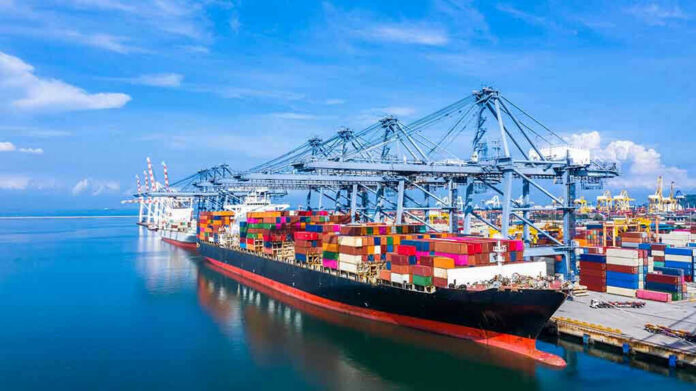
More than 150 ships — including oil tankers and cargo vessels — remain stranded on both sides of the strait.[11] Ships that can’t wait are rerouting around the Cape of Good Hope at the southern tip of Africa, adding up to 14 extra days at sea and sharply higher costs. Tanker rates for Gulf-to-Asia routes have tripled. War risk insurance premiums have soared to more than 16 times their normal levels.[11]
Project Freedom Launches, but Challenges Remain
Trump launched a U.S. military operation called “Project Freedom” to guide stranded ships safely out of the strait. U.S. Central Command (CENTCOM) reported redirecting at least 41 ships since the naval blockade began on April 13.[2] The operation signals real effort from the administration to restore shipping. But with Iran still patrolling the waters and enforcing its own rules, the path to full reopening remains uncertain.
U.S. and Iran Reach Preliminary Peace Agreement to End Active Conflict and Reopen the Strait of Hormuz
What’s happening:
The United States and Iran have agreed on a memorandum of understanding (MoU) to halt fighting on all fronts, including Lebanon-related hostilities. Core…— World Audit (@WorldAuditPro) June 15, 2026
Analysts at the Center for Strategic and International Studies describe the standoff as “a struggle of political endurance and bargaining leverage” rather than a clear military victory for either side.[19] The gap between a political announcement and ships actually moving freely is wide. Iran has spent decades building up drones, missiles, and fast-attack boats to control this narrow waterway. A signed deal doesn’t instantly remove those threats. American families are still feeling the pain at the gas pump — prices jumped over 30% in March alone.[12] Until tankers are moving freely again, the deal is a promise, not a reality.
Sources:
[1] Web – Shipping still mostly halted in Hormuz Strait: trackers
[2] Web – US-Iran ‘peace deal’ announced; Trump says Strait of Hormuz …
[4] Web – 2026 Strait of Hormuz crisis – Wikipedia
[10] Web – Strait of Hormuz | International Crisis Group
[11] Web – [PDF] Strait of Hormuz Shipping Traffic – MUFG Americas
[12] Web – Strait of Hormuz Live Tracker — Real-Time Shipping & Oil Crisis …
[19] Web – There is a website you can actually watch ship movements in real-time
© truetrendnews.com 2026. All rights reserved.