
After President Trump’s 2026 State of the Union, the loudest “meltdown” may have come from media spin colliding with stubborn polling reality.
Quick Take
- President Trump delivered a nearly two-hour State of the Union that conservatives praised as patriotic and results-focused.
- Democratic leaders and liberal commentators blasted the address as “boring,” “destructive,” or filled with falsehoods, underscoring the country’s political divide.
- Major coverage highlighted that recent polling shows significant public skepticism on the economy, tariffs, and parts of the administration’s agenda.
- The speech previewed big policy ambitions—including tariffs and tax-related ideas—but did not produce immediate legislative action.
A record-length SOTU that sharpened the partisan split
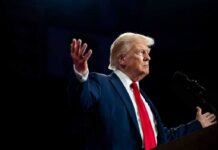
President Trump delivered his February 24, 2026 State of the Union address from the House chamber, capping the night with a message of national pride ahead of America’s 250th anniversary on July 4, 2026. Multiple reports described the speech as the longest SOTU on record at nearly two hours, with Republicans applauding and Democrats visibly withholding support. The address framed his second-term agenda as a “turnaround,” especially on the economy and the southern border.
Online reaction followed the familiar modern script: conservatives circulated praise in real time, while prominent Democrats and left-leaning influencers publicly trashed the remarks. According to reporting that compiled posts and reactions, conservative voices called the speech “historic” and a “home run,” while critics labeled it boring, incoherent, or harmful. The substance of the night mattered, but the immediate takeaway was cultural and political: the same speech was interpreted as proof of progress or proof of decline.
What Trump emphasized: border enforcement, national pride, and big promises
Trump’s speech leaned heavily on themes that resonate with constitutional conservatives—sovereignty, law enforcement, and a government that puts Americans first. Coverage described him emphasizing border security, deportations, and crime reduction, while presenting his administration as restoring “dominance” abroad. Trump also took swipes at Democrats on taxes and projected optimism about an American “golden age.” The White House framed the night as a forward-looking rally heading into the 2026 midterm cycle.
At the same time, reporting indicates the address included teasers rather than immediate policy moves. Articles summarizing the speech referenced ideas involving tariffs and tax structure—headline-grabbing concepts that would require Congress and would face court scrutiny if implemented aggressively. For voters frustrated by years of inflation, overspending, and Washington gamesmanship, the key question is less about rhetoric and more about follow-through: what becomes actual legislation, what becomes agency action, and what ends up blocked in court.
Liberal media “fact-checks” leaned on polls showing real vulnerabilities
Liberal commentary focused on disputing Trump’s claims and stressing negative polling, with cable coverage featuring rapid-response critiques while the speech was still dominating the news cycle. One prominent on-air analysis highlighted broad disapproval numbers, including majorities unhappy with economic conditions and heavy opposition to tariffs among independents. Another report similarly cited polling that showed weak approval on the economy and tariffs. Those data points don’t validate every criticism—but they do show political risk.
For conservatives, the practical insight is that “media outrage” and “public opinion” are not the same thing, and neither guarantees policy success. A skeptical electorate can still support tougher border enforcement while disliking higher prices or uncertainty tied to trade fights. The available research also notes there is no clear, documented “new poll” in the provided materials that dramatically flips the narrative overnight; what’s cited is continued skepticism on key issues, not a sudden post-speech surge.
The tariff fight and institutional pushback remain the core pressure points
Beyond the partisan reaction, the deeper story is institutional friction: courts, Congress, and public opinion all constrain any administration. One report noted a Supreme Court ruling against Trump on tariffs by a 6–3 margin, with three conservative justices dissenting, a reminder that even a Republican-led agenda can hit legal limits quickly. That context matters because tariffs and tax proposals can move markets, affect prices, and provoke prolonged courtroom and legislative battles.
Trump also used the speech as a leadership signal—both to allies and to opponents—by spotlighting priorities and assigning roles inside the administration. Coverage mentioned Vice President JD Vance being tasked with leading a “war on fraud,” a theme that fits a broader conservative demand for accountability after years of frustration over waste, bureaucracy, and uneven enforcement of laws. Still, the sources indicate no immediate legislative package emerged in the 24 hours after the speech.
Why this moment matters heading into the 2026 midterms
The State of the Union functioned less like a policy briefing and more like a campaign-season dividing line: Republicans used it to energize voters around enforcement, pride, and a “country-first” worldview, while Democrats used it to reinforce claims of chaos and exaggeration. That split will shape how both sides talk about inflation, immigration, and America’s direction. If the administration delivers measurable results—especially on border control—Republicans can argue outcomes over headlines.
Liberal Media Reactions to Trump's State of the Union Were Wild, But This Poll Will Drive Libs Nuts https://t.co/WEsffeu8Cy
— Norman Firebaugh (@FirebaughNorman) February 25, 2026
If the economy stays sluggish or prices rise, critics will keep pointing to those same polls as evidence voters are not buying the pitch. The research provided also flags uncertainty around some claims made in the speech, including at least one reported as “dubious” by a major outlet. With so much noise, the constitutional conservative lens stays straightforward: demand receipts, demand lawful enforcement, and watch closely for policies that expand government power without clear limits or congressional accountability.
Sources:
Takeaways from Trump’s State of the Union address