
One Trump social media post about the Iran conflict reportedly hit the markets like a switch—calming oil fears and lifting stocks in real time on live financial TV.
Story Snapshot
- President Trump issued a de-escalation message amid attacks on Middle East energy sites tied to the Iran conflict.
- Live financial coverage highlighted the immediate market reaction as oil pared gains while equities strengthened.
- Trump publicly denied U.S. involvement in strikes on Iran’s South Pars gas field and signaled Israel would halt further attacks.
- Trump paired de-escalation with deterrence, warning of retaliation if Iran targets Qatar’s LNG facilities.
Trump’s Message Meets a Market on Edge
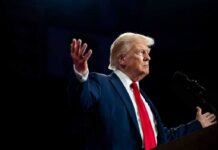
President Donald Trump’s social media statement, discussed on live financial television on March 19, 2026, landed during a tense stretch of fighting described in available reporting as the third week of a broader Iran conflict. The backdrop was immediate: attacks on energy infrastructure, including Iran’s South Pars gas field, and warnings that other Gulf facilities could be threatened. Traders were already pricing in supply risk, making any signal of restraint unusually consequential.
‘Wow!’ CNBC Reads Trump’s Iran Deescalation Post Live On Air — and Watches in Real-Time as Dow Surges and Oil Craters #Mediaite https://t.co/x5G74OV2ab
— #TuckFrump (@realTuckFrumper) March 23, 2026
According to the available transcript-based reporting, anchors read and discussed Trump’s message as markets moved, with oil prices paring gains and U.S. equities strengthening. The framing that captured attention was the “real-time” feel of the moment—commentary and price action happening together—because energy headlines can feed directly into inflation expectations, consumer costs, and Federal Reserve thinking. The research provided does not include precise Dow or oil figures, limiting exact measurement of the move.
What Trump Said: De-Escalation, Distance, and Deterrence
The substance attributed to Trump was a mix of reassurance and warning. The report says Trump denied U.S. involvement in Israeli strikes on South Pars, stated that Israel would refrain from further attacks, and urged de-escalation. At the same time, he warned Iran against expanding the conflict by targeting Qatar’s liquefied natural gas facilities, signaling potential retaliation if Gulf energy infrastructure was hit. That combination attempted to reduce immediate panic without rewarding escalation.
This matters for Americans because energy shocks hit ordinary households fast—at the pump, in grocery distribution, and through broader inflation pressures. For a conservative audience still frustrated by recent years of fiscal and monetary strain, the market’s sensitivity is a reminder that foreign policy and domestic cost-of-living are tied together. The research also emphasizes that the Federal Reserve’s inflation concerns can intensify when oil prices threaten to move sharply higher, even on short notice.
Why South Pars and Qatar LNG Became the Flashpoints
South Pars is central because it is a major gas field and sits within a larger Gulf energy network where disruption can ripple across global supply expectations. The provided research describes an Israeli strike on South Pars as a trigger for Iranian threats aimed at wider regional infrastructure, including Qatar’s LNG facilities. Gulf states, facing high stakes, were portrayed as focused on preventing further escalation that could endanger export capacity, shipping, and regional stability.
Saudi Arabia’s reaction in the same reporting underlined that regional players were trying to contain the fallout while still drawing red lines. The account says Saudi officials condemned Iran for crossing a “redline” yet also called for de-escalation. That posture reflects the core dilemma for U.S. interests as well: deterring attacks on energy infrastructure while avoiding a spiral that sends oil materially higher. The research notes $100-plus oil as a possible risk scenario, but does not provide updated price confirmations.
Media “Wow” Moments vs. What We Can Actually Verify
The viral hook to this story is the idea that CNBC read Trump’s post live and watched the Dow surge as oil “cratered.” The research, however, primarily supports this through a Bloomberg Daybreak Europe-style transcript and analysis describing oil paring gains and equities reacting positively as Trump signaled an off-ramp. With only one primary item summarized in the research, the exact network footage, verbatim post text, and the magnitude of the market moves cannot be fully verified from the materials provided alone.
Even with those limitations, the key takeaway is solid: markets respond quickly to perceived shifts in escalation risk, especially when energy sites are threatened. From a constitutional, America-first viewpoint, voters tend to demand two things at once—credible deterrence to protect U.S. interests and allies, and disciplined decision-making that avoids open-ended conflict and runaway costs back home. The available reporting portrays Trump aiming for that balance in a single, highly watched message.