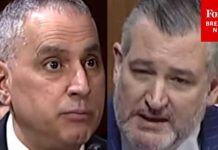


Senator Lindsey Graham warns that Congress risks turning itself into 535 commanders-in-chief, undermining President Trump’s constitutional authority to defend America.
Story Highlights
- Graham defends presidential power to initiate military actions without declaration, citing over 130 historical precedents.
- Criticizes 1973 War Powers Resolution as patently unconstitutional for limiting executive discretion.
- Speech delivered ahead of War Powers vote on Venezuela amid Maduro’s downfall.
- Parallels Trump’s Iran strategy, urging de-escalation while upholding Commander-in-Chief role.
Graham’s Floor Speech Defends Executive Prerogative
Senator Lindsey Graham (R-SC) delivered a Senate floor speech in early February 2026, two months before April 9. He addressed the downfall of Venezuelan leader Nicolás Maduro and upcoming War Powers vote. Graham asserted the President, as Commander-in-Chief under Article II, Section 2, can initiate military actions without congressional declaration. Congress holds exclusive power to declare war per Article I, Section 8, but has done so only five times in history, including the War of 1812 and World Wars I and II. This establishes presidential initiative as the norm, exercised over 130 times.
War Powers Resolution Faces Constitutional Challenge
Graham targeted the 1973 War Powers Resolution, enacted after Vietnam. It requires presidential notification within 48 hours of military action and withdrawal after 60-90 days without authorization. Graham called it patently unconstitutional, creating 535 commanders-in-chief by letting Congress veto or limit presidential decisions. He cited precedents like George H.W. Bush’s 1989 Panama invasion, conducted without declaration despite casualties. Graham argued Congress substitutes its judgment for the executive’s in protecting national interests through limited actions.
Trump’s Second Term and Foreign Policy Tensions
In President Trump’s second term, with Republicans controlling Congress, Graham allies with the administration on foreign policy. His speech ties to Venezuela policy amid Maduro’s collapse. Paralleling Iran tensions, Graham urged Trump to wind down conflict and pursue peace consistent with military objectives. This marks a shift from Graham’s past hawkish calls for escalation. Backlash came from Republicans like Nancy Mace and Anna Paulina Luna over his Iran rhetoric. Graham positions as defender of originalism, favoring strong executive against legislative overreach.
Implications for National Security and Power Balance
The speech could sway the pending War Powers vote, bolstering presidential flexibility in Venezuela and Iran. Short-term, it aids U.S. military operational freedom; long-term, it reinforces executive-led precedents, potentially eroding congressional war powers. Affected parties include U.S. forces, Venezuelan and Iranian civilians facing escalation risks, and allies like Saudi Arabia. Economically, Iran actions impact oil markets; politically, they heighten divides. Graham’s view aligns with unitary executive theory, prioritizing agility for security over post-Vietnam reforms.
Sources:
Lindsey Graham tells Trump to ‘wind down the war’ in Iran, seek peace