
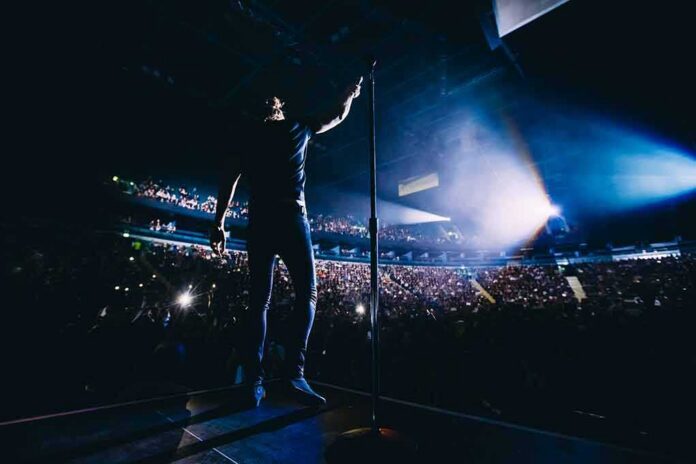
A private stadium owner’s veto, not the headliner, ended Macklemore’s slot and upended Ed Sheeran’s tour.
Story Snapshot
- Ed Sheeran says promoters and venues, not him, removed Macklemore from his U.S. tour.
- Robert Kraft confirmed he barred Macklemore from performing at Gillette Stadium.
- Macklemore alleges venue pressure spread beyond Boston through a coordinated ultimatum.
- All remaining opening acts quit the tour in solidarity, citing free speech concerns.
What Sheeran Says Happened and Why It Matters
Ed Sheeran told fans that he did not decide to drop Macklemore and that the tour promoter controlled the rapper’s contract. He said he spent days talking with venues and promoters to keep the lineup intact but faced threats to cancel shows if Macklemore stayed. His account shifts focus from artist politics to venue power and contract control, a common tension in live music when the person who controls the room decides what is allowed.
Robert Kraft, who owns Gillette Stadium, confirmed he blocked Macklemore from performing there. He tied the call to Macklemore’s recent onstage actions and what he described as a broader history of harmful rhetoric toward the Jewish community. That public statement supports Sheeran’s claim that venue access, not just headliner preference, drove the outcome, and shows how a single venue owner can steer a national tour’s plans.
What Macklemore and Support Acts Say
Macklemore said a week of hard talks with Sheeran ended in “fundamental disagreement,” and he linked his removal to pro-Palestinian remarks he made on stage. He alleged that Sheeran told him Kraft barred him at Gillette and rallied other stadium owners to do the same, creating an ultimatum across multiple dates. Those claims paint the dispute as a penalty for political speech rather than a routine booking change.
After Sheeran’s statement, all remaining openers, including Lukas Graham and Finneas, quit in solidarity. Finneas said artists should not be silenced when speaking up for the oppressed. Their exits turned a contract fight into a wider debate about speech, power, and who decides what messages are acceptable in major venues. Their choice also raised costs for the tour and fans who bought tickets expecting a full bill.
How Venue Power Shapes Speech Without Government Censorship
Concerts rely on a chain of deals among the artist, the promoter, and the venue. The venue controls dates, staff, and safety plans. When a venue owner or group of owners says “no,” a promoter often has to re-route or change the bill. That structure can limit speech without any government order. It is a private rule set by gatekeepers who manage the biggest rooms, and it affects what millions of fans can see live.
The Kraft statement is on record; the broader alleged multi-venue ultimatum is not backed here by documents from other stadium owners. Sheeran maintains the promoter made the call under venue pressure. Macklemore frames the event as fallout from his message. Both can be partly true in a system where access is leverage. The missing pieces are promoter contracts and venue emails that would show exactly who decided and when.
Why This Resonates Across the Political Spectrum
Americans across the aisle worry that elites with special access make choices that regular people must live with. This story taps that concern. A billionaire stadium owner could block an artist from a major stage. A global star says he could not overrule it. Fans lose options they paid for. Whether you see this as safety, standards, or censorship, the process is opaque and the power sits far from the public.
I am surprised that David Tepper went political with the @macklemore
removal, but what should l expect from a billionaire? I will refrain from calling him a POS, as I still hold out hope for him, but he joined with the prostitute soliciting POS Kraft. Not a good look. @Panthers— Yang's Pit Bull🧢 (@YangsPitBull) September 19, 2026
People on the right see private pressure used to police speech. People on the left see a message for Gaza punished by the rich and connected. Both sides see a system built to protect itself. The fix starts with sunlight: publish promoter terms, venue standards, and clear rules for political speech on tour. Without that, every dispute like this will feel like the powerful calling the shots behind closed doors.
Sources:
abcnews.com, usatoday.com, theguardian.com, independent.co.uk, bostonglobe.com
© truetrendnews.com 2026. All rights reserved.