
France’s plan to let local officials ban protests after city halls burned shows how fast a street crisis can turn into a test of basic freedoms.
Story Highlights
- Large protests over living costs turned violent in several French cities, with hundreds of arrests and major fires.
- President Emmanuel Macron told prefects to work with mayors and, when needed, prohibit specific gatherings.
- The government says most demonstrators were peaceful and vows to prosecute those who attacked public buildings.
- Partial protest-route bans in Paris show how authorities are narrowing assemblies while claiming to protect the right to protest.
What sparked the emergency posture
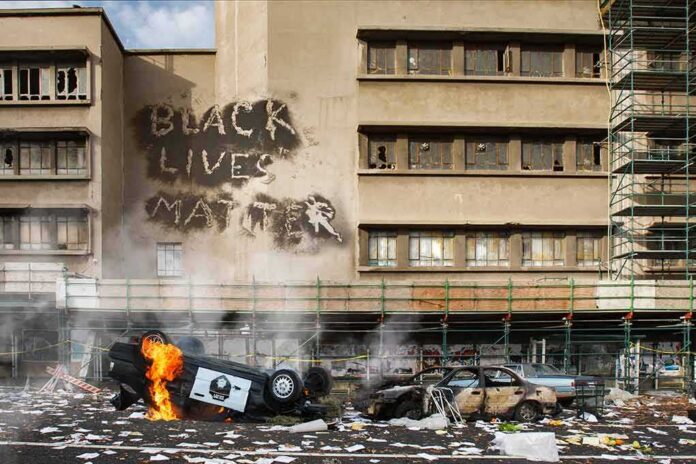
French cities saw large, nationwide demonstrations over rising living costs and public services. Several rallies turned violent on October 17 and 18, with fires, smashed storefronts, and attacks on public buildings. News outlets reported arrest totals in the hundreds to more than one thousand, reflecting different times and regions as events unfolded. One blaze heavily damaged Limoges City Hall, a symbol of local government, and deepened fears that order was slipping in parts of the country.
President Emmanuel Macron responded with a televised address and an emergency meeting. He backed police and said the state would bring “the full force of the law” against those who rioted. He also drew a line between peaceful demonstrators and violent groups, saying the vast majority protested without harm. That framing aimed to defend the right to protest while isolating the people who attacked city halls, police sites, and private businesses.
How the protest limits would work
Macron instructed prefects, who are the state’s top regional officials, to coordinate with mayors to protect buildings and shops. His guidance said they could prohibit specific gatherings when needed to prevent violence. In Paris, the police prefect applied this approach by issuing orders that partially blocked declared routes while allowing modified marches to proceed under the public-order law. These legal notices show the tool kit in action on the ground.
The approach signals a tactical shift. Rather than a blanket national ban, France is using targeted restrictions and route edits to manage risk city by city. Supporters argue this balances safety with civil liberties. Critics warn that “when needed” bans can creep wider over time, chilling speech and assembly. The concern is sharper after attacks on civic buildings, which make hard-line steps seem easier to justify in the short term.
What we know, and what remains unclear
Several facts are firm. The protests were large, the damage was real, and many people joined because they are struggling with prices and public services. The government says organized violent groups exploited the crowds, and it plans to prosecute them. Interior Minister Laurent Nuñez said police should be able to use all intermediate weapons if urban violence erupts, including tear gas and defense launchers. These steps show the state believes routine protest policing is not enough in hot spots.
Two gaps remain. First, arrest figures vary across reports, from hundreds to well over a thousand, depending on the time and area counted. Second, the record does not yet show whether the attacks were coordinated across cities or mainly opportunistic. Without charging documents and court findings, it is hard to judge organization claims. What is clear is that officials view the threat as serious enough to justify route bans and possible event prohibitions.
Why this matters beyond France
Democracies often face a hard tradeoff during unrest: protect safety without shrinking rights. France’s targeted bans are a case study in that balance. The state says it will defend the right to protest while stopping arson, looting, and assaults on civic buildings. The risk, as many Americans know from our own debates, is that temporary limits can linger. Once tools to restrict assembly are normalized, future leaders can reach for them faster, sometimes for less urgent reasons.
For readers on both the right and the left, the core worry is familiar. People feel real pain from higher costs and weak public services. They also see elites and officials who seem quicker to police the streets than to fix daily problems. France’s story is not about one party’s talking point. It is about whether governments still solve the problems that push people into the streets, or mainly manage the symptoms once they are there.
Sources:
telegraph.co.uk, bbc.co.uk, abcnews.com, gpb.org, nbcnewyork.com, cnbc.com, itv.com
© truetrendnews.com 2026. All rights reserved.