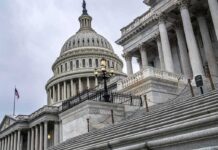


Twenty-two days after the midterms, Democrats signaled continuity on Middle East policy even as voters demanded change, deepening fears that Washington listens more to insiders than to the public.
Story Snapshot
- Hakeem Jeffries’ past AIPAC remarks underscored strong support for Israel as he rose in party leadership.
- Democratic leaders criticized the Iran war but hesitated to tie December funding to firm limits.
- Analysts say Congress can pressure a president, but veto power narrows options without big majorities.
- Bipartisan habits and institutions often keep foreign policy on the same track across elections.
What Shifted After the Midterms, and What Did Not
Reporters described a gap between rising antiwar pressure and party leaders’ actions on funding. House Democratic leader Hakeem Jeffries and Senate leader Chuck Schumer urged an end to the Iran war. But they did not commit to using the December budget deadline to force limits, while appropriators kept talking behind closed doors. That kept war policy on a familiar path. Many voters on both the left and the right see this as proof that insiders run the show, no matter the election result.
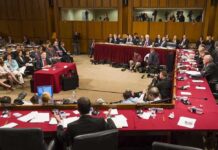
Political analysts added a caution. They said Congress can hold hearings, slow arms transfers, and write restrictions. But a determined president can veto major limits, which puts change out of reach without supermajorities or cross-party support. That legal reality frustrates voters who expect fast results. It also helps explain why foreign policy often looks steady even when campaign talk sounds sharp.
Jeffries’ Record and Why It Matters to Skeptics
As Jeffries won the House Democratic leadership, old remarks resurfaced. In 2020 at an American Israel Public Affairs Committee event, he called Jerusalem the “sixth borough” of New York City and said the United States commitment to Israel should be “ironclad”. Supporters view that as alliance talk. Critics view it as a sign that donors and lobbyists matter more than voters. The quote is real, but it does not prove funding decisions or donor control on its own.
The larger dispute goes beyond one line. Some Democrats have pushed for stricter limits or a reset in the region, while others defend long-standing security ties. That mix shows a party argument, not a single voice. Still, to many Americans, the end result looked the same: continued support, careful language, and little hard leverage used at the deadline. That outcome feeds the “uniparty” charge from both antiwar liberals and populist conservatives.
Why Bipartisan Continuity Is So Hard to Break
Researchers have tracked a pattern for decades. Congress holds the purse and can regulate war. Presidents command the military and can act quickly. Over time, lawmakers often hesitate to fight a president on active operations. They fear blame if events go wrong or if troops lack support. Those incentives create a default to continuity, even under divided or shifting government. That does not prove a conspiracy. It does show how institutions can blunt election shocks.
Foreign policy thinkers on the Democratic side argue that strong alliances, steady promises, and clear deterrence help prevent larger wars. They pair that with support for Ukraine, defense upgrades, and diplomacy to avoid new quagmires. That vision aims to sound responsible. But for voters worn down by long wars, high costs, and elite spin, the lived experience can feel like more of the same. Trust erodes when leaders criticize a war yet avoid spending leverage.
What Evidence Is Strong — and What Is Still Missing
The record shows three things clearly. First, Jeffries made strong pro-Israel statements before becoming House leader. Second, party leaders voiced concern about the Iran war but did not pledge to tie December funding to strict limits. Third, constitutional structures make fast, unilateral congressional change hard without veto-proof backing. What we do not have here is the final text and roll-call proof that leaders blocked a specific measure that would have ended funding outright.
That gap matters. Many feel betrayed when rhetoric shifts after votes are counted. But a betrayal claim needs a clear promise followed by a documented opposite action. Analysts also warn against blaming foreign policy alone for election outcomes. Inflation, abortion, and candidate quality all mattered in 2022. The safer takeaway is narrower: institutions and bipartisan habits kept policy on track, while public patience kept wearing thin.
What to Watch Next
Watch for three signs of real change. First, look for hard budget riders that limit operations, not just speeches. Second, track hearings that force officials to map an exit plan with dates and metrics. Third, check for cross-party coalitions willing to face a veto fight. If those steps happen, Congress is using its power. If not, continuity will likely persist, and many Americans will keep asking why elections do not seem to change foreign policy.
Sources:
youtube.com, mezha.net, mediabiasfactcheck.com, x.com, members.jpost.com, forward.com, music.amazon.com
© truetrendnews.com 2026. All rights reserved.