
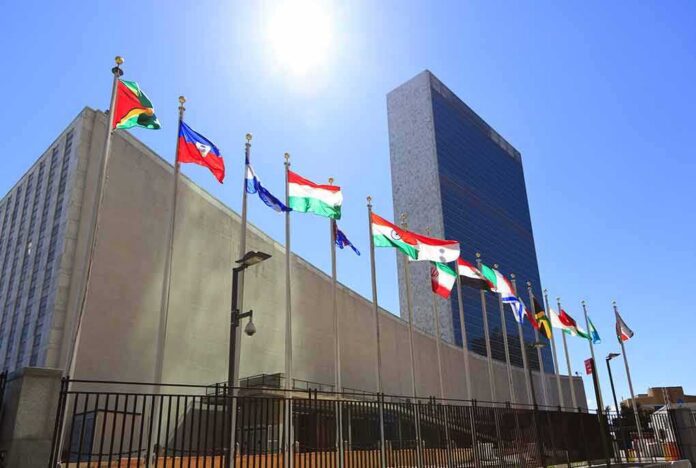
At the United Nations, Iran’s president accused the United States and Israel of illegal attacks while insisting Iran is acting in self-defense.
Story Highlights
- Iran’s Masoud Pezeshkian told the UN Iran is defending itself and is not a terrorist state.
- He blamed the United States and Israel for unlawful strikes on civilians and infrastructure.
- He said Iran will answer any bombing of its cities but remains open to talks with Washington.
- He defended Iran’s peaceful nuclear rights and accused world powers of a double standard.
What Pezeshkian Said In The UN General Assembly
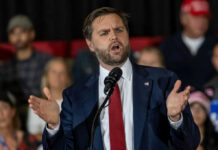
Iranian President Masoud Pezeshkian addressed the United Nations General Assembly in New York on September 23, 2026. He said Iran has “only defended” itself and rejected labels that call Iran a terrorist state. He accused the United States and Israel of illegal attacks on civilians and infrastructure, and he cited dead children as proof of harm. He said Iran built defenses so that bombings of Iranian cities would not go unanswered, signaling a firm deterrent posture.
Pezeshkian tied his message to the setting and to President Trump’s remarks the prior day. He answered Trump’s warning that he could “annihilate” Iran if there was no deal to end the war, saying Iran would never surrender. He said Iran still wanted negotiations to reduce tensions if the language of force stopped. He insisted Iran’s nuclear program serves medical, farm, and energy needs, not weapons, and argued that Iran accepts inspections while Israel keeps nuclear ambiguity.
How The United States Responded In The Room
Coverage reported a tense hall. The United States presence at the speech was minimal, and there were walkouts as Pezeshkian spoke about alleged crimes and double standards. Trump had used his own UN speech to defend the war and threaten Iran with annihilation if talks failed, framing Tehran as the world’s top sponsor of terrorism. The back-to-back addresses highlighted a sharp clash in stories about who is escalating and who seeks peace.
These speeches fit a long pattern in Iran–United States standoffs: each side claims self-defense while inviting talks on its terms. Leaders use the United Nations stage to show resolve to their own people and to allies. They also try to shape global opinion without offering courtroom-style proof because General Assembly speeches are political statements, not evidence hearings. That setup rewards strong lines and firm postures, even as both sides keep the door to diplomacy cracked open.
Why This Matters For Americans Watching At Home
For millions of Americans facing high costs and deep distrust in Washington, this clash raises hard questions. War and sanctions drive oil and shipping risks that can raise energy and food prices. A wider fight in the Middle East could hit savings, travel, and jobs far from the front. Pezeshkian’s claim of self-defense and Trump’s vow to crush Iran set up a test: can leaders apply pressure and still avoid a costly, open-ended conflict?
The shared worry on the left and right is that powerful players talk past each other while regular people pay the bill. Pezeshkian said Iran wants talks but will not bow to threats. Trump said only maximum pressure will stop Iran’s nuclear ambitions. Both messages aim to look strong. The outcome will depend on whether back-channel contacts match the public lines, and whether each side can claim a win without widening the war.
Sources:
foxnews.com, cnbc.com, tribune.com.pk, denvergazette.com, apnews.com, webtv.un.org, independent.co.uk, abcnews.com
© truetrendnews.com 2026. All rights reserved.