
As U.S. military planes and ships rush into quake-hit Venezuela, many Americans see both real lifesaving work and yet another reminder of how the “experts” turned war and aid into tools of power.
Story Snapshot
- U.S. forces and faith-based groups are moving fast to help Venezuela after deadly earthquakes, using heavy military lift and elite rescue teams.
- Interim Venezuelan authorities formally asked Washington for help, but that request came only after the U.S. removed Nicolás Maduro from power.[11][4]
- America’s $150 million in aid flows mainly through religious charities and big global agencies, raising questions about who really benefits.[3]
- This response saves lives, yet it fits a long pattern where disaster relief blurs into foreign policy and fuels distrust of U.S. elites.[1]
Quakes, Chaos, and a Call for American Help
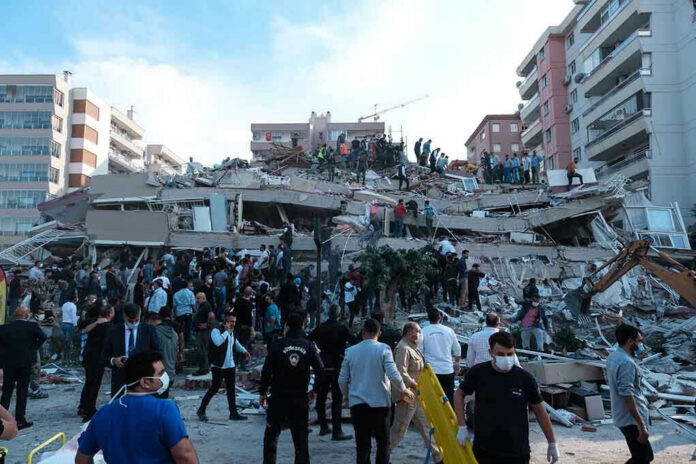
Two massive earthquakes slammed Venezuela on June 24, tearing up runways, crushing buildings, and overwhelming a country already in deep crisis.[10] Interim Venezuelan authorities formally asked the United States for help in the aftermath, a rare open door after years of bitter relations.[11] That request came only months after U.S. forces captured former President Nicolás Maduro in a special operation, removing a leader accused of brutal repression and deep corruption.[3][5] Many Venezuelans were already fleeing hunger, blackouts, and collapsing hospitals long before the ground shook.[5][7] The quakes turned a slow-motion disaster into a sudden emergency, forcing even skeptical politicians to admit outside help was now a matter of life and death.
For Americans watching from home, this scene hits familiar nerves. People on the right remember years of “globalism” and foreign aid while problems at home festered. People on the left see a country where the rich and powerful seem to play chess with other nations while ordinary families struggle to stay afloat. Both sides doubt that Washington elites suddenly became honest saints overnight. Yet both also know real people are trapped under concrete in Caracas, and turning away from them is not who we are supposed to be as a nation.
Military Muscle and Faith-Based Aid on the Front Lines
U.S. Southern Command says the Venezuelan government specifically requested American military support, and the response has been large and fast.[11][12] Two C-17 Globemaster aircraft are airlifting elite Urban Search and Rescue teams from Virginia and California, with about 150 specialists and a dozen search dogs heading into the rubble.[11][7] The San Antonio-class amphibious transport ship USS Fort Lauderdale and the littoral combat ship USS Billings have arrived off Venezuela’s coast, carrying helicopters, supplies, and medical staff to support relief work.[11][10] Three U.S. Army Chinook helicopters and an airfield assessment team are deploying to help move people and cargo where wrecked runways now block normal flights.[10][11] A major general from Southern Command is already on the ground in Caracas to direct operations, showing that this is not just a token gesture.[16] At the same time, the State Department has pledged $150 million in aid through faith-based groups like Samaritan’s Purse and Catholic Relief Services, plus two United Nations agencies.[3][7]
These partnerships highlight both the best and worst of the current system. Many religious groups have long track records feeding the hungry and caring for the poor when governments fail.[13] They often reach places big bureaucracies ignore. But critics point out that steering such a large sum to ideologically friendly groups can look like rewarding political allies.[3] After the dismantling of the United States Agency for International Development, a premier aid agency, the federal disaster response map grew more tangled and harder to follow.[3] Now the Pentagon, the State Department, and private charities share a mission that once belonged mostly to civilian relief experts. For citizens already worried about “regulatory capture” and cozy deals between government and big organizations, that mix raises fair questions about who sets priorities and who gets paid.
Hard Limits, Lingering Doubts, and the Deep State Shadow
Even this large response has serious limits. Both U.S. Navy hospital ships, USNS Comfort and USNS Mercy, are stuck in maintenance and cannot sail to Venezuela, cutting off full-scale floating hospitals that once symbolized American mercy in crises.[7] Damaged runways around Caracas mean heavy cargo planes cannot land easily, so early aid must rely on helicopters and amphibious ships, slowing the flow of bulk supplies when every hour matters.[7][10] Communications inside Venezuela remain badly disrupted, making it hard to count the dead, locate the injured, or target help to the neediest towns.[10] Seismic experts say the recent quakes fit a worrying pattern of frequent shocks around the Pacific Ring of Fire but admit they still cannot tell whether this means pressure is being safely released or new danger is building.[6] These unknowns leave families in both Venezuela and the United States wondering how much of this suffering is preventable and how much is simply out of human control.
America is sending a lot of heavy lifting. Virginia Task Force 1, that’s about 80 people and six search dogs with 70,000 pounds of gear, flew down on Air Force C-17 Globemaster IIIs, same for teams from LA and Miami. We’ve also got three Army CH-47 Chinook helicopters for moving… https://t.co/1t8hmicrHU pic.twitter.com/fSomjPPgZ6
— Patricia 🇺🇸 (@1109Patricia) June 28, 2026
Overlaying all this is the political shadow nobody can ignore. The same White House that now “answers the call” in Venezuela also ordered the raid that captured Maduro and gave Washington outsized sway over the country’s future.[3][14] Some experts say President Trump’s team sees Venezuelan oil and regional influence as core goals and believe military power can serve those interests without Congress or strict respect for international law.[4][14] Critics warn that even genuine disaster relief can double as cover for deeper involvement that bypasses normal checks and balances. Supporters counter that America has long used its strength to push back against brutal regimes and that saving lives now matters more than abstract legal debates. What both sides share, inside the United States, is a growing sense that decisions of war, aid, and intervention are made far above the heads of ordinary voters, by a “deep state” of insiders who rarely face real accountability.
Why This Operation Feels Familiar — and Why It Still Matters
This fight over motives fits a pattern seen across Latin America for decades. Again and again, disasters strike, local leaders ask for help, and the United States sends troops, planes, and money.[2] Each time, some people focus on brave medics and rescuers pulling survivors from rubble. Others point to oil fields, shipping lanes, or partisan talking points and see another move on a global chessboard.[1] Venezuela’s situation is extreme: nearly 7.9 million people have fled in recent years, and millions more inside the country depend on international aid just to eat and drink clean water.[5][7] That scale of suffering makes it hard to argue that outside help should stay away. At the same time, Americans of all stripes have good reason to keep asking who writes the checks, who gives the orders, and who profits when disaster strikes. Partnerships in action can save lives. They can also hide deals and power plays. The only way to defend both Venezuelan families and American values is to demand clear facts, strong oversight, and a government that treats its people as the final judge, not an afterthought.
Sources:
[1] Web – “Partnerships in action to save lives.”
[2] Web – US military helping plan Venezuela earthquake relief – Task & …
[3] Web – U.S. Military Support to Venezuela Earthquake Relief – southcom
[4] Web – U.S. pledges generous earthquake relief to Venezuela – NPR
[5] YouTube – US airplane loaded to help quake rescue efforts in Venezuela
[6] Web – International community pledges aid to Venezuela after earthquakes
[7] Web – US airplane loaded to help quake rescue efforts in Venezuela SH …
[10] Web – USA-01, one of the elite heavy urban search-and-rescue teams …
[11] Web – Venezuela Earthquake Relief: Unmatched U.S. Department of War …
[12] YouTube – US military supporting relief efforts in Venezuela after deadly …
[13] YouTube – US military arrives in Venezuela after DEVASTATING earthquakes …
[14] YouTube – U.S. military aid arrives in Caracas after deadly earthquake
[16] Web – The U.S. is expanding its military response as earthquake relief …
© truetrendnews.com 2026. All rights reserved.