
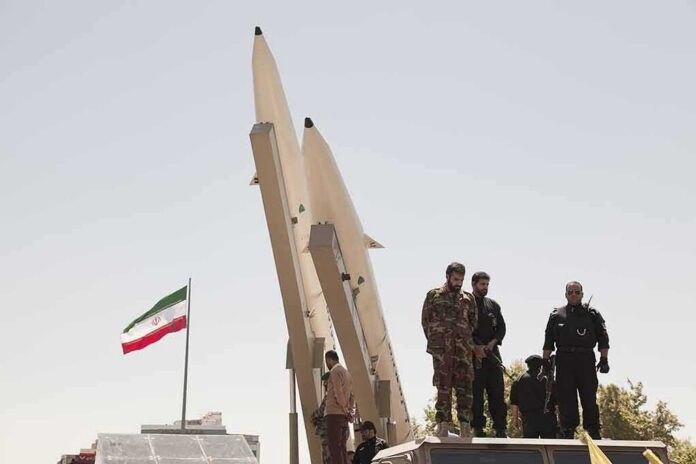
Iran has moved from rejecting direct talks with Washington to warning it may wait until 2029 before trying again, a stance that keeps diplomacy frozen while indirect messages still pass through intermediaries.
Quick Take
- Iranian officials say there are no direct negotiations with the United States right now.
- Reports say Tehran is still using intermediaries, especially Oman, to pass messages.
- A senior adviser to Iran’s parliament speaker said Iran would wait until President Trump’s term ends in 2029.
- The dispute shows how “talks” and “negotiations” can mean different things in Iran diplomacy.
Why Tehran Is Drawing a Hard Line
Iranian state-linked reporting says Tehran will not resume negotiations with the Trump administration before January 20, 2029, when Trump’s current term ends. Majid Shakeri, an adviser to Parliament Speaker Mohammad Bagher Ghalibaf, said Trump would not reach an agreement with Iran and that Tehran would keep its current approach until then. That message deepens a pattern of public refusal toward direct talks.
That hard line follows earlier statements from Iranian leaders rejecting direct negotiations after Trump sent a letter about the nuclear issue. AP reported that President Masoud Pezeshkian said Iran had declined direct talks, while the Supreme Leader had already rejected U.S. pressure for talks that could bring limits on missiles and regional influence. The public message is clear: Iran wants to define the terms, not simply answer Washington’s demand for a meeting.
Indirect Channels Still Stay Open
The same reports also show that Tehran is not shutting every door. Reuters reported that Foreign Ministry spokesman Esmaeil Baghaei said no negotiations were taking place with the United States, but that talks with Oman were continuing over the Strait of Hormuz. NPR likewise reported that Iran was only talking with Oman and that messages from friendly countries had reached Tehran about U.S. requests. That is a narrow channel, not a full diplomatic reset.
That difference matters because Iranian officials have repeatedly separated direct talks from indirect contact. In the current dispute, public denials of negotiations sit beside claims that intermediaries are still trying to create the right conditions for talks to resume. The result is a familiar diplomatic split: Washington describes momentum, while Tehran describes limits. Both can be speaking honestly if they mean different kinds of contact.
What This Means for the Bigger Conflict
The timing also matters because these statements land during a wider clash over the Strait of Hormuz, sanctions pressure, and the war environment around Iran. Bloomberg reported that Tehran wants Washington to meet its conditions before any new talks, including issues tied to transit and oil exports. Reuters reported that the only active discussions were with Oman on managing the strait, which shows that maritime access is part of the bargaining, not just the nuclear file.
Breaking || Trump demands compensation from Iran.
⮞ Trump: Iran must pay for regional damage
⮞ Trump links Iran talks to compensation
⮞ Trump rejects Iran compensation demand
⮞ Trump: Iran should compensate victims@akankshaswarups & @anchoramitaw with details. pic.twitter.com/98QWyjStEm
— TIMES NOW (@TimesNow) August 11, 2026
For readers frustrated with government theater in general, this episode looks less like a breakthrough than another reminder of how major powers manage headlines. Trump has publicly said talks were underway or imminent, while Iran has publicly denied direct talks and limited any opening to indirect channels. The gap between those statements keeps the story alive, but it also shows how thin the real diplomatic bridge remains.
Sources:
pjmedia.com, bloomberg.com, aljazeera.com, npr.org, newarab.com, pbs.org, cnbc.com
© truetrendnews.com 2026. All rights reserved.