
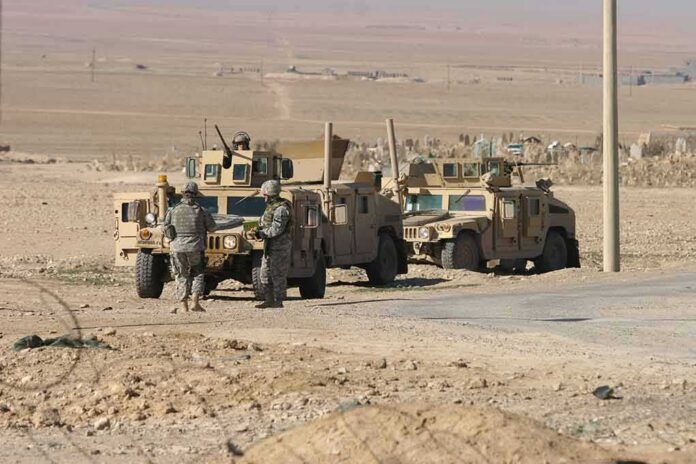
Under fire from Iranian-backed attacks, the United States is pulling troops and Patriot air defenses from northern Iraq while consolidating forces in the Kurdish region, signaling a major shift in posture that both reduces risk and shrinks leverage.
Story Snapshot
- U.S. and Iraq agreed to wind down coalition operations and vacate longstanding bases.
- Troops are relocating to Erbil’s Harir base in the Kurdish region, not leaving the theater entirely yet.
- Baghdad says U.S. forces have already left federal Iraq, with exceptions in Kurdistan.
- Analysts say drawdowns can protect troops but also reduce U.S. influence against Iran.
What Moved: Bases Closed, Units Shifted North
U.S. and Iraqi officials announced a plan to wrap up the coalition’s mission and close some long-held bases. Officials said remaining U.S. personnel would shift to Harir base near Erbil in the Kurdistan Region. This move pulls troops back from more exposed sites and keeps a smaller footprint in the north to support training and counterterror needs. The Associated Press reported that this is a phased approach tied to ending the anti-Islamic State mission over the next year.
Iraq’s government stated that U.S. forces have completed their withdrawal from bases in federal territory, with continued presence limited to the semi-autonomous Kurdish region. Iraqi officials framed this as a complete exit from federal areas, reflecting pressure from political blocs that want foreign troops out. The statement also reflects a practical reality: the Kurdish region has been the safer and more willing host for a smaller U.S. advisory and support presence.
Why Now: Rising Threats and a Negotiated Timeline
Rising attacks by Iranian-backed groups raised risk to U.S. units across Iraq. Moving to the Kurdish region shortens supply lines and places troops behind stronger local security, while still allowing limited support to Iraqi and regional partners. Washington and Baghdad have worked for years on a path to scale back the mission. Reporting indicates both sides tied the drawdown to a negotiated timeline that ends most operations but preserves some capability in Erbil.
Policy studies show that U.S. drawdowns often pursue two goals at once: protect American forces and lower costs, while also reshaping America’s role in a region where influence is contested. Those studies warn that while consolidation can reduce casualties, it can also reduce U.S. leverage against Iran and limit rapid response options if extremists regroup. That trade-off has defined each Iraq withdrawal phase since the first large pullout more than a decade ago.
What It Means: Security Gains, Leverage Loss, and Public Frustration
For service members and families, consolidation can mean fewer exposed convoys, simpler defenses, and faster medical support. For U.S. strategy, it can mean a smaller say in Baghdad’s choices and more space for Tehran’s proxies to push. Iraq’s leaders gain more control over their soil, but they also carry more burden if the Islamic State’s remnants test weak seams. The balance of risk shifts from U.S. troops to local partners and to distant deterrence tools.
US Withdraws Troops, Patriot Batteries From Northern Iraq Amid Iranian Attacks https://t.co/Tr68UCq5pB #Money #Finance #Economics #Market
— Alen Karabegovic (@AlenKarabegovic) August 1, 2026
Across America, many on the right and left see a pattern they dislike. Conservatives see years of costly deployments that strain troops while Iran’s militias gain ground. Liberals see endless missions without clear goals that drain resources at home. Both worry that powerful insiders make decisions that regular citizens cannot shape. This drawdown answers force-protection needs and Iraqi demands, but it also spotlights a deeper concern: Washington still struggles to match aims, costs, and results in the Middle East.
Sources:
© truetrendnews.com 2026. All rights reserved.