

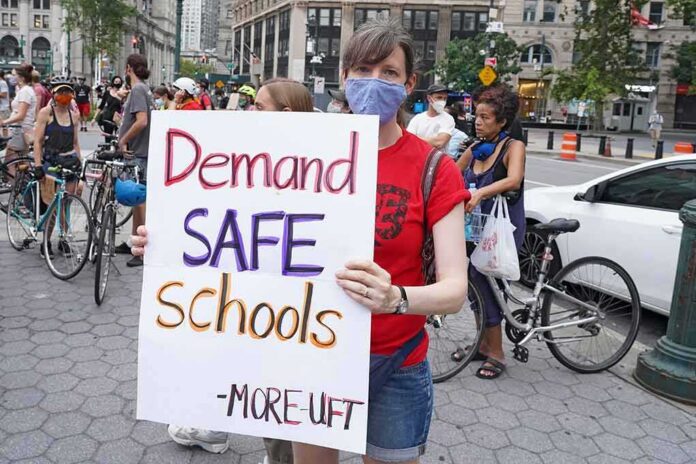
New York City’s largest teachers union endorsed Zohran Mamdani for mayor — and now both sides are clashing over pay and power in the nation’s biggest school system.
Story Snapshot
- The United Federation of Teachers (UFT) formally endorsed Mamdani after a 64% delegate vote.
- The union cited alignment on reining in mayoral control and boosting educator voice.
- Dissent inside the union surfaced soon after, including protests from Jewish educators.
- A year later, the UFT and Mayor Mamdani are fighting over $10,000 aide bonuses and reading policy.
What the UFT Actually Endorsed — And Why It Mattered
United Federation of Teachers leaders said their Delegate Assembly endorsed Zohran Mamdani for mayor on July 8, 2025. The union described a formal resolution and a vote after a “vigorous debate,” with 64% in favor. UFT statements framed Mamdani as a partner on school priorities, not a backroom choice. The pitch focused on educator input, class size, and checks on mayoral control, a long-running union concern in New York City governance. Chalkbeat reported Mamdani thanked the union for the support.
Chalkbeat and union materials linked the endorsement to changes in how schools are run. The union praised pledges to overhaul mayoral control, give parents and educators more say, and fund core school priorities. Outside coverage described potential goals like Tier 6 pension relief and paraprofessional pay. Those items matched what a workforce group would seek from City Hall. But no public document showed a negotiated trade or promised outcomes tied to the endorsement itself, leaving the expectations as political alignment rather than a contract.
Internal Backlash Highlights Division and Trust Gaps
Some union members bristled at the move. Right after the vote, reporting described educators threatening to pull money from the union’s political fund and saying they felt blindsided. Jewish educators and allied groups urged the union not to endorse anyone, warning it could split members. Later, critics publicly called for the union to withdraw the endorsement, citing concerns about antisemitism and divisive politics. These voices showed the endorsement did not unite the full rank and file.
Commentary in conservative outlets argued the union backed Mamdani to weaken mayoral control and boost union sway over education policy. That view said the endorsement risked putting an interest group over student needs. While such commentary is opinion, it reflects a broader fear on both right and left: organized power inside government can crowd out public input and transparency. The UFT’s own past testimony shows it opposes the current version of mayoral control and favors “checks and balances” on the mayor.
From Allies to Adversaries: The Fight Over Pay and Policy
One year on, the alliance looks strained. News reports say Mayor Mamdani sued to block $10,000 bonuses for teaching aides under a City Council bill the UFT backed. UFT President Michael Mulgrew defended the bill, saying it posed no threat to collective bargaining. That dispute placed the union against the mayor it once championed. It also exposed a common dynamic: endorsements set expectations, but governing brings legal limits and budget tradeoffs.
Zohran Mamdani cashed the United Federation of Teachers like a campaign check. Then City Hall sued to stop the money.
July 16: City Council passes the RESPECT Check Act 51–0. Up to $10,000 for paraprofessionals adults on as little as $32,000 sitting with the highest-need kids in… pic.twitter.com/jO6v6cNRyD
— NRAW (@unownz2pd) August 30, 2026
Union leaders also threatened to pull support from the city’s reading program after poor results. That pressure campaign signaled that endorsements do not erase hard fights over curriculum and outcomes. For many parents, this clash feels familiar. Big promises get headlines. Results in classrooms take time, money, and proof. When test scores lag or pay deals stall, trust fades fast. New York City has seen this cycle before under different leaders and different governance models.
Why This Story Hits a Nerve Beyond New York
The deeper issue is who runs public schools and who benefits. Since 2002, New York City has used a centralized model known as mayoral control, which state officials have studied and revised over time. Supporters say clear authority speeds change. Critics say it concentrates power and silences families and teachers. The UFT’s testimony favors limits on the mayor and more checks. That debate mirrors national fights over unions, elected leaders, and unelected “experts” who set policy behind closed doors.
For readers on the right, this looks like politics first and students last. For readers on the left, it looks like concentrated power failing workers and communities. Both sides see a system where insiders trade endorsements and then argue over the bill. The lesson is simple: demand daylight. Ask for written terms, public timelines, and measurable goals. If leaders claim a partnership, they should show what changed in hiring, class size, pay, and reading results — and when it changed.
What to Watch Next
Watch the court fight over the aide bonuses and any budget changes it triggers. Track whether City Hall proposes specific reforms to school governance that match the union’s stated goals. Look for public, dated benchmarks on class size, reading results, and pay for support staff. Finally, watch the tone between the mayor and the union. If both sides move from press releases to verifiable plans, parents and teachers gain clarity. If not, suspicion about insider deals will only grow.
Sources:
redstate.com, nypost.com, midtowntribune.com, chalkbeat.org, facebook.com, youtube.com, washingtonexaminer.com, aljazeera.com
© truetrendnews.com 2026. All rights reserved.