

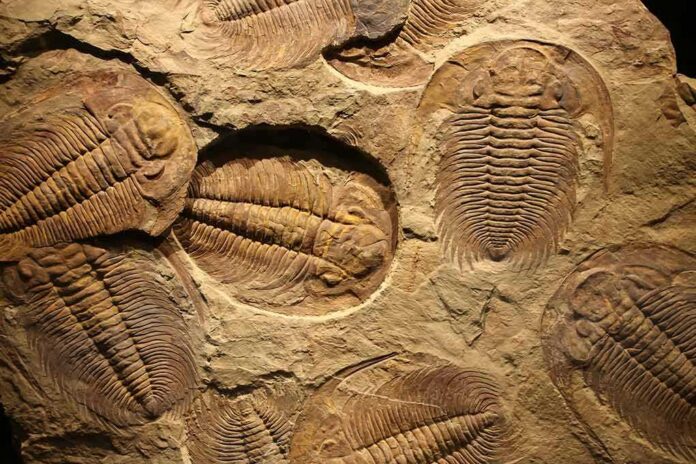
A new study says the first animals may have appeared up to 200 million years earlier than scientists have long believed, pushing their origin back to between 800 and 700 million years ago.
Story Snapshot
- A study in Science Advances moves the estimated start of animal life back about 200 million years, to 800–700 million years ago.
- Researchers reached this number by using older fossil deposits, dated 850 to 730 million years ago, instead of younger fossil sites to set their molecular clock.
- An international team, including Yale paleontologist Derek Briggs, built the findings on new fossils, known fossil sites, and chemical traces of ancient life.
- The proposed date still comes 100 to 200 million years before the oldest animal fossils scientists can clearly identify.
Study Pushes Animal Origins Deeper Into Earth’s Past
A study published October 2 in Science Advances argues that animals evolved far earlier than their oldest confirmed fossils suggest. Researchers found that switching to older fossil calibration points moved the estimated origin of animal life back by about 200 million years, landing somewhere between 800 and 700 million years ago.
Yale News describes the work as coming from “an international group of researchers, including a renowned Yale paleontologist,” pointing to Derek Briggs as part of the team. The study combined newly found fossils with a fresh look at well-known, well-preserved fossil sites around the world, plus recent chemical evidence of early animal activity.
How Scientists Set the New Timeline
Molecular clocks work by comparing differences in living species’ DNA, then using known fossil ages as anchor points to calculate how long ago two groups split apart. This study anchored its clock to fossil deposits dated 850 to 730 million years old, instead of younger, commonly used sites. That single change shifted the calculated origin point deep into the Neoproterozoic Era, possibly before some of the harshest ice ages in Earth’s history.
The pick of which fossils to use as anchors matters a lot. Scientists have pointed out for years that molecular clocks “consistently indicate” animals began diversifying tens of millions of years before the fossil record shows clear proof of them. Early versions of this method even suggested animal ancestors existed as long as 1.2 billion years ago, before newer models brought that number down.
A Long-Running Gap Between Clocks and Fossils
This new estimate fits a pattern that has shaped evolutionary biology for decades. Scientists have long debated whether molecular clocks run too fast, whether fossil calibration points are too conservative, or whether the fossil record is simply missing huge stretches of early animal life. The gap between when molecular clocks say animals began and when clear fossils show up has never fully closed, and this study adds a new data point to that ongoing puzzle rather than settling it.
Even with the new estimate, the paper leaves a wide stretch of time unaccounted for. Yale News notes the proposed origin falls “100 to 200 million years or more before the first recognizable fossils” of animals. That gap means no one has found a confirmed animal body fossil from the newly proposed window. The claim rests on calculations built from fossil-anchored models, not a direct fossil discovery from 800 to 700 million years ago.
Researchers studying ancient biology have long known that the choice of fossil calibration points can swing results by hundreds of millions of years. That sensitivity is exactly what drove this study’s headline number, and it is likely to keep fueling debate among scientists who study how and when the first animals appeared on Earth.
Sources:
sciencedaily.com, news.yale.edu
© truetrendnews.com 2026. All rights reserved.