
U.S. immigration officers quietly put a suspected Liberian warlord on a one-way flight home after nearly 20 years in America, underscoring how civil tools can decide life-or-death human rights cases without a criminal trial.
Story Snapshot
- ICE said it deported Amos Sheik Massaquoi to Liberia on August 11, 2026.
- Agents allege he ordered killings, torture, forced labor, and child-soldier recruitment.
- He entered legally in 2006, overstayed, and was ordered removed by a judge in 2025.
- Public records do not show a U.S. criminal conviction tied to the alleged war crimes.
What ICE Says Happened and Why It Matters
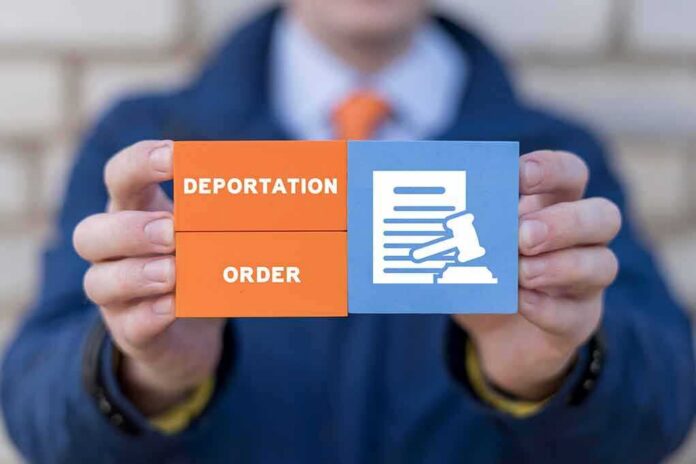
U.S. Immigration and Customs Enforcement said it removed Amos Sheik Massaquoi to Liberia on August 11, 2026, after years in the United States. The agency stated it believes he ordered and joined in killings, torture, arbitrary arrests, forced labor, and recruiting child soldiers during Liberia’s civil wars. ICE said he legally entered the country in August 2006 but overstayed his authorized stay. An immigration judge ordered him removed in 2025, which cleared the way for deportation.
ICE also linked Massaquoi to a leadership circle under Major General Daniel Chea, tied to Charles Taylor’s National Patriotic Front of Liberia, which fought in brutal phases of the conflict. That positioning adds gravity to the government’s claims, even as the public record is lean. The agency’s human rights mission has long relied on civil immigration tools to remove suspected abusers when criminal evidence is hard to gather across borders and decades. The result is swift action, but thin transparency for the public.
The Process Used: Civil Tools, High Stakes
Immigration law allows the government to remove a person who violates visa terms, even without a new criminal charge. ICE commonly uses that track to expel suspected human rights violators, especially when witnesses fear reprisals or evidence sits overseas. Past cases show the pattern: the agency has removed dozens of Liberian figures alleged to have used child soldiers or overseen abuses, based on immigration violations decided by judges in civil courts. Supporters see necessary action; critics see opaque process.
That gap shapes public trust. The Fox report cites ICE’s allegations but does not publish the immigration judge’s order, the case file, or witness statements. The lack of accessible records leaves two competing instincts. Some readers trust the government’s vetting and want the U.S. to deny safe harbor to alleged war criminals. Others worry that life-altering decisions can rest on secret files, old memories, and limited defense options. Both reactions are predictable in cross-border human rights enforcement.
Allegations, Denials, and Liberia’s Accountability Problem
The report describes sweeping allegations but lists no specific incidents, victims, or dates beyond the civil-war period. In other Liberia-linked cases overseas, courts have acquitted defendants after prosecutors failed to prove presence or identity beyond a reasonable doubt. Those acquittals, while not about this deportation, show how hard it is to fix facts from wars fought decades ago, with witnesses scattered and records missing. Deportation uses a lower standard than a criminal conviction.
🇺🇸🇱🇷 ICE says it sent a Liberian civil-war fighter home after he spent almost 20 years in the U.S..
They named Amos Sheik Massaquoi, 55.
They say he was a bodyguard for a Charles Taylor general and is tied to killings, torture, forced labor, and child soldiers from the 1989 to… pic.twitter.com/ZsIbiw5cHr
— Mario Nawfal (@MarioNawfal) September 18, 2026
Liberia still struggles to prosecute past war crimes at home, so deportations and foreign trials fill the gap. That leaves the U.S. in a tough spot: act on credible intelligence and remove suspects, or risk giving safe haven. Many Americans across the political spectrum see another problem, too. When cases hinge on files the public cannot see, they fear powerful institutions make unreviewable calls. That fuels the wider belief that the system answers to elites more than to citizens.
What to Watch Next
Key questions remain. Did the immigration court rely on human rights grounds, or only the visa overstay? Will any records be released that show how investigators linked Massaquoi to the alleged acts? Could Liberia or another country bring a criminal case with open evidence and named victims? Answers will show whether this removal marks a step toward justice or only a transfer of risk from one system to another. For now, the paper trail the public can see is brief.
Sources:
foxnews.com, iconocast.com, bbc.co.uk, judiciary.uk, bbc.com
© truetrendnews.com 2026. All rights reserved.