
For the first time, a polarizing Harvard alien hunter claims he’s leading a White House-backed UFO science council — and Washington’s silence is raising new questions about who really runs the show.
Story Snapshot
- Harvard astrophysicist Avi Loeb says the White House and top agencies asked him to chair a new UFO science council.
- The council’s members are real high-level experts, but there is no public government record that the council itself exists.
- Loeb’s alien technology theories thrill some and alarm many scientists, making his new role highly controversial.
- The fight over this council taps into wider fears that elites and secretive agencies hide the truth from the public.
A UFO Council With No Paper Trail
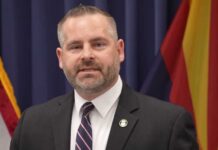
Harvard astrophysicist Avi Loeb now says the White House, the Pentagon’s anomaly office, the Office of the Director of National Intelligence, and the Federal Bureau of Investigation asked him to set up and lead a new Unidentified Anomalous Phenomena Science Advisory Council. He describes the panel as a group that will study strange UFO data using standard scientific methods and advise the Trump administration on national security risks and possible origins. On paper, this sounds like a formal government body. In practice, things look murkier.
Investigative coverage notes that Loeb named eleven council members on his personal blog on June 13, 2026, including well-known scientists and a retired Navy rear admiral who once led a major ocean agency. These people and their careers are real. Yet reporters looking for a federal charter, a listing in the advisory committee database, or any official statement from the agencies he named have found nothing. There is no Federal Register notice, no public memo, and no press release confirming this council exists inside the government.
Who Is Avi Loeb, And Why Is He So Divisive?
Avi Loeb is a respected astrophysicist with a long history at Harvard University, including serving as chair of the astronomy department and launching the Galileo Project to search for signs of alien technology. At the same time, he has made bold claims that split the scientific world. He argued that the interstellar object ‘Oumuamua might be alien technology, even as other researchers published peer-reviewed studies saying it behaved like a natural comet. He has also promoted a deep-sea expedition that he said found material from outside our solar system, which many scientists greeted with strong doubt.
Critics say Loeb’s habit of going straight to the media and the public with dramatic alien claims, instead of waiting for peer review, misleads people about how science works. They argue he often presents opinions as facts and brushes off detailed criticism as jealousy or closed minds. Supporters counter that the scientific establishment is too quick to dismiss anything that hints at aliens and that Loeb is forcing the field to take strange data seriously. This split explains why putting him, or even allowing him, to lead a UFO council feels risky to many on both the left and the right.
A Council Built To Study Orbs — And People
Loeb describes his council as more than a group of astronomers staring at the sky. He says it includes experts in artificial intelligence, psychology, anthropology, communication, and theology, plus a well-known skeptic, Michael Shermer, who often debunks paranormal claims. In recent interviews, Loeb explained that part of the mission is to track not only strange “orbs” in the sky but also how people react when news clashes with their worldview. That means the council is designed to study both the phenomena and the public’s trust and fear.
For Americans who already worry about “deep state” manipulation, that mix may sound unsettling. Many citizens feel elites use psychology and media messaging to steer what people believe about war, pandemics, and now UFOs. At the same time, Loeb insists he will only work with open, unclassified data, not secrets locked in government vaults. He says this protects scientific integrity but admits it also limits what the council can prove, since some of the most dramatic military cases remain classified, out of reach for public review.
Washington’s Long, Uneasy History With UFOs
The United States government has studied UFO reports for decades, usually in secret, and almost always ends by saying the cases are unexplained but not proven to be alien. A 2021 intelligence report to Congress listed 144 military encounters with unknown objects since 2004 and said 143 were of “unknown origin,” while stressing there was no evidence of extraterrestrial technology. Later reviews by the All-domain Anomaly Resolution Office again found no confirmed alien craft, and said most sightings come from misidentified normal objects.
Avi Loeb is considered the RFK Jr of cosmologists/Astronomers appointed to UFO/UAP White House board
Harvard professor with polarizing alien theories is picked to lead new White House UFO councilhttps://t.co/z5A55JLgP3
— PatriceCherie (@kmcpcc) July 1, 2026
Against that backdrop, Loeb’s claim that top agencies quietly asked him to lead a new UFO science council hits a nerve. On one hand, some voters see it as a sign that at least someone in power wants to bring real scientists into the loop and stop brushing off pilots’ reports. On the other, the lack of basic paperwork — no charter, no listing, no confirmation — fits a familiar pattern where important decisions seem to happen off the books. For citizens already angry at a system run by insiders, this only deepens the sense that the rules are different for elites.
What This Means For A Distrustful Public
Many conservatives and liberals now agree on one thing: they do not trust Washington to tell the truth, whether the topic is spending, wars, pandemics, or UFOs. Studies show a slice of the public already believes extreme conspiracy claims about space, science, and hidden plots. When a controversial figure like Loeb announces a powerful role that the government will not clearly confirm, it fuels both hope and suspicion. Some see a chance for honest science to break through; others see another layer of spin.
The real stakes go beyond aliens. They touch basic questions about who gets to investigate major national security issues, who controls classified data, and whether ordinary citizens ever get straight answers. If the council is real but kept vague, it suggests key decisions are made in a gray zone between public and private power. If it is mostly an informal group with government observers, it shows agencies now rely on outside “experts” whose motives and methods are hard for voters to judge. Either way, this episode reinforces a growing belief that the system serves itself first — and the American people only when it has to.
Sources:
military.com, apnews.com, ground.news, pbs.org, facebook.com, aol.com, reddit.com, sites.psu.edu, nature.com
© truetrendnews.com 2026. All rights reserved.