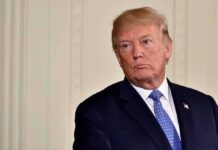

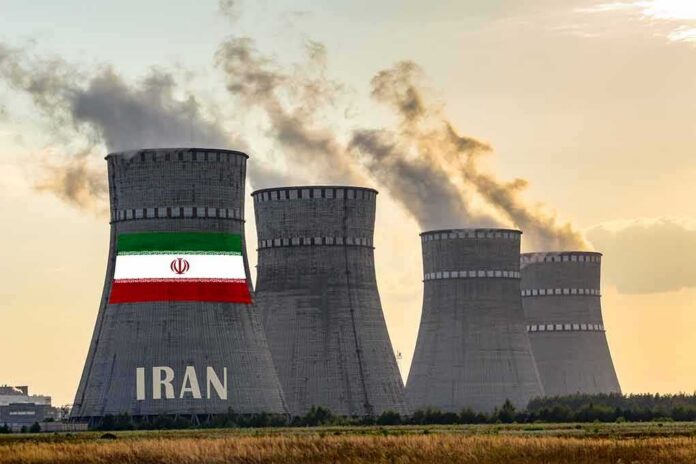
President Trump tied every Iranian attack on shipping in the Strait of Hormuz to a U.S. promise to destroy one bridge or power plant, and he made that threat in public.
Quick Take
- Trump said each ship attack would trigger destruction of “ONE BRIDGE OR POWER PLANT.”
- U.S. officials said the strikes were meant to curb Iran’s threat to commercial shipping.
- Reporters and rights groups described many of the hit sites as civilian infrastructure.
- The record provided does not include released strike orders or target packets for public review.
Trump’s Trigger-and-Response Threat
Trump’s statement was not vague. He said that any Iranian fire on a ship in the strait, by missile, drone, rocket, or other weapon, would bring a U.S. strike on a bridge or power plant. Politico and the BBC reported that he also named bridges and power plants near Tehran, which made the warning easy to understand and hard to miss.
That kind of language matters because it turns deterrence into a public rule. The White House told Politico that the United States would target “military logistics infrastructure,” but the public threat itself used broad terms and a one-for-one formula. That gap between the official legal frame and the public message is now central to how both supporters and critics read the campaign.
Why the Strikes Are Fueling a Bigger Fight
Reuters and the Associated Press said the U.S. campaign aimed to pressure Iran and restore safer shipping through the strait. That is the military case for the strikes. But several outlets also reported damage to bridges, energy sites, a pharmaceutical plant, water facilities, and other objects that serve civilian life, which makes the fight over target choice much larger than a shipping dispute.
That split explains why the story has landed so sharply across the political spectrum. People who distrust distant elites see a government using war language without clear public proof. People worried about civilian harm see the same thing in another way: a powerful state threatening infrastructure that ordinary families depend on. The public record in this package shows both the stated military aim and the reported civilian cost.
The Missing Proof Behind the Legal Argument
The strongest weakness in the U.S. case is the lack of released target-by-target evidence. BBC reporting quotes a White House spokesperson saying the strikes hit military targets, including military logistics infrastructure, but the material here does not include declassified orders, legal memos, or battle-damage reviews for each site. Without that record, outside readers cannot test whether each bridge or power plant met the law-of-war standard the administration claims.
(AP) Iran demands “US must permanently end the war, lift its naval blockade of Iranian ports and withdraw its military from the area. It also must ▶️▶️”completely compensate” Iran for war damage, lift sanctions and “unconditionally” release frozen assets.”
(Comment; NO chance… pic.twitter.com/1D3uZ6H1zu
— Ron Strauss, Esq (@RonStrauss1) August 9, 2026
That absence leaves room for competing stories to harden. Some reports describe the strikes as a lawful effort to degrade maritime threats, while others describe them as attacks on civilian infrastructure that put the United States closer to war-crimes accusations. In practical terms, the result is a familiar one in modern conflict: the side with the loudest public message may still lose the argument over facts that were never fully shown.
Sources:
19fortyfive.com, bbc.com, aljazeera.com, youtube.com, washingtonpost.com, wbaltv.com, npr.org, theguardian.com, nytimes.com
© truetrendnews.com 2026. All rights reserved.