
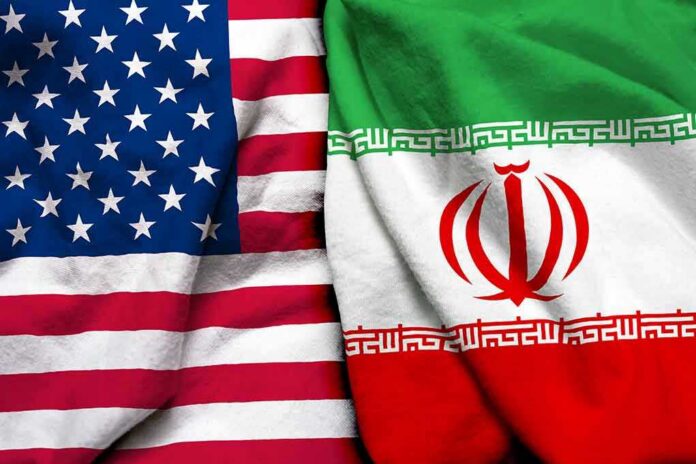
Iran’s president says he will reopen the Strait of Hormuz in seven days if U.S. pressure eases, tying a global energy lifeline to a written deal.
Story Highlights
- Pezeshkian links reopening Hormuz to ending a U.S. blockade and easing military pressure.
- Iran says negotiations can start “the day” Washington accepts the proposal.
- Talks remain far apart as new U.S. sanctions target Iran’s oil network.
- Both sides cite deep distrust even while keeping diplomacy open.
What Pezeshkian Offered And Why It Matters
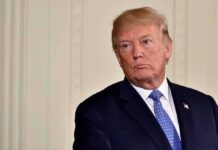
Iranian President Masoud Pezeshkian told CBS that Iran would reopen the Strait of Hormuz within seven days if the United States eased military pressure and lifted a blockade on Iranian ports. He said talks on ending the war, and possibly Iran’s nuclear program, would follow once those steps begin. He framed trust around written promises and said the “process will begin” the day Washington accepts. This offer ties a vital shipping lane to a clear sequence.
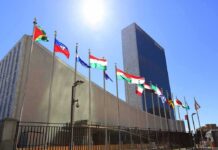
At the United Nations, Pezeshkian repeated that Iran would not surrender to the United States, but he left the door open to talks. He criticized the “language of force” and argued that Iran should benefit from Hormuz if others do. The message used firm lines for home audiences while signaling a path to reduce risk for energy markets and freight. That mix aimed to pressure Washington while avoiding a public climbdown.
Where The Talks Stand Right Now
Shuttle diplomacy in New York showed movement but no deal. An Iranian official said Tehran conveyed conditions through a Qatari mediator. These included ending the war on all fronts, halting U.S. “acts of aggression,” and releasing frozen Iranian assets. Tehran also prioritized lifting what it calls a U.S. naval blockade and reopening Hormuz. Iran said it was reviewing Washington’s response to these ideas. The gap remains wide, but channels are open.
At the same time, the United States imposed new sanctions on a network moving Iranian oil, including ships and companies. The State Department described the target as a “shadow fleet” used to evade sanctions. That action underscores a common pattern in U.S.-Iran crises. Pressure and talks often move together, not in sequence. For Tehran, new penalties during talks feed distrust. For Washington, sanctions are leverage to force compliance.
The Stakes For Energy And Security
The Strait of Hormuz carries a large share of the world’s traded oil and liquefied natural gas in normal times. Even a partial closure can raise fuel prices, rattle supply chains, and strain allied navies. Iran’s seven-day reopening pledge, if real and verified, could calm markets fast. But it rests on steps the United States would need to take first, and on technical and command choices inside Iran. Those details remain only partly public.
9 PM Top-of-the-Hour News
US and Iranian negotiators in New York are in talks about a phased path to ending the war.
It would involve Tehran reopening the Strait of Hormuz as well as Washington lifting an economic blockade of Iran.
Iran wants economic relief while the U.S. wants… pic.twitter.com/hsz8FUY3bm— Worldwide News Network (@WorldwideNNX) September 25, 2026
For Americans, this is not only about foreign policy. Higher fuel and shipping costs hit family budgets, farms, and small businesses. Voters on the right see risk in rewarding a hostile state while U.S. sailors stand guard. Voters on the left see risk in endless conflict that drains money from schools and health care. Many across both camps doubt that elites on either side of this dispute will honor any deal once the cameras move on.
Trust And Verification: What We Know And What Is Missing
Pezeshkian says Iran will “abide by what we have written down” and start talks the day Washington accepts the plan. He also says distrust is high and cites continued U.S. pressure as a barrier. The reporting gives pieces of a phased path: ease pressure, reopen Hormuz in seven days, then negotiate war and nuclear issues. But the full text, timelines, inspection terms, and enforcement steps are not public. That gap limits outside confidence.
Reuters and CBS align on core points: Iran rejects surrender, keeps diplomacy open, and links Hormuz to relief from U.S. measures. The United States has not released a matching document with reciprocal terms. Until both sides publish binding texts, the case for trust rests on selective quotes and press summaries. Caution is fair here: name the steps, show the monitors, set snapbacks, and track each action. Without that, politics will fill the silence.
What To Watch Next
Watch for three signs. First, a written framework from both governments that spells out the seven-day reopening and the exact U.S. actions. Second, any third-party verification plan for shipping lanes, port access, and nuclear sites. Third, whether sanctions pauses match security de-escalation. If even one of these shows up, risk falls fast. If none appear, expect more speeches, more sanctions, and a tighter squeeze on energy and household costs.
Sources:
cbsnews.com, reuters.com, cnbc.com, tbsnews.net
© truetrendnews.com 2026. All rights reserved.