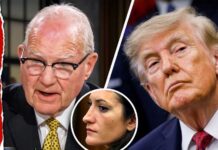

Senators pressed Secretary of State Marco Rubio on wartime policy while fragmented records and clip-driven narratives risk confusing Americans about what was actually said and what the administration is doing.
Story Snapshot
- Rubio’s Senate testimony is confirmed in official records tied to his role and prior committee appearances, but the Iran-hearing transcript is not included in the available materials [2][3].
- Verified committee material shows Rubio outlining specific sanctions policy mechanics in another regional context, underscoring his willingness to detail concrete tools, not slogans [1].
- The Foreign Relations Committee’s Venezuela hearing page confirms recent full-committee oversight under Rubio’s watch as Secretary of State [3].
- Third-party videos and headlines risk mislabeling hearings, fueling confusion during a live war environment [1][4][5][7].
What Is Verified About Rubio’s Role And Record
Senate documentation and committee materials confirm Marco Rubio as the Secretary of State appearing before the Senate Foreign Relations Committee, including his confirmation-hearing opening remarks preserved as an official Senate record [2]. A separate full committee hearing page confirms a January 28, 2026 session on United States policy toward Venezuela, listing the Secretary of State as witness, which establishes the institutional context for his recent testimony practice and reinforces his standing as the administration’s lead diplomat before Congress [3].
Video transcripts and coverage show Rubio discussing specific policy instruments during committee testimony, including sanctions licensing and ensuring oil proceeds benefit the Venezuelan people rather than propping up a prior abusive system [1]. That granular explanation indicates his readiness to defend targeted, conditional pressure tools rather than defaulting to broad rhetoric. While this example concerns Venezuela, it demonstrates an approach—calibrated leverage, human-centered outcomes—that can inform how the administration communicates on Iran and other regional flashpoints [1].
Where The Record On The “Iran War” Hearing Falls Short
The supplied research package does not include the official transcript, hearing docket number, or a Senate-published page for the specific Iran-related testimony that some social clips describe. Without those identifiers, it is not possible to quote Rubio’s exact Iran-policy statements from the witness table or verify precise exchanges between senators and the Secretary of State. As a result, any claim about what he “said on Iran” in that setting would be inference, not documentation, in this record set [1][3][4][5][7].
This gap matters for accountability. Conservatives expect transparent oversight when American lives, energy prices, and deterrence are on the line. Clip compilations and commentary often blur the distinction between separate hearings, producing a mash-up that looks like a single event. The result is confusion that benefits entrenched bureaucracies and foreign adversaries. Accurate assessment requires the formal committee transcript and the prepared opening statement for the specific Iran session, neither of which appear in the provided sources [1][3][4][5][7].
Why This Matters For Conservative Priorities
Clear records protect constitutional oversight and keep foreign policy tethered to national interest, not media spin. When hearings are mislabeled, it becomes harder to judge whether the administration is defending American deterrence, safeguarding the homeland, and preventing mission creep that drains the treasury. Rubio’s verified testimony on sanctions mechanics in the Venezuela context shows a preference for targeted economic pressure that aims to help people without enriching hostile regimes—a principle conservatives favor when confronting terror sponsors and their proxies [1][3].
During wartime, Congress must evaluate whether sanctions, interdictions, and security assistance are aligned with achievable objectives and backed by clear rules of engagement. For citizens facing high energy costs and inflation, the stakes are practical: bad policy raises prices and emboldens adversaries. The administration owes the public a clean paper trail—hearing notice, roster, transcript, and written responses—so Americans can separate firm policy from theatrical posturing. Until that record is surfaced, caution is warranted in drawing conclusions from standalone clips [1][3][4][5][7].
What To Watch Next
Watch for the Senate Foreign Relations Committee to post the full Iran-hearing transcript and Rubio’s prepared statement. Look for specific details: how sanctions are sequenced, how violations are enforced, what guardrails exist against cash flows to terror networks, and how regional deterrence is coordinated with allies without surrendering American sovereignty. Those are measurable benchmarks conservatives can use to judge whether the administration is matching strong words with verifiable actions while respecting limits, accountability, and the Constitution [2][3].
Sources:
[1] YouTube – LIVE: Marco Rubio testifies before Senate for the first time since the …
[2] YouTube – Secretary Rubio testifies before the Senate Committee on …
[3] Web – Marco Rubio SFRC Confirmation Hearing Opening Remarks
[4] Web – [2026-01-28] U.S. POLICY TOWARDS VENEZUELA – Hearing
[5] YouTube – Secretary of State Marco Rubio testifies before Senate …
[7] Web – Marco Rubio Confirmation Hearing Secretary of State
© truetrendnews.com 2026. All rights reserved.