
As U.S. jets pound Iran for a ninth straight night, the line between defending American lives and sliding into a wider war is growing dangerously thin.
Story Snapshot
- U.S. forces are hitting Iran nightly after attacks on ships and bases around the Strait of Hormuz.
- Iran has answered with missile strikes across the Gulf and claims the strait is closed to U.S. vessels.
- Both sides say they are protecting civilians, yet commercial crews and U.S. troops keep dying.
- Critics warn the campaign risks a forever war driven by elites while ordinary Americans pay the price.
What Triggered Nine Nights of U.S. Strikes
United States Central Command says this latest wave of attacks began after Iranian forces struck several commercial ships moving through the Strait of Hormuz, including the Cyprus-flagged container ship M/V GFS Galaxy and the MV Helios Ray. U.S. officials describe these hits as clear attacks on civilian mariners using an international waterway that carries a large share of the world’s oil and gas trade. This message is aimed at allies and markets as much as at Iran’s leaders.
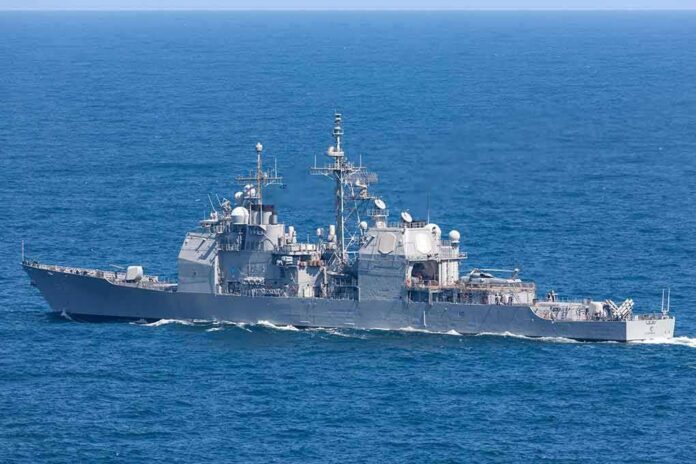
Iran’s leadership tells a very different story. The Islamic Revolutionary Guard Corps claims some shots were “warnings,” saying at least one ship had shut off identification and communication systems and ignored orders. Tehran has also declared the Strait of Hormuz closed to U.S. vessels, insisting that no ship can pass without Iranian permission. That claim clashes with U.S. statements that the strait remains open, even as American warships avoid direct transit due to high risk.
How the Air War Is Being Fought
The U.S. military says its goal is to “degrade” Iran’s ability to attack ships and bases, not to invade the country. Over several nights, U.S. strikes have hit coastal defense systems, air defense sites, drone and missile storage, radar stations, and naval facilities along Iran’s southern coastline. Central Command reports that more than 300 targets have been struck in three nights of operations, in addition to earlier waves that hit at least 80 targets in a single four-hour mission.
These attacks fit a longer campaign pattern. Since early 2026, U.S. operations like Operation Epic Fury have hit hundreds of Iranian military sites, drone carriers, and command centers after Iran fired missiles and drones at U.S. positions and partners. Analysts say Washington is trying to make it too costly for Iran to harass shipping or threaten bases without launching a full-scale ground war. Still, the sheer number of strikes and the spread of targets deeper inside Iran make both supporters and critics worry about mission creep.
Iran’s Response and Civilian Cost
Iran has answered the strikes with its own missile and drone attacks across the Gulf. Iranian officials say they have targeted U.S. bases in Kuwait, Bahrain, Qatar, and Jordan, and have struck tankers and other shipping near Oman and in Gulf waters. State media in Iran has reported damage near a nuclear power plant in Bushehr, raising fears that military action is brushing up against sensitive civilian infrastructure. Regional governments are nervous about blasts near energy hubs and cities.
Ordinary people are being caught in the middle. Reports say at least two U.S. service members were killed in Jordan, triggering one major round of punitive strikes. Other outlets describe three Indian sailors killed when a tanker accused of breaking the U.S. blockade was hit by American fire, and Omani authorities evacuating injured crew from another damaged vessel. These deaths undercut official claims on both sides that they are mainly targeting “military capabilities” while keeping civilians safe.
Deep State Fears, Media Spin, and a Blockade That Feels Like Control
Many Americans watching from home see something familiar and troubling. The federal government says it is defending “freedom of navigation,” yet it has imposed a naval blockade on Iranian ports and is even floating ideas like charging a 20% toll to guard the Strait of Hormuz. To citizens who already feel squeezed by high prices and endless wars, that can look less like protection and more like powerful elites turning a crisis into leverage and profit.
Major news outlets frame the strikes as risky escalation, stressing the danger of drifting into a larger regional war and questioning whether the response is truly proportional. A CNN analyst has blasted the Trump administration’s approach as “hubris,” arguing that Washington is charging ahead without deep understanding of Iran or the region. That critique echoes the frustration of both conservatives and liberals who feel the people running foreign policy rarely admit past mistakes and almost never pay the personal price for them.
Why This Matters for Americans Who Feel Shut Out
The Strait of Hormuz crisis fits a decades-long pattern. Iran uses pressure on shipping to push back against U.S. power and to win attention at the bargaining table, while the United States answers with airstrikes to keep oil flowing and protect its forces. Today’s tit-for-tat strikes follow the same script seen since the “Tanker War” of the 1980s and more recent flare-ups in 2019 and 2024. The names of the operations change, but the basic logic stays the same.
For many Americans, that is the real worry. They watch nine nights of strikes turn into talk of more waves, more blockades, and more “degradation” campaigns, all while wages lag, prices rise, and political leaders focus on global games instead of problems at home. People on the right see more debt and foreign entanglements; people on the left see more money for bombs than for schools and health care. In both cases, the sense grows that a small circle of decision-makers is steering the country toward another long war, while the American Dream slips further out of reach.
Sources:
cnbc.com, npr.org, washingtonpost.com, usatoday.com, nytimes.com, en.wikipedia.org, reuters.com, cnn.com, aljazeera.com, apnews.com
© truetrendnews.com 2026. All rights reserved.