
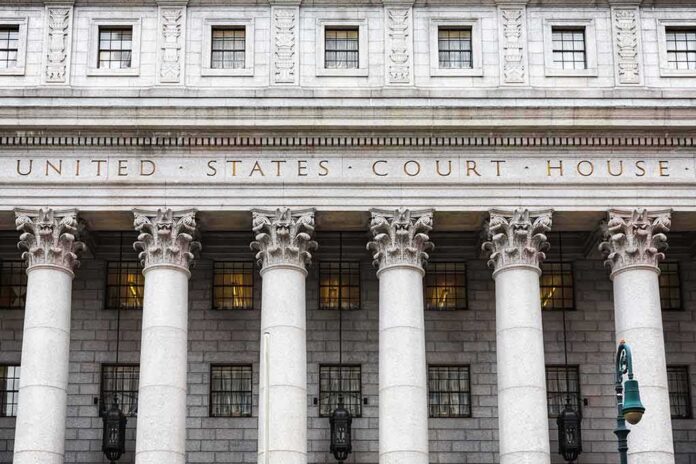
A federal judge temporarily blocked the Postal Service from enforcing new mail-voting rules for the 2026 elections, warning the agency not to upend voting plans weeks before ballots go out.
Story Snapshot
- A preliminary injunction limits the Postal Service from enforcing parts of a new mail-voting rule for 2026 elections.
- States and voting-rights groups say the rule would force rushed overhauls and risk disenfranchising voters.
- The Postal Service says the changes would improve ballot tracking and reduce fraud while leaving eligibility to states.
- Courts signaled concern that the agency moved ahead despite prior orders, keeping litigation active before November.
What the Court Did and Why It Matters
A federal court issued a preliminary injunction that stops the United States Postal Service from implementing key parts of a mail-voting rule tied to a 2026 executive order by President Trump, at least for the coming midterm elections. The ruling focuses on preventing last-minute changes that could disrupt how states plan, print, and process ballots. The judge’s order does not finally decide the rule’s legality. It pauses the most disruptive parts so November’s elections can proceed with fewer surprises.
Litigants said the final rule would force sweeping changes on a tight clock. They argued it would require states to build or supply new lists of all mail voters and push that data into a new Postal Service system before ballot mailings begin. Wisconsin’s filing said the rule would make states send a list of mail-in voters 60 days before the election and place every eligible mail voter in a new Postal Service database, which they called unworkable and risky.
What the Rule Would Change
The Postal Service rule would standardize ballot envelopes, require official Election Mail markings, and use a unique barcode to track both outbound and return ballot envelopes nationwide. Supporters say this creates a consistent system to count how many ballots were sent and compare that with how many came back, which could flag mail problems or possible fraud for review. The agency says it would keep only exterior envelope data and would not open ballot envelopes or record party affiliation.
The Postal Service and allied state officials argue the changes would reduce weak links in the mail chain. They say common standards and tracking could cut errors and improve trust without letting federal officials decide who can vote. They also say voter eligibility remains a state decision, not a federal one, even under the new system. That view frames the rule as logistics, not policy. It aims to secure mail flow and documentation rather than to set voter rules.
Why States and Advocates Object
States led by California’s attorney general said the final rule invades state control over elections, violates federal privacy and voting laws, and would harm this year’s planning and voter access if it took effect now. Their filings say states would have to rebuild systems, reprint materials, and redo training close to Election Day. Voting-rights groups likewise claim the rule would force rushed changes that could slow ballot mail, confuse voters, and raise the chance that eligible ballots do not count.
TRUMP'S MAIL-VOTING ARCHITECTURE (EO 14399, as unlocked Aug 24–26, 2026)
Summary
DHS creates a new federal citizenship-reference layer.
DOJ attaches potential enforcement consequences to how state officials respond to it.
USPS independently creates a voter-linked ballot-mail…— Thomas Paine Alliance 4 Environment & Equality (@JeffersonianAll) August 27, 2026
Reuters reported that a judge said the Postal Service appeared to act against a prior order when it issued the rule, though the court at one point declined to block it immediately while considering next steps. That back-and-forth shows how complex this fight has become. It also shows why many Americans across the spectrum are frustrated. Agencies move fast. Courts issue mixed rulings. Election offices get squeezed in the middle while voters just want a clear, fair process.
What This Means for Voters and Trust
For now, election officials can keep using their current mail-ballot playbooks while courts sort the case. That should reduce last-minute changes to envelope designs, tracking systems, and voter data sharing. It does not end the debate over how to balance security, privacy, speed, and access. The next rulings could shape mail voting far beyond 2026. Clear rules, enough lead time, and transparent communication will matter most for public trust this fall.
Sources:
aclu.org, cpr.org, axios.com, reuters.com, oag.ca.gov, abc7.com
© truetrendnews.com 2026. All rights reserved.