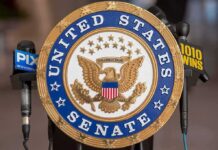


At a Detroit front-yard press conference, Mike Rogers rolled out “Democrats for Rogers,” turning a few defections into a statewide headline about party cracks.
Story Snapshot
- Rogers staged a Detroit event to showcase Democrats backing him over Abdul El-Sayed.
- The coalition is small, but the campaign aims to signal broader appeal beyond Republicans.
- Polling still shows most Democrats sticking with El-Sayed, tempering realignment claims.
- Both campaigns held dueling press events to frame momentum after a divisive primary.
Rogers Courts Democratic Defectors in Detroit
On August 20 in Detroit, Republican Senate nominee Mike Rogers gathered a handful of self-identified Democrats who said they would vote for him over Democrat Abdul El-Sayed. Rogers’ team branded the effort “Democrats for Rogers” and used the press event to claim crossover momentum after the Democratic primary. Detroit News noted the event was staged in a Detroit home’s front yard to highlight these defections and to project bipartisan appeal heading into November.
Michigan Advance reported the coalition “currently consists of a small group,” naming outgoing state Representative Karen Whitsett, attorney Chelsea Rebeck, and Rabbi Asher Lopatin. The report framed the move as tactical, designed to exploit fresh divisions among Democrats after a tense primary. The small size matters, but the optics can be potent in a close race. Campaigns often use a few high-visibility supporters to imply wider support that polling must later confirm.
El-Sayed Pushes Party Unity Message
Abdul El-Sayed’s campaign responded with its own show of strength. His team held a Detroit press conference with Michigan Democratic Party chair Curtis Hertel and former candidate Mallory McMorrow to rally Democrats behind the nominee. National coverage also said Democrats were moving to unify after the primary, suggesting party leaders want to shut down the defection storyline before it spreads beyond a symbol into a trend that shapes turnout or persuades swing voters.
CNN earlier described Rogers’ outreach as a direct pitch to Democrats after a bruising primary, not as proof of a broad shift. That description fits a common pattern in tight races: seize news cycles with cross-party moments, hope to attract independents, and force the opposing party to spend time on defense. Both sides are racing to define what these defections mean before early voting and mail ballots fix opinions.
Polling Signals Versus Headline Optics
A Fox News survey found El-Sayed still holds support from ninety-one percent of Democrats, which undercuts claims of mass defection. The same coverage said his strength was highest among Democratic Socialists of America-aligned voters, while support slipped among non-affiliated Democrats and independents. That mix suggests Rogers’ “Democrats for Rogers” brand may speak to a narrow slice, while the larger Democratic base remains in line for now.
Mike Rogers touts Democratic defectors turned off by El-Sayedhttps://t.co/DjhcT3Te4g
This el-sayed is a dangerous snake. Be careful!
— HS Teo (@Thuas888) August 20, 2026
El-Sayed’s camp also tried to reset the narrative by attacking Rogers’ record in a separate press push, calling him corrupt and costly. That approach aims to harden partisan loyalty and make crossing over feel risky or wasteful. In modern campaigns, a few defections can draw big attention, but real voter movement shows up in sustained polling shifts or precinct-level swings, not only in press events or viral clips.
Why This Matters Beyond One Event
Michigan’s Senate race sits in a country where many voters on both sides feel let down by Washington. Cross-party endorsements feed that mood by saying, “we can break the script.” The tactic can reach independents, union households split on cultural fights, and older voters tired of elite games. Yet history shows these moments are often more signal than stampede. Voters will watch for concrete plans on costs, safety, and jobs, not just podium optics.
What to Watch Next
Watch whether “Democrats for Rogers” grows beyond a few names and whether El-Sayed’s unity push holds through debates. Track new polls for movement among independents and non-aligned Democrats, not just overall partisan loyalty. Monitor whether both campaigns focus on everyday pain points—prices, energy, health costs, and trust in government—or drift back to labels that many voters now tune out. If numbers shift, the story becomes realignment; if not, it was a messaging win, not a map-changer.
Sources:
twitchy.com, detroitnews.com, michiganadvance.com, cnn.com, finedayradio.com, abdulforsenate.com, michigandems.com, ifapray.org, nypost.com
© truetrendnews.com 2026. All rights reserved.