
A U.S. Air Force B-2 Spirit stealth bomber fired a Long Range Anti-Ship Missile and helped sink the ex-USS Juneau during Valiant Shield 2026, showing the bomber can now strike warships at sea.
Story Highlights
- Pacific Air Forces confirmed a B-2 launched a Long Range Anti-Ship Missile during a live-fire drill.
- The target ship, the decommissioned USS Juneau, was sunk north of the Mariana Islands.
- The event marks the first public acknowledgment of B-2 anti-ship strike capability.
- The test signals longer-range sea denial options in the Western Pacific.
What the military did in the Pacific drill
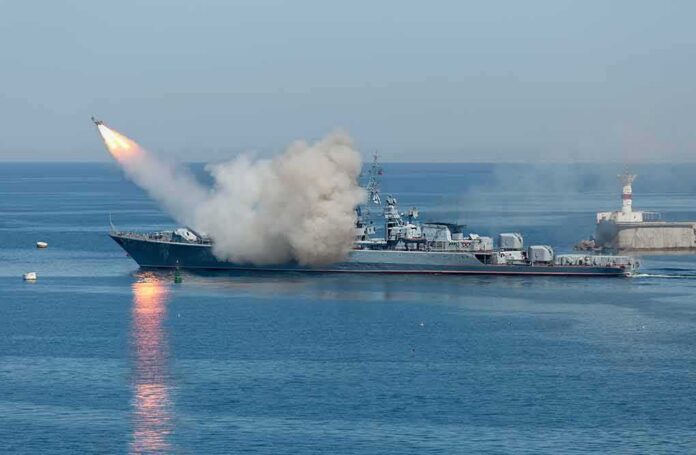
Pacific Air Forces said airmen and sailors ran a live-fire sinking exercise north of the Mariana Islands on June 27, 2026. A B-2 Spirit launched a Long Range Anti-Ship Missile at the decommissioned amphibious transport dock USS Juneau during Exercise Valiant Shield. The missile strike was part of a larger, coordinated attack that ended with the ship on the seafloor. The command framed the event as proof the force can hit maritime targets while staying outside threat range.
Stars and Stripes reported the Juneau sank about 200 miles from Guam after multiple live-fire strikes during the exercise. The sequence included shots by allied and U.S. forces before the ship went down. The report matched the timeline of the Pacific Air Forces statement and placed the action in the Philippine Sea. The location matters because it sits along key sea lanes that would be central in any major Indo-Pacific crisis.
Why the B-2 and Long Range Anti-Ship Missile pairing matters
The Air Force’s public confirmation marks the first time it has said the B-2 can employ the Long Range Anti-Ship Missile. Aviation outlets highlighted that this links a stealthy, penetrating bomber with a sea-skimming, autonomous, ship-killing weapon. That pairing gives commanders another way to hold distant naval targets at risk without sailing a carrier into missile zones. It also spreads launch options across platforms, which complicates any rival’s defense planning.
Defense reporting noted the demonstration fits a pattern seen in past Valiant Shield events. Controlled sink exercises validate how sensors, aircraft, and weapons link up, while sending a signal to potential foes. The Air Force and partners have used these drills to show they can find, track, and hit moving ships under real conditions. Public releases confirm the event, but technical details like loadouts and tactics remain classified for obvious reasons.
What this means for deterrence and taxpayers
Army Recognition said the live-fire launch occurred alongside other aircraft, including the F‑15E, showing a layered strike picture. That matters for deterrence because it suggests overlapping ways to close sea lanes if needed. For citizens watching budgets and mission creep, the point is simple: one bomber now offers both land-attack and maritime strike from long range. That may reduce risk to ships and crews, but it also raises pressure to maintain costly stealth fleets.
A B‑2 Spirit from the 509th Bomb Wing launched an AGM‑158C LRASM during a live-fire SINKEX on 27 June 2026, striking the ex‑USS Juneau in the Philippine Sea.The equivalent model is Chinese 071 Yuzhao LPD. AGM‑158C LRASM can be loaded onto B-1B,B-2, F/A-18E ,F-35A,B,C n B52H pic.twitter.com/kMMLovyZag
— Gustaf Van Martin (@GustafVanMartin) August 15, 2026
For readers across the political spectrum, this drill cuts both ways. Supporters of a strong military see a clear win: more options to keep American and allied ships safe. Skeptics worry about open-ended spending and the risk of miscalculation near contested waters. Both groups can agree on this: Washington must show results and discipline. If leaders claim new power, they must also show a plan that protects troops, avoids waste, and reduces the chance of war by mistake.
Sources:
19fortyfive.com, sofx.com, armyrecognition.com, taskandpurpose.com, reddit.com, migflug.com
© truetrendnews.com 2026. All rights reserved.