
A judicially authorized federal search at Rep. Ilhan Omar’s home shows investigators had evidence to justify looking—but not proof of a crime.
Story Snapshot
- Justice Department said agents executed a judicially authorized search tied to a criminal probe.
- Homeland Security Investigations led the search, signaling an immigration-focused inquiry.
- No charges were announced, and the warrant affidavit remains sealed.
- Omar called the search political targeting and vowed to keep speaking out.
What Officials Confirmed About The Search
The Department of Justice said on October 12 that agents executed a judicially authorized warrant at a Washington, D.C.-area residence connected to Representative Ilhan Omar as part of an ongoing criminal investigation. Officials confirmed that the warrant had been approved by a judge, which means investigators met the legal standard to search. The statement did not describe the suspected offense, evidence sought, or who is a target. No charges were announced at that time.
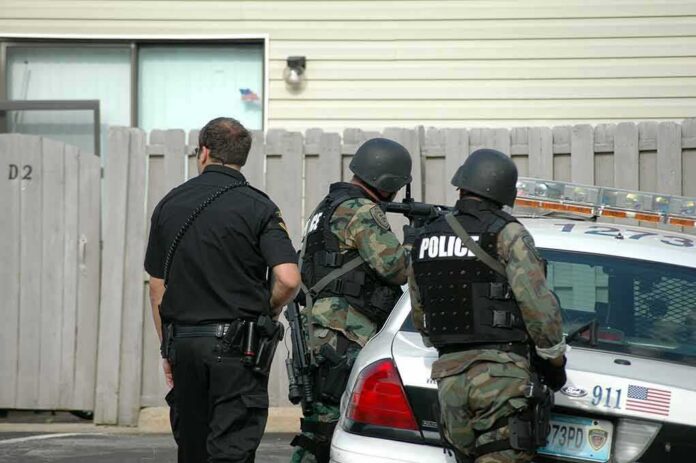
Homeland Security Investigations carried out the search. That agency is the investigative arm that often handles immigration, customs, and related document cases. Reporting the same day, citing officials familiar with the matter, linked the inquiry to immigration paperwork from Omar’s childhood that was reportedly completed by her late father. Those details, while specific, came from unnamed sources rather than public filings or affidavits.
What Is Known Versus What Is Alleged
A judge’s approval to search is not proof of guilt. A search warrant requires probable cause that evidence of a crime may be in a place. It does not decide whether a crime happened or who did it. Here, the public has not seen the affidavit, the list of items seized, or a case number. Without those records, claims about marriage fraud or broader schemes remain unproven in the public domain. Reporters also stressed that no charge had been filed.
Some outlets tied the inquiry to long-running claims about Omar’s family and past marriage history. Prior fact checks reported no hard evidence that Omar committed immigration or marriage fraud. County records did not show that she was legally married to two people at the same time. Earlier this fall, a congressional watchdog also dismissed separate financial-disclosure allegations after a review, according to Omar’s office and news reports.
Omar’s Response And The Political Backdrop
Omar said the search was an attempt to weaponize law enforcement against a critic of President Trump and called it abuse of power. Her office released a statement accusing the government of political targeting. She also said she would not be silenced and would keep doing her job. Those are claims from Omar and her staff; the Justice Department has not commented on motive beyond confirming the search and the ongoing probe.
The timing adds heat. The search arrived late in an election cycle and involved a high-profile lawmaker often attacked by the White House. That invites a familiar split: some see a proof point for misconduct, others see political retaliation. Both reactions thrive when official details are scarce. Limited disclosure by the Department of Justice and Homeland Security Investigations creates space for rumors, which can drown out facts until records are unsealed or charges are filed.
How To Read This Moment Without The Spin
Separate three questions. First, did agents have legal grounds to search? Yes, a judge signed the warrant, which meets the search standard. Second, did the alleged conduct occur? Unknown; the public record does not include affidavits, exhibits, or charges. Third, was the timing or rollout improper? That is a policy and ethics question that needs more facts. Until more documents appear, firm answers on guilt or political abuse are premature for anyone, right or left.
Why This Matters For Trust In Government
People across the spectrum feel that elites bend rules while citizens face a different system. A clear paper trail can cut that cynicism. Unsealing the warrant, inventory, and any future filings would show what agents looked for and why. If the case is solid, sunlight builds confidence. If it is thin, sunlight exposes overreach. Either way, transparency helps everyone judge claims on evidence, not on tribal loyalty or social media noise.
What To Watch Next
Watch for a motion to unseal the warrant affidavit and the return listing seized items. Look for any filing that names statutes under review and the assigned prosecutors. Track whether the Department of Justice announces charges, resolves the matter quietly, or refers it elsewhere. If Congress seeks answers, sworn testimony from investigators could clarify scope. Until then, avoid jumping from “search” to “guilt” or from “dispute” to “witch hunt” without documents to back it up.
Sources:
cnbc.com, fox9.com, yahoo.com, san.com
© truetrendnews.com 2026. All rights reserved.