

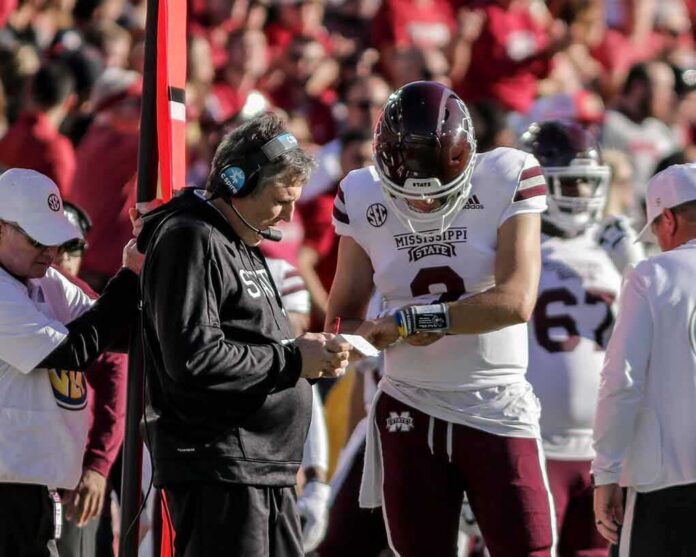
A live mic caught Steelers quarterback Aaron Rodgers and head coach Mike McCarthy trading profanities during a stalled play call, and McCarthy later apologized for his words.
Story Snapshot
- Broadcast audio picked up Rodgers yelling to “call it,” then cut to McCarthy mouthing a profanity.
- McCarthy apologized after the game and called it heat-of-the-moment communication.
- Coach–quarterback flare-ups are common in the National Football League under time pressure.
- The exchange fed a media cycle that focused on language over the play-calling issue.
What Happened On The Field
Midway through the first quarter in Cleveland, the Pittsburgh offense waited on a play call near the red zone. Cameras showed Aaron Rodgers looking to the sideline and yelling, “What the f—? Call it!” toward the bench. The broadcast cut to head coach Mike McCarthy, who appeared to mouth an insult back. The moment unfolded on national television and spread fast online after the 27–24 loss to the Browns.
Postgame questions pressed both men on the exchange. McCarthy acknowledged his language and said he wished he had chosen better words. He framed it as part of game-day intensity, not a personal attack. Reports described the back-and-forth as brief and tied to a slow play call during a long opening drive. Neither side suggested the episode would linger past the night.
Why Tempers Boiled At That Moment
Quarterbacks and coaches race the play clock and crowd noise every snap. When the call comes in late, the quarterback must adjust formations and protections in seconds. That stress makes sharp words more likely, especially during a long drive with scoring on the line. League history shows many similar sideline flare-ups that pass quickly once the drive or game ends, even if cameras make them look larger than they are.
Several outlets tied this moment to recent communication hiccups between Rodgers and the staff. Broadcast comments noted Rodgers looking to the bench often in earlier games. That pattern sets the stage for irritation when timing slips. Still, the Steelers scored on the drive, which undercuts claims that emotion alone doomed the series. The loss had many causes beyond one hot exchange.
How The Media Cycle Shaped The Story
Television mics and close-up cameras pull private sideline talk into public view. Clips of profanity spread faster than clips of clean execution. Analysts often replay the outburst but skip the technical breakdown of why the call lagged or how headsets and substitutions affect timing. That tilt can leave fans focused on attitude instead of operations that decide games in seconds.
Steelers head coach Mike McCarthy on his sideline exchange with Aaron Rodgers:
"What's said on the field … usually stays on the field. That's not the case today. I understand that….Any negative communication on my part, I wish I wouldn't use those words." https://t.co/ubYSeuJoQN pic.twitter.com/eaTL0kG7mA
— Martin Weiss (@martinweiss) October 2, 2026
McCarthy’s apology added a clear endpoint to this incident. He said the words were not his best and pointed to the heat of competition. That response fits how teams often handle these flashes: acknowledge, correct tone, and move on. For fans across the spectrum who see leaders as unaccountable, the quick apology matters. It shows a standard for conduct, even in a violent, high-speed sport played under bright lights.
What To Watch Next
Watch Pittsburgh’s early-game operations in coming weeks. Faster personnel groupings, quicker headset decisions, and more no-huddle calls could ease strain. Clearer sideline signals can shave seconds and cut risk of delay penalties. If the staff tightens these steps, we may see fewer viral moments and more steady drives. If not, the pattern could return when the clock, the noise, and the stakes all rise again.
Sources:
mediaite.com, espn.com, sports.yahoo.com, cleveland.com, yahoo.com, nytimes.com
© truetrendnews.com 2026. All rights reserved.