

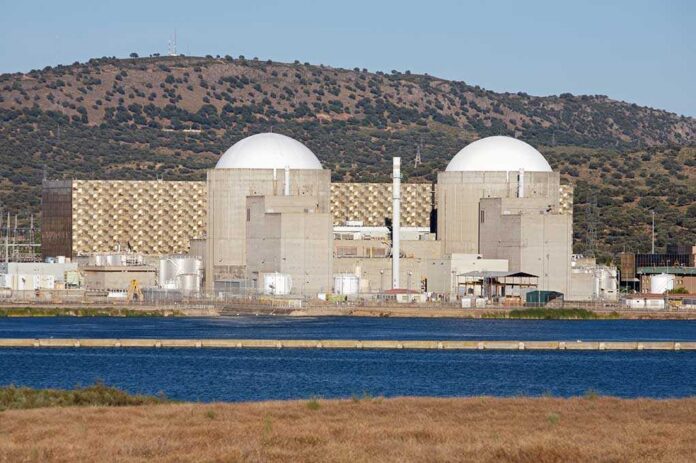
Missiles hitting near Iran’s only working nuclear power plant have turned a “shipping dispute” in the Strait of Hormuz into a showdown that many fear could spin far beyond anyone’s control.
Story Snapshot
- U.S. Central Command says strikes on about 90 sites in southern Iran were meant to stop attacks on commercial ships in the Strait of Hormuz.
- Iran says at least one U.S. projectile hit the perimeter of the Bushehr nuclear power plant area, sparking fires and killing at least one person near the site.
- International nuclear inspectors confirm multiple recent strikes close to Bushehr and warn that any direct hit on the plant could be disastrous for the Gulf.
- Decades of “maritime security” missions in the strait now look like part of a wider pattern where protecting trade doubles as a reason to wage war, raising alarm on both the left and the right.
Missiles, Ships, And A Nuclear Plant In The Crosshairs
The United States military reports that it struck about 90 targets across southern Iran, saying the goal was to “degrade Iran’s ability to attack commercial shipping and innocent civilian mariners” moving through the Strait of Hormuz. Officials describe these sites as air defense, missile, and surveillance positions tied to recent drone and missile attacks on cargo ships and tankers near the strait. The U.S. framing is clear and simple: hit Iranian military assets now, so civilian crews and global trade routes are safer tomorrow.
Iran tells a very different story from the ground. Local and state media report explosions across coastal cities and say some of the strikes landed near the Bushehr nuclear power plant, the country’s only operating civilian reactor. Iranian officials claim at least 14 people were killed and dozens wounded over two nights of bombing, including at sites in Bushehr province that they say sit on the plant’s perimeter. Video and photos shared by regional outlets show heavy fires near industrial areas close to the nuclear facility.
Bushehr: A Civilian Nuclear Site In A Military Battlefield
The International Atomic Energy Agency, the United Nations nuclear watchdog, confirms that several recent projectiles have landed near the Bushehr nuclear plant, damaging an auxiliary building but not the main reactor. One security worker was reported killed by fragments, and inspectors say radiation levels remain normal for now. Iranian officials insist the reactor itself was not hit, stressing there was “no radiation leak or contamination,” but they also say Bushehr has now been attacked four times since the wider U.S.–Israel war with Iran began.
Experts warn that repeated strikes close to any nuclear plant are a gamble with consequences far beyond battlefield maps. An attack that ruptures the reactor or key cooling systems at Bushehr could spread radioactive material across the Gulf coast, hitting Iran, Iraq, Kuwait, Saudi Arabia, and U.S. bases alike. That kind of fallout would not care who started the fight or whose talking points poll better back home. It would poison water, soil, and economies for decades, in a region that already supplies much of the world’s oil and gas.
Strait Of Hormuz: Shipping Security Or Permanent Excuse For War?
The Strait of Hormuz is a narrow waterway that carries a huge share of the world’s traded oil. For decades, the United States has treated attacks or threats against ships there as a trigger for military action against Iran. During the “Tanker War” of the 1980s, Iran mined the strait and harassed ships, and U.S. forces moved in to protect convoys and strike Iranian assets. Since 2000, every time tankers or cargo ships are hit or seized, U.S. officials quickly point to Iran and respond with sanctions or strikes, sometimes before neutral investigations finish.
Recent fighting follows that same script. After three ships were attacked over a few days this July, the U.S. military launched what it called “powerful strikes” against Iranian targets linked to those incidents. Central Command again said these strikes were aimed at keeping the strait safe for global trade. Yet independent analysts note that these operations also fit a broader pattern of escalation, where “maritime security” missions steadily expand into campaigns that hit deep inside Iran, including near nuclear sites, without solving the basic political dispute between Washington and Tehran.
Escalation, Public Frustration, And Fear Of The “Deep State”
While missiles fly overseas, many Americans on both the right and the left watch this cycle and see the same old movie. They remember past wars, broken promises, and rising costs at home, and they see a federal government that seems more responsive to defense contractors and foreign lobbies than to working families. In this case, U.S. leaders again say the strikes are narrowly focused on protecting “innocent mariners,” yet the bombing reaches the edge of a nuclear power plant and sparks more Iranian retaliation across the region.
U. S. launches new airstrikes on Iran, Tehran fires back by targeting Bahrain, Kuwait and Qatar.The strikes came hours after U.S. president Donald Trump said recent Iranian strikes on ships in the Straight of Hormuz the end of the fragile ceasefire.https://t.co/YAtU1c8wza
— NCMOULY99 (@moulync) July 9, 2026
Iran has already answered by firing missiles at U.S.-linked sites in Bahrain, Kuwait, Qatar, and even Jordan, further widening a conflict that official statements still frame as a shipping dispute. Every new strike, from either side, adds more risk of a mistake that could damage Bushehr or drag other countries into direct war. For citizens who feel the “deep state” runs on autopilot, this looks less like careful defense and more like a machine that cannot stop, even when nuclear sites lie in the blast zone. They worry that once again, regular people will pay the price while elites argue over talking points and timelines.
Sources:
feedpress.me, jpost.com, israelnationalnews.com, bbc.com, ynetnews.com, aa.com.tr, aljazeera.com, trtworld.com, en.wikipedia.org, reuters.com, deccanherald.com, facebook.com, youtube.com, pbs.org, haaretz.com, britannica.com, congress.gov
© truetrendnews.com 2026. All rights reserved.