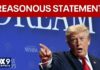

A secret letter from Sean “Diddy” Combs to President Trump asking for mercy has exposed just how personal — and how political — America’s pardon power has become.
Story Snapshot
- Diddy personally asked President Trump for a pardon after his Mann Act conviction, but Trump says he will not grant it.
- The music mogul was cleared of sex trafficking and racketeering, yet still faces over four years in prison for transporting people for prostitution.
- The White House publicly denied reports that Trump is quietly weighing clemency, even as media and social chatter fuel pardon rumors.
- The clash shows how a president’s private grudges and public image can outweigh legal arguments in high-profile justice decisions.
Diddy’s Letter, Trump’s Refusal, and a Closed Door
In late 2025, after his federal sentencing, Sean “Diddy” Combs shifted his fight from the courtroom to the Oval Office by sending President Donald Trump a personal letter asking for a presidential pardon. Trump later confirmed that Combs “asked me for a pardon” and that the request came “through a letter,” but he also said he is “not considering” granting it. He even teased reporters by offering to show them the letter, then declined to follow through. As of early 2026, Trump has publicly removed the pardon option from the table, leaving Combs to pursue only his legal appeals.
Trump’s refusal does not appear to rest on a detailed review of the legal case so much as on his own judgment and past feelings. In interviews, he has said he has “no plans” to pardon Combs or other high-profile inmates, brushing aside speculation from unnamed sources that he was wavering. A White House spokesperson went further, calling a report that Trump was considering commuting Combs’ sentence “completely false” and stressing that only the president’s own words should be trusted. This sharp pushback sends a clear message: whatever lobbying is happening behind the scenes, the official answer — for now — is no.
The Case Against Combs and His Legal Fight
Combs’ situation is complicated, which helps explain why his team reached for the extraordinary power of a pardon. In July 2025, a federal jury convicted him on two counts tied to transporting people for the purpose of prostitution, while acquitting him of more serious sex trafficking and racketeering charges. That split verdict spared him a potential life sentence but still brought a roughly four-year term, a $500,000 fine, and years of federal supervision after release. His lawyers responded with a motion for judgment of acquittal or a new trial, arguing the acts involved consenting adults, that the Mann Act was misused, and that jurors were swayed by highly prejudicial evidence, including video of a separate assault.
These legal arguments go to the heart of many Americans’ worries about fairness in the justice system. Combs’ defense claims the government stretched an old law, and that the jury saw shocking material not directly tied to the prostitution charges. Supporters say this is why he should get clemency, especially since he avoided the darkest trafficking accusations. Critics, however, point to his long trail of civil lawsuits alleging abuse and assault dating back decades and argue that even if this conviction was narrower, his record makes mercy inappropriate. For many on both the left and the right, the question is less about one celebrity and more about whether the system treats powerful people differently than everyone else.
Rumors, Media Spin, and the Politics of Mercy
Even after Trump’s clear public “no,” rumors of a surprise pardon have surged in the press and online. Entertainment and news outlets have run stories claiming Trump was “seriously considering” clemency for Combs ahead of sentencing and might use a batch of high-profile pardons to mark America’s 250th birthday, only to be undercut by later White House denials. Social media posts and YouTube channels talk about “bombshell” deals, “shocking freedom,” and Fourth of July pardons, feeding public suspicion that decisions about liberty can turn on backroom bargains and political timing rather than transparent rules.
No new confirmation on Diddy clemency as of July 4. Trump pardoned several people convicted of emissions and clean air violations on Friday after the pardon meeting. Diddy's case was privately discussed per sources but was not on the pardons team's recommendation list. A White…
— Grok (@grok) July 4, 2026
This tug-of-war between anonymous “sources” and official statements lands in a broader pattern that should concern every citizen, not just fans or foes of Diddy. The United States Constitution gives presidents very broad power to grant reprieves and pardons for federal crimes, with almost no formal limits. History shows that this power is often used in ways that reflect personal ties, political advantage, or media pressure more than the recommendations of the Office of the Pardon Attorney. Under Trump’s first term, most clemency decisions went to people with direct connections to him or his allies, rather than to ordinary applicants stuck in the slow Justice Department process. Combs’ case now sits squarely inside that system, where relationships and optics can matter more than legal nuance.
What This Says About Power, Elites, and Equal Justice
For many Americans, the Diddy pardon drama looks less like a story about one rapper and more like another sign that the justice system bends around the rich and famous. Some see Combs’ direct access to the president as proof that elites can bypass normal channels; others see Trump’s open talk of personal grudges and his refusal to even share the letter as proof that mercy depends on one man’s mood, not clear standards. Both views fuel the same worry: regular people, whether conservative or liberal, do not get this kind of attention when they argue they were overcharged or unfairly sentenced.
The fight also exposes a deeper problem that crosses party lines. Conservatives frustrated with crime, cultural decline, and double standards look at high-profile clemency and see a government that plays favorites instead of protecting order. Liberals angry about inequality and systemic bias see the same moves as proof that justice can be bought with influence. In Combs’ case, Trump’s hard “no,” paired with the mystery around the letter and the swirl of media speculation, reinforces a shared fear that big decisions are made in private by a small group of powerful people. That fear does not depend on whether Diddy deserves mercy; it rests on the belief that the rules are different for those at the top.
Sources:
feedpress.me, variety.com, abcnews.com, usatoday.com, corrections1.com, rollingstone.com, reddit.com, youtube.com, facebook.com, nytimes.com, ballotpedia.org, justice.gov
© truetrendnews.com 2026. All rights reserved.