

America’s air power still dwarfs every rival on paper, but fuzzy math and China’s rapid buildup raise hard questions about what those huge numbers really mean.
Story Snapshot
- The United States fields the largest and most diverse military aircraft fleet in the world.
- Different counting methods give very different totals for U.S. aircraft strength.
- China is closing the gap fast with a modern fighter fleet and high production rates.
- Debates over “who is #1” expose how defense leaders use numbers to shape public opinion and budgets.
How Big Is America’s Air Power, Really?
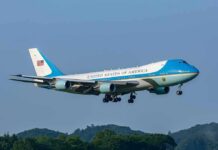
United States Air Force inventory numbers look huge, but they change based on who is counting and what they include. One respected global directory lists about 5,004 active aircraft for the Air Force in 2026, focused on planes that are actually flying missions. Another defense site claims 12,692 active aircraft, adding helicopters and other platforms across services. This gap shows how easy it is for leaders and media to pick the number that best supports their story.
FlightGlobal’s World Air Forces review says the United States has more than 13,000 military aircraft when all branches and types are counted, with 2,718 combat aircraft alone. That places America clearly in the top spot for total military air power by raw numbers. But those totals mix front-line fighters with trainers, transports, and support aircraft. When people repeat claims that the United States holds “nearly a quarter of the world’s military aircraft,” they rarely explain what is actually inside that count.
What Those Aircraft Can Do — Not Just How Many
The United States does not just have a lot of aircraft; it has a wide mix of advanced types spread across many missions. Official Air Force fact sheets list fighter jets like the F-15 Eagle and F-35A Lightning II, attack planes like the A-10C Thunderbolt II, bombers like the B-1B Lancer and B-2 Spirit, and helicopters like the CV-22 Osprey. The new B-21 Raider stealth bomber is set to become the backbone of the future bomber force, able to carry both nuclear and conventional weapons deep into enemy territory.
Air and Space Forces Magazine’s 2026 almanac shows the Air Force also relies on tankers and cargo planes to keep that fleet moving, including KC-10, KC-46A, KC-135 refueling aircraft and C-5M and C-17 transports. These support aircraft do not make headlines like fighters do, but they are what allow the United States to fight far from home and stay in the air longer than almost any rival. For Americans who worry that Washington wastes money, these complex fleets can look like proof of a system that constantly buys more but rarely explains how each piece fits into a clear strategy.
China’s Rising Air Power and the Numbers Game
China’s People’s Liberation Army Air Force now ranks second worldwide in fighter strength, with about 1,800 combat aircraft according to FlightGlobal. A separate global directory lists 3,733 active aircraft, though other sources give slightly lower totals, again showing that definitions matter. Analysts using satellite images say Chinese plants may soon produce around 300 modern fighters per year, including 100 to 120 J-20 stealth jets annually from one factory with multiple production lines.
By 2025 China reportedly removed older J-7 and J-8 fighters, leaving mainly fourth- and fifth-generation aircraft in front-line service. Chinese “special mission” aircraft, used for tasks like surveillance and electronic warfare, now fly regular patterns around Taiwan, Japan, and the Korean Peninsula. That growth worries many Americans on both the left and right, who already feel the government is slipping while rivals move ahead. But China’s own numbers also mix combat and non-combat planes, and they come mostly from outside observers, not open Chinese military reports.
Why Defense Math Feels Rigged to Ordinary Americans
Recent Air Force reports to Congress quietly changed how fighter numbers are counted, moving from “primary mission” fighters to a new “combat coded total aircraft inventory” that adds backup and attrition reserve jets. That single change raised the reported fighter count to 1,271 tails, without building a single new aircraft. For citizens who already believe politicians and Pentagon leaders play games with data to protect budgets and careers, this kind of accounting shift looks like more proof that the system serves insiders first.
Experts warn that both Washington and Beijing often highlight the figures that best support their political story and downplay the rest. United States officials rarely publish clear “share of world aircraft” numbers, while Chinese leaders avoid detailed branch-by-branch comparisons. Media and YouTube channels then repeat dramatic claims of dominance on both sides, often without digging into what is included in the totals or how ready those aircraft really are. In a time when many Americans feel the federal government has stopped telling hard truths, the fight over air power numbers becomes one more symbol of a deeper trust problem.
Sources:
19fortyfive.com, wdmma.org, en.wikipedia.org, youtube.com, militaryfactory.com, forbes.com, thediplomat.com, airandspaceforces.com, globalmilitary.net, abc.net.au
© truetrendnews.com 2026. All rights reserved.