
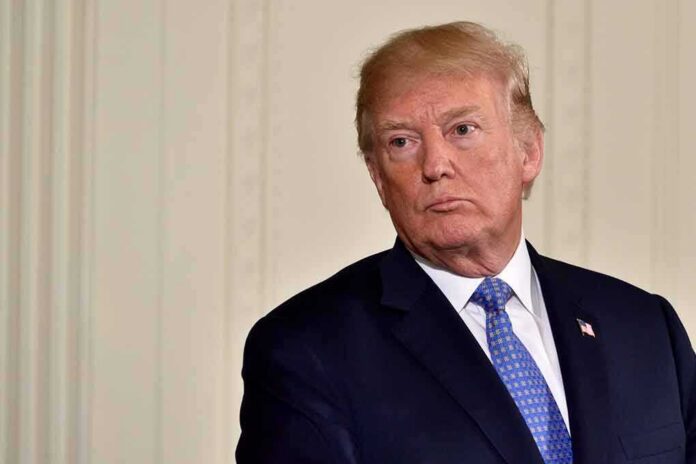
President Trump’s emergency order now sweeps battery storage into national-security rules, jolting billions in grid projects at once.
Story Snapshot
- The order names battery energy storage systems as covered grid equipment.
- The Department of Energy can set conditions even on already-installed gear.
- Developers warn of delays, contract changes, and supplier swaps.
- The White House frames the move as targeted at security risks, not a blanket ban.
What the emergency order actually does
On August 26, 2026, President Trump declared a national emergency to secure the bulk power system. The order restricts certain foreign-produced grid components when they pose national-security or reliability risks. The text explicitly lists battery energy storage systems alongside inverters and transformers. That language places batteries under the same security umbrella as other critical gear, shifting how companies design, buy, and connect storage to the grid.
The order bars risky transactions going forward and also opens the door to rules on gear already in the field. Legal analyses note that the Department of Energy can require utilities to identify, isolate, monitor, disconnect, or replace specific components after consulting security agencies. That authority reaches past new purchases and into existing substations, which raises planning and cost questions for both utilities and developers.
Why developers say the scope creates uncertainty
Energy storage developers say the broad scope will slow projects. They point to batteries, inverters, and software that often come from foreign supply chains. They warn that unclear thresholds could force contract changes and supplier swaps and may delay interconnections. Industry reporting says the risk review, combined with Department of Energy discretion over operating gear, will likely push back timelines and increase costs on near-term projects.
Many projects rely on integrated systems where the battery, the inverter, and the control software come as a package. If one component is flagged, the whole system may need rework. That means new engineering, fresh testing, and utility approvals. Each step adds time. Developers say lenders will also pause to reassess risk. That can raise financing costs, which may flow through to power prices for customers if not managed well.
The national-security case and how it could be narrowed
The White House says the goal is not a blanket ban. Officials say the limits target gear that poses cyber or operational risks to the grid. They cite foreign access to smart components and software as the concern. The order’s risk-based framing leaves room for case-by-case approvals and conditions that could allow many projects to proceed with added safeguards instead of outright bans.
Security experts and policy groups argue that the highest risks sit in control layers, not in the battery cells themselves. They urge focus on battery management systems, inverters, remote access, and firmware that can be manipulated. If the Department of Energy targets those pieces with clear rules and mitigation options, the government could cut cyber risks while letting most storage deployment continue on safer terms.
What this means for ratepayers and the broader grid
Near term, utilities and developers face added review steps, supplier checks, and possible redesigns. That can slow new battery projects that help balance peaks, back up hospitals, and support data centers. Slower storage growth can keep prices higher during tight hours. But better security could avoid costlier failures from hacks or sudden outages. The tradeoff is speed now versus resilience later. Many readers on both left and right worry that delay and cost land on customers first.
The Trump administration just issued a national emergency order targeting foreign grid tech. The problem: it is so vaguely worded that it could put gigawatts of battery projects on uncertain legal ground. https://t.co/onrqbY4GWB pic.twitter.com/AJLsgGWmgu
— GoodPower (@goodpowerhq) September 11, 2026
Longer term, clear guidance matters. Past infrastructure rules often start broad and then narrow through implementation. If the Department of Energy sets a transparent list of covered components, testing rules, and mitigation steps, companies can plan. Paths like isolating vendor access, localizing firmware updates, and logging all commands can manage risk without ripping out safe gear. That approach could protect the grid and avoid feeding a sense that distant elites change rules without regard for real-world costs.
Sources:
zerohedge.com, whitehouse.gov, utilitydive.com, natlawreview.com
© truetrendnews.com 2026. All rights reserved.