
After a month-long lull, new U.S. strikes on Iran and swift Iranian retaliation pushed the Hormuz crisis back to the brink.
Story Snapshot
- U.S. Central Command said strikes targeted Iranian military sites tied to threats on shipping.
- Officials linked earlier strikes to an attack on a commercial vessel in the Strait of Hormuz.
- Iran claimed self-defense and warned of responses to any new U.S. action.
- Renewed hits risk higher energy prices and wider regional spillover, with verification gaps persisting.
What sparked the latest exchange
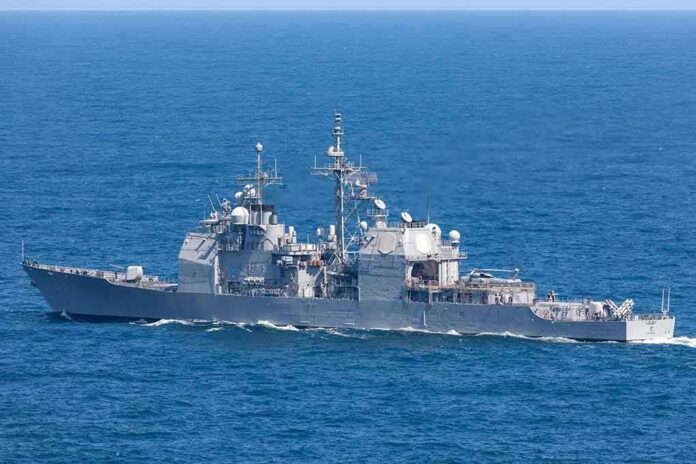
U.S. Central Command reported new strikes on Iranian targets after a month of relative quiet. Command statements said aircraft hit missile and drone storage, coastal radar, and command nodes. The stated goal was to reduce Iran’s ability to attack ships and crews moving through the Strait of Hormuz, a vital oil lane. Earlier in the campaign, the command tied an operation directly to a one-way drone attack on the M/V Ever Lovely, a commercial ship, on June 25.
Reuters reporting during July supported the scope and aim the Pentagon described. The outlet said U.S. forces struck dozens of sites, including air defense systems, command and control, and small boats run by Iran’s Islamic Revolutionary Guard Corps, to curb threats to global commerce. A later report said Washington cast one large strike wave as a “powerful response” to Iranian missiles launched toward U.S. forces in the region the prior day.
How Iran is framing its response
Iran’s Foreign Ministry said it will keep using what it calls its “legitimate right to self-defense” until U.S. and Israeli “aggression” stops. It called the airstrikes a “flagrant violation” of the United Nations Charter and warned that hostile bases and assets in the region are valid targets under its view of self-defense. Iran’s mission to the United Nations added that its missile and drone attacks on U.S.-operated sites were responses to earlier American strikes.
Iran also argued that its actions are authorized by Article 51 of the United Nations Charter. It said its measures are “strictly defensive” and aimed only at military facilities tied to attacks on Iran, not neighboring countries. This self-defense claim conflicts with the U.S. position that its targets are limited to Iranian military assets used to threaten shipping and that the strikes are meant to restore safe transit through the strait.
Why this matters beyond the battlefield
The Strait of Hormuz moves a large share of the world’s oil. Reuters reported shipping risk jumped to “severe” after tanker attacks, with traffic near a standstill during earlier exchanges, pushing prices higher. Fresh strikes and counterstrikes raise the chance of new supply shocks. That would hit family budgets through fuel and delivery costs. It would also strain small businesses already squeezed by inflation and higher borrowing costs in recent years.
Monday 31 August — what's moving markets?
London is closed for the bank holiday. The news isn't.
US forces struck two Iranian rocket launchers on Larak Island in the Strait of Hormuz on Sunday, after several weeks of relative calm. Futures dropped sharply on the open then pared…
— Mark (@MTrad25) August 31, 2026
Both left and right share a core worry here: leaders talk tough, but the public pays the bill. U.S. statements name military aims, yet do not release full legal memos, detailed damage reports, or independent checks on civilian harm. That gap feeds distrust across the spectrum. Iran’s legal claims also come without neutral proof. Until credible, independent verification of incidents and effects is public, citizens will struggle to judge who is acting in defense and who is driving escalation.
What to watch next
Watch for whether attacks on commercial ships fall after these strikes. If they do not, the strategy may not be working as stated. Look for independent satellite images and casualty reviews to test official claims on both sides. Track whether prices and insurance costs for Hormuz routes keep rising. Finally, note any move by Congress to seek fuller briefings or legal justifications for continued strikes, and any signals from Gulf states pressing for de-escalation or tougher action.
Sources:
feedpress.me, centcom.mil, reuters.com, abcnews.com, iacenter.org, iranintl.com
© truetrendnews.com 2026. All rights reserved.