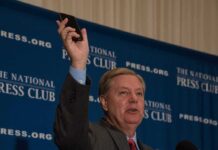

A newly elected member of Congress once translated for the “Blind Sheikh” and later volunteered with a charity the government shut down for aiding al‑Qaida, and both parties now want answers rooted in the full record, not slogans.
Story Snapshot
- Adam Hamawy’s past contact with Omar Abdel‑Rahman and a 1994 Bosnia charity stint resurfaced with specifics on dates and places.
- Hamawy condemns terrorism and says he knew nothing of the charity’s alleged ties at the time.
- A recent interview showed him declining to label Iran an adversary while urging diplomacy.
- Critics use sharp labels; the underlying primary records remain only partly public.
What sparked the charge and what is actually documented
Jewish Insider and the Washington Examiner reported that Adam Hamawy met Omar Abdel‑Rahman, translated for him after the 1993 World Trade Center bombing, and testified for the defense at Abdel‑Rahman’s 1995 federal trial. Reports also cite a 1991 trip to Detroit and visits to the cleric’s home. These are specific claims tied to places, dates, and court activity, not anonymous tips. National Review added details about his 1994 Bosnia volunteer work.
Separate reports say Hamawy spent about five weeks in Bosnia in 1994 with the Benevolence International Foundation, described then as a Chicago‑based nonprofit. Years later, the United States Treasury Department shut that group down for aiding al‑Qaida, and Bosnian authorities raided its Sarajevo and Zenica offices in 2002. That later record gives critics a firm reason to ask what he did there, even if his role was brief.
What Hamawy says in his own words
Hamawy told The Atlantic he condemns Abdel‑Rahman’s terrorism conspiracy. He said he never heard the cleric push jihad in America or talk about robbing banks or attacking bases. He said he viewed his 1995 testimony as a civic duty. On Bosnia, he said he believed he was helping a charity to deliver medical supplies and did not know about any militant ties at that time. He also pushed back on claims that paint him as a sympathizer.
On foreign policy, a CNN interview showed Hamawy refusing to call Iran an adversary when pressed several times. He called Iran authoritarian and a dictatorship, but argued the United States should rely on leverage and diplomacy to avoid war. He said the country makes adversaries when it should make friends. Supporters hear restraint; critics hear softness toward a hostile regime. The clip fuels the broader debate over judgment and risk.
Why the dispute resonates across left and right
Voters see a pattern: old contacts and charity work get reframed during campaigns as proof of present loyalty. In this case, the timeline matters. Hamawy’s Bosnia trip was in 1994; the raids and shutdown came years later. The record ties him to meetings, translation, travel, and sworn testimony. It does not, by itself, show he endorsed attacks, gave material support, or faced charges. That gap is where politics rushes in and trust in institutions breaks down.
One of the new House members is Adam Hisham Hamawy (D-NJ). He has close ties to Al-Qaeda.
Abdel-Rahman was convicted in 1995 of conspiring to carry out terrorist attacks in New York City. Court records show that Hamawy accompanied him to Detroit in 1991, served as his… pic.twitter.com/bysgAj5ssr
— Erikaaa (@ErikaCA47) November 9, 2026
Both sides share a core worry: powerful people play word games while the truth hides in files no one has read. The cleanest path forward is simple. Release the full 1995 trial transcript that covers Hamawy’s testimony. Publish the complete 1996 interview record about Bosnia. Clarify any United States or Bosnian documents that list his role. That evidence would let citizens judge intent, knowledge, and conduct, not slogans or clickbait.
What to watch next
Watch for document releases, not new labels. Track whether congressional leaders, media outlets, or watchdogs obtain and post the trial transcript and Bosnia records. Look for clear timelines that separate what Hamawy knew then from what the world learned later. Also note whether his Iran stance shapes committee roles or party support. In a season of hard talk and easy smears, verified records remain the only way to test claims and restore public trust.
Sources:
youtube.com, theatlantic.com, nypost.com, jewishinsider.com
© truetrendnews.com 2026. All rights reserved.