
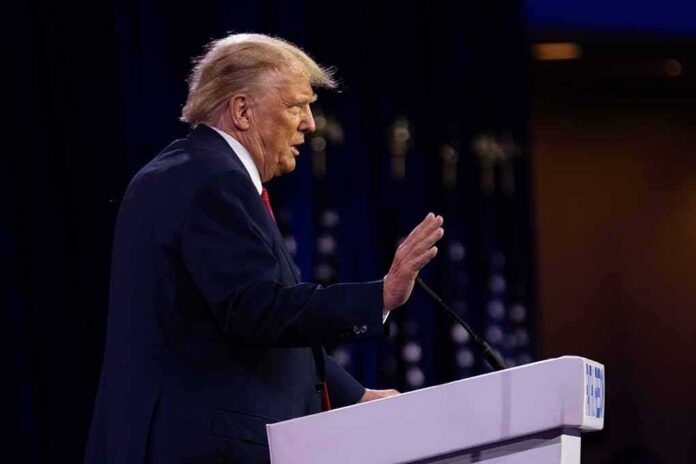
President Trump, Chinese President Xi Jinping and Russian President Vladimir Putin are set to sit down together in Shenzhen, China, marking the first time the leaders of the world’s three biggest nuclear powers have ever met in one room.
Story Snapshot
- Trump, Xi and Putin plan to meet Thursday, November 19, on the sidelines of the Asia-Pacific Economic Cooperation (APEC) summit in Shenzhen.
- China’s Foreign Ministry confirmed the meeting Monday, following earlier statements from the White House and the Kremlin.
- Expected topics include nuclear arms control, the war in Iran, trade policy and possibly the war in Ukraine.
- The sit-down grew out of a phone call between Trump and Putin in October, where Putin first raised the idea of a three-way summit.
- U.S. allies are watching closely, with some analysts calling the moment unsettling for partners used to Washington leading from the front.
How the Meeting Came Together
The plan traces back to October 9, when Putin proposed the three-way sit-down to Trump during a phone call focused on the war in Ukraine. Trump first went public with his thinking on November 8, telling reporters he expected to meet Xi and Putin at the APEC summit and calling it “interesting”. Within days, the White House and Kremlin both confirmed the meeting was set.
China’s Foreign Ministry added its own confirmation on Monday, locking in the final piece. A spokesperson said Xi would meet both Putin and Trump in Shenzhen on Thursday, completing a chain of confirmations that started with Trump’s own cautious prediction and ended with formal statements from all three governments.
What Leaders Say They Will Discuss
Trump has pointed to denuclearization and ending the war in Iran as top items for the talks. The White House and other officials have since widened that list to include nuclear non-proliferation, the war in the Middle East, trade policy, and possibly the war in Ukraine. Kremlin spokesman Dmitry Peskov said the meeting “will have a major impact on global affairs,” signaling Moscow expects the discussion to carry real weight.
Peskov also confirmed the specific date and location days before the official Chinese announcement, telling Russian state media the sit-down would happen November 19 in Shenzhen. That early Kremlin detail matched what the White House and Associated Press had already reported, showing the three governments were moving in step even before China made it official.
A Summit Without Precedent
No sitting U.S., Chinese and Russian leader has ever met together at the same table. Xi is hosting this year’s APEC summit, running November 18-19, giving him a built-in reason to bring the other two leaders to Chinese soil. Sideline meetings at events like APEC are common in diplomacy because they let leaders talk without the cost of planning a stand-alone summit, but pairing all three nuclear powers this way breaks new ground.
Some experts caution against expecting a breakthrough. Analysts told reporters that a three-way sit-down built around nuclear issues is unlikely to produce major arms control deals, even if it happens as planned. The scale of the meeting itself, not any single deal, is what makes it historic.
Why U.S. Allies Are Watching Closely
Partners in Europe and Asia who have leaned on American leadership for decades now face a moment where Washington is negotiating directly with Moscow and Beijing, without them in the room. Some commentary has described the setup as unsettling for allies accustomed to being consulted before major power deals are struck. That unease fits a broader pattern many Americans already sense: big decisions increasingly get made by a small circle of powerful figures, leaving everyone else to find out after the fact.
Whether the Shenzhen meeting produces concrete agreements or mostly symbolic images, it marks a turning point simply by happening. For a public on both the left and right already skeptical that elected leaders act with real accountability, a closed-door gathering of three of the world’s most powerful men carries its own weight, regardless of what gets signed.
Sources:
cnbc.com, apnews.com, aa.com.tr, charlotteobserver.com, bbc.com, sacbee.com
© truetrendnews.com 2026. All rights reserved.