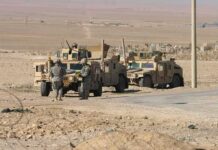

When a devastated Venezuelan city saw quake survivors and even security forces looting, many felt their worst fears about failed governments and disaster chaos coming true.
Story Snapshot
- Looting erupted in La Guaira’s quake zone as aid arrived slowly and families slept outside.
- Survivors grabbed food, water, and medicine—but also TVs and appliances—from wrecked shops.
- Reports say some police and security forces looted valuables instead of rescuing trapped victims.
- The clash between survival needs and criminalization echoes a long pattern in disaster responses.
Earthquake Devastation Turns La Guaira Into a Disaster Zone
Back-to-back earthquakes on June 24 shattered La Guaira, a coastal state near Caracas, tearing down homes and shops and leaving streets piled with rubble.[2] Thousands of families refused to reenter cracked buildings and instead camped on road medians, parks, and stadiums, turning public spaces into makeshift shelters.[2] Government figures later put deaths in the hundreds to over a thousand and injuries in the thousands, while many remained missing under collapsed structures.[1] Daily life collapsed in hours.
Power outages and blackouts spread across the region, knocking out traffic lights and making it hard for ambulances and rescue crews to move safely.[1] With electricity down and communications strained, the normal systems that keep order simply failed. Security forces concentrated on collapsed apartment blocks and search-and-rescue, leaving commercial areas with little protection in the crucial first hours.[1][2] In this vacuum, desperate people and opportunists shared the same darkened streets, often caught on the same shaky phone videos.
Looting Erupts: Survival, Anger, and Crime Mixed Together
As night fell after the quakes, scenes from Catia La Mar and other hard-hit neighborhoods showed crowds entering damaged supermarkets and small stores and carrying goods out in plastic bags and carts.[1][2] Many took obvious essentials—food, water, medicine, clothing—items people need when they are sleeping outside without shelter or supplies.[1][4] International footage described “desperate survivors” raiding warehouses and shops for basic clothing and groceries while the military moved in and aid trucks rolled out far too slowly to meet the immediate need.[4][5]
Those same videos also captured people hauling refrigerators, televisions, and other appliances out of shattered storefronts, loading them on motorcycles and trucks.[1][2] Reporters on the ground wrote that “some people…have taken advantage of the disaster” to grab whatever remained in shops, from cables to electronics, once the earth stopped shaking.[2][5] This mix—bread and medicine in one hand, high-end electronics in the other—made it easy for officials and many observers to label the whole situation as “opportunistic looting,” even though not every act looked the same.[1][2]
Slow Aid and Security Failures Fuel Public Rage
Residents across La Guaira voiced strong anger at what they called slow and meager government aid, saying help “trickled in” while they slept outdoors and searched for missing relatives.[2][5] Disaster research shows that when food, clean water, blankets, and power supplies do not reach people in the first days, some will turn to illegal taking of goods simply to survive.[13] In La Guaira, that pattern matched what locals described: long delays, weak logistical support, and families forced to fend for themselves in ruined streets without clear direction from authorities.[2][5][13]
To restore order, the national government declared a state of emergency and sent in the military to “stabilize” the situation.[1][3] Troops and police arrested dozens for looting homes and businesses, and officials framed all unauthorized taking as criminal behavior in a “national disaster” zone.[1][3] At the same time, death toll numbers jumped sharply—from hundreds to over nine hundred—raising doubts for some citizens about the accuracy of official reporting.[2] When people already distrust the state, harsh crackdowns in a crisis can look less like protection and more like an attempt to control the narrative.
Police Accused of Joining the Looters
New outrage spread when videos surfaced that appeared to show security forces themselves looting from the rubble instead of helping victims.[3] One widely shared report described law enforcement officers pulling jewelry and valuables from debris while a citizen remained trapped nearby, highlighting not only human cruelty but a deep security crisis.[3] Social media posts, later echoed by news outlets, showed police with boxed televisions on motorcycles, matching what many citizens were already claiming on the ground.[3]
🇻🇪 Venezuelan police officers were caught looting in the aftermath of the earthquake
Residents are filming officers loading numerous boxes of goods into the police vehicles
"Local government in La Guaira will be militarized and additional armed forces would be deployed to… https://t.co/OJceiQdtcI pic.twitter.com/Q1wA8lRkIc
— Lord Bebo (@MyLordBebo) June 28, 2026
For Venezuelans and outside observers, police involvement in looting crossed a line many consider sacred: the idea that those sworn to protect the public must act differently from desperate civilians. When that line blurs, trust in any official version of events collapses. This fits a broader fear shared by many Americans today, left and right alike, that in moments of shock the “system” protects itself first, and ordinary people last, whether the crisis is in La Guaira or in their own backyard.[3][13]
What La Guaira Shows About Disasters and Power
Studies of past disasters, from hurricanes to earthquakes, find that most people act to help one another, not to harm, and that looting for survival usually rises when logistics fail and authorities do not deliver fast aid.[13][14] Researchers also warn that media often oversell stories of “mobs” and “crime,” making fear and control the main lens, instead of showing quiet acts of sharing and solidarity that are more common.[14][15] In La Guaira, headlines focused on looting and theft, while quieter details—families salvaging cookies, water, and underwear from their own damaged homes—received less attention.[5][13]
For Americans watching from afar, the story raises hard questions that cut across party lines. When a government responds slowly, then relies on soldiers and police to lock things down, who pays the price—the corrupt and powerful, or ordinary people with nowhere else to turn? La Guaira’s quake zone offers a warning: when aid is late, rules are rigid, and trust is already broken, disaster can expose not only fragile buildings, but a fragile social contract. That is something many citizens now fear at home as well.[2][5][13]
Sources:
[1] YouTube – Venezuela quake survivors turn to looting
[2] YouTube – Furniture, Appliances& More Looted In La Guaira
[3] Web – Aid trickles in, survivors sleep outside, and looting breaks out in La …
[4] Web – Reports of looting emerged in Venezuela’s La Guaira region …
[5] Web – Looting Reported After Venezuela Earthquake … – Facebook
[13] Web – La Guaira, Venezuela before and after the earthquake on June 24 …
[14] Web – Venezuela Live Updates: Window Narrowing to Find Survivors as …
[15] Web – On 25 June 2026, the Federal Council took note of the devastating …
© truetrendnews.com 2026. All rights reserved.