

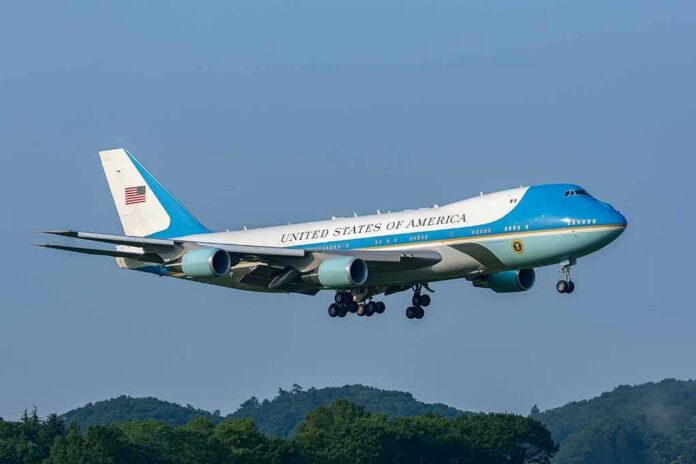
U.S. officials quietly moved President Trump to the older Air Force One in Turkey after judging a credible Iranian proxy threat against him and the aircraft, according to multiple reports.
Story Snapshot
- Officials assessed a credible threat from Iranian proxy forces targeting President Trump and Air Force One.
- The Secret Service urged a switch to the older, better-defended presidential jet, reports say.
- Trump has said Iran wants to kill him, but he downplayed that this switch was about a single threat.
- Separate Israeli intelligence warned of a plot against Trump, adding to tensions but described as distinct.
What Triggered the Plane Swap
Multiple outlets report that United States officials determined there was a credible threat from Iranian proxy groups aimed at President Trump and Air Force One while he was departing Turkey after a high-profile summit in early July. The New York Times said the assessment came from United States intelligence and protective officials who were briefed on the matter. The reported threat led to a rapid change in plans. The president flew on the older Air Force One for at least part of the trip home.
News accounts say the United States Secret Service pressed for the change once the threat surfaced, due to security features on the legacy aircraft. That jet has well-known defensive systems and hardened communications built for contested travel. Reports say the newer, Qatar-donated jet lacked some of those protections, making the older plane the safer call that day. Officials have not released the exact intelligence or the protective memo that drove the decision, which is common with presidential security.
How Trump and Officials Framed the Risk
President Trump told reporters he is “number one on the kill list” for Iran, which matches long-running threat concerns. At the same time, he said he faces threats all the time and did not confirm that a single Iran-linked warning forced the aircraft switch on that trip. That split tone leaves room for debate. It also fits a pattern in security coverage where details stay classified, and the public sees only parts of the story through media leaks and brief comments.
Separate reporting says Israel shared intelligence with the United States about a possible Iranian plan to assassinate the president. Outlets described that as a distinct thread from the specific warning said to have triggered the aircraft change in Turkey. The overlap in timing has fueled confusion. Still, the core claim from the New York Times and others is direct: United States officials saw a credible threat and adjusted the flight plan and aircraft accordingly.
Security Tradeoffs Between the Jets
Coverage points to differences between the older Air Force One and the newer Qatar-donated jet. The legacy aircraft was built for hostile environments and carries layered defenses. The newer jet, while advanced, reportedly did not yet match those protections on this route. That gap, combined with the Iran-linked risk picture, led security teams to favor the older aircraft for departure from Turkey, according to accounts relaying officials’ views. No public technical audit has been released that lists exact systems on either plane.
Some officials reportedly did not see the threat as imminent or “fully credible” in the strongest sense, which often happens in live security calls. But the Secret Service and national security teams plan for worst cases. When serious indicators appear, they change routes, delay moves, or change platforms. In this case, the change was the plane itself. The choice aimed to reduce risk while keeping the president on schedule and out of a public scramble.
Why This Matters Beyond One Flight
This episode highlights a larger concern that many Americans share: vital security decisions are made behind closed doors with little transparency. People on the right and the left worry that government elites withhold facts, yet ask for trust. Here, the stakes were life-and-death, and secrecy is part of the job. But the secrecy leaves citizens sorting through unnamed sources and mixed messages to learn why a president changed planes on short notice.
Reasonable steps can bring more clarity without exposing methods. Congress can press for a classified review of the threat bulletin, the Secret Service risk memo, and the aircraft comparison, and then release a basic summary to the public. That would confirm what level of danger officials saw, what advice they gave, and why the older jet was chosen. Until then, the best-supported account remains that United States officials judged a credible Iranian proxy threat and the president flew home on the more protected aircraft.
Sources:
mediaite.com, nytimes.com, chosun.com, newsmax.com, youtube.com
© truetrendnews.com 2026. All rights reserved.