
A man endorsed to lead Minnesota is not even registered to vote there, raising fresh questions about how seriously the political class treats the rules that bind ordinary citizens.
Story Snapshot
- Mike Lindell, Trump’s choice for Minnesota governor, is registered to vote in Texas, not Minnesota.
- Lindell claims he has “re-established” Minnesota residency and is nearly meeting legal requirements.
- The clash exposes how residency rules are enforced for elites versus everyday voters.
- Republican leaders in Minnesota are split, warning Lindell could hurt the party’s chances.
Trump’s Pick Who Cannot Vote Where He Wants To Govern
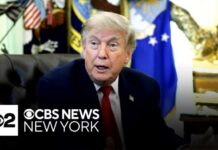
Former President Donald Trump has given his “complete and total endorsement” to MyPillow founder Mike Lindell in Minnesota’s 2026 race for governor, praising him as “one of America’s greatest and most hard working Patriots.” Yet a review of official records by the Minnesota Star Tribune found that Lindell is still registered to vote in Texas and is not registered to vote in Minnesota, the state he now wants to lead. For many voters, that looks like one set of rules for politicians and another for everyone else.
The Star Tribune reports that Lindell had been living in Lufkin, Texas and registered to vote there since January 2023. In a January 2025 court filing in Carver County, he was formally described as “a Texas citizen,” language lawyers usually choose carefully because it helps define legal residency. Lindell now says he has “re-established residency” in Minnesota and spends most of his time there, but he has not completed the basic step of signing up to cast a ballot in the state.
What Minnesota Law Requires And Where Lindell Stands
Minnesota requires candidates for governor to be residents of the state for at least one year before the general election. For tax purposes, the state also uses a clear rule: a person must spend at least 183 days in Minnesota and own, rent, or maintain a home there to count as a resident. Lindell told reporters he owns homes in both Minnesota and Texas and said that if he runs, he would spend “99%” of his time in Minnesota, but he could not say how many days he actually spends in Texas now. That gap between bold claims and hard numbers is at the center of the dispute.
Across the country, residency fights like this are common when candidates have ties to more than one state. Legal scholars say most states focus on “domicile,” which means the place a person truly treats as home, more than simple travel or property records. In one recent Florida case, officials pointed to voting in another jurisdiction, buying a home there, and claiming a tax break as proof a candidate’s real home was elsewhere. Lindell’s Texas voter registration and “Texas citizen” court label give critics similar tools to question where his legal home really is.
A Campaign Caught Between Trump’s Base And Party Concerns
Lindell’s story taps into broader anger on both the right and the left about a political system that seems broken. Many conservatives who like Trump’s “America First” message are tired of seeing rules bent for well-connected figures. Many liberals who worry about growing inequality and attacks on voting rights see a man who spent years spreading false claims about election fraud now asking voters to trust him on basic facts like where he lives. For both groups, this fight feels less like a partisan squabble and more like another sign that the system serves insiders first.
Republican leaders in Minnesota are openly nervous. Party officials and strategists have warned that Trump’s endorsement could hurt their chances in November because Trump has lost Minnesota in all three of his presidential runs. Democracy Docket reports that Lindell already lost the race for official party endorsement at the state convention, placing third among Republican candidates and missing out on the state party’s backing. He can still compete in the August primary, but he is doing so without unified support from his own party.
Residency Rules, Voting Records, And Public Trust
Mainstream outlets across the spectrum—local papers, national sites, and partisan watchdogs—have echoed the same key fact: Lindell is not registered to vote in Minnesota and remains an active voter in Texas. HuffPost, Raw Story, and other sites picked up the Star Tribune’s reporting, tying it to his long record of pushing unsupported claims about the 2020 election. Supporters see media bias and another attack on a Trump ally. Critics see a pattern of bending rules and stretching the truth until someone checks the paperwork.
🚨 JUST IN: President Trump has officially endorsed Mike Lindell for Governor of Minnesota.
Trump praised Lindell as one of America’s hardest-working patriots and highlighted his years of fighting for election integrity.
“He can do it.”
“Mike Lindell has my complete and total… pic.twitter.com/aBmQkkAnWa
— Commentary 🇺🇸 Tom Homan (@HomanNews) July 16, 2026
The bigger question is not only whether Lindell meets Minnesota’s residency rules, but what this says about how the system treats ordinary citizens. Everyday Americans are told that voting rules are strict and must be followed exactly or they face fines or even charges. Yet here, a well-known businessman and close Trump ally moved to Texas, registered there, was called a “Texas citizen” in court, and now claims to have “re-established” Minnesota residency without even registering to vote in his new home state. Whether voters support or oppose Lindell, many will see that as proof that those at the top play by looser rules than everyone else.
Sources:
mediaite.com, startribune.com, huffpost.com, ground.news, politico.com, democracydocket.com, cnn.com
© truetrendnews.com 2026. All rights reserved.