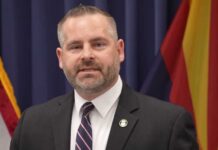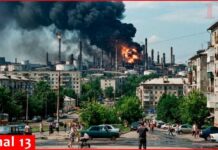

A Rwandan migrant who met Pope Francis in 2016 later burned a historic cathedral and killed the priest who sheltered him, exposing deep cracks in Europe’s immigration and justice systems.
Story Snapshot
- A man who entered France illegally in 2012 later met Pope Francis during a Vatican visit.
- In 2020, he set fire to the Nantes cathedral and was convicted of arson.
- In 2021, while awaiting trial, he killed Father Olivier Maire, the priest who housed him.
- French officials say legal rules blocked deportation, while critics see a system failure.
From illegal entry to a meeting with the Pope
Emmanuel Abayisenga, a Rwandan national, entered France illegally in 2012 and asked several times for asylum. Courts later found his claims about being a child soldier during the 1994 genocide were false. Catholic sources report that in November 2016, he took part in a pilgrimage to Rome and met Pope Francis during a gathering for migrants and poor people. Supporters say this shows the Church trying to live its call to mercy. Critics point to it as another example of elites trusting systems that are failing ordinary citizens.
Many readers on both the left and right see this path as troubling. A man who was in the country illegally, with rejected asylum claims, was still able to move freely enough to attend a high-profile Vatican event. For people who already feel that global institutions care more about symbolism than safety, the image of Abayisenga shaking the Pope’s hand looks less like compassion and more like a sign that powerful leaders are disconnected from the risks their policies create.
Cathedral fire, priest’s murder, and missed chances
In July 2020, Abayisenga admitted starting three fires inside the 15th‑century Cathedral of Saints Peter and Paul in Nantes, where he served as a volunteer warden and held the keys. In March 2023, a criminal court sentenced him to four years in prison for that arson. Before that sentence, he had been released under judicial control and told to live with the Montfort religious community in Saint‑Laurent‑sur‑Sèvre, where Father Olivier Maire welcomed him into their house.
On August 9, 2021, Abayisenga turned himself in to police after killing Father Maire, who had offered him shelter while he awaited trial. Reports say he beat the priest to death. In a later trial, a court sentenced him to 30 years in prison and ordered that he be deported from France after his sentence ends. For many Europeans and Americans alike, this chain of events looks like a tragic case study in how a complex system can keep moving a dangerous person around instead of removing him.
Political fight over deportation and state failure
The murder sparked fierce debate in France about immigration enforcement. Right‑wing politicians asked why an undocumented migrant, already suspected of burning a major cathedral, was still in the country and living with a priest instead of being deported. Marine Le Pen and others argued that French authorities had failed to protect citizens by not acting on deportation orders sooner, echoing a common anger heard from many voters who feel their governments talk tough but act weak.
French Interior Minister Gérald Darmanin pushed back, saying Abayisenga could not be deported while he was under judicial control, even though there was an order requiring him to leave French territory. He accused Le Pen of “polemicizing without knowing the facts.” That answer may be legally correct, but it also feeds a familiar frustration. When people see clear danger yet are told “the rules won’t allow us to act,” it sounds like a system that protects itself first and the public second.
Immigration, crime, and a wider crisis of trust
Studies in France and across the European Union find no simple link between overall immigration and higher crime rates. At the same time, one recent assessment notes foreign nationals are overrepresented in some crime statistics, which fuels public worry and sharp political rhetoric. Cases like Abayisenga’s become symbols. To many conservatives, they show why border and deportation rules must be stricter. To many liberals, they show the danger of ignoring mental health, war trauma, and failed integration.
In 2016, Pope Francis shook hands with the Rwandan migrant Emmanuel Abayisenga.
In 2020, Abayisenga set fire to Nantes Cathedral, a 15th-century Gothic cathedral in France.
In 2021, he murdered Father Olivier Maire, who had given him shelter while he was on bail for the arson. https://t.co/jJI1teJUox pic.twitter.com/3DoWyC8tvF
— Jonathan Wong (@WONGthink) July 6, 2026
For ordinary citizens, the deeper concern is that their leaders and institutions seem unable to handle obvious risks. Church leaders tried to show mercy by housing a troubled man, and the state tried to follow every legal step. Yet a priest is dead, a cathedral was burned, and trust in both government and large religious bodies is shaken. When people talk about “elites” or a “deep state,” they are often pointing to stories like this, where systems feel more complex than effective.
Sources:
lifesitenews.com, lemonde.fr, dosafl.com, thecatholicherald.com, montfortian.info, catholicculture.org, en.wikipedia.org, etias.com, bbc.com, youtube.com
© truetrendnews.com 2026. All rights reserved.