

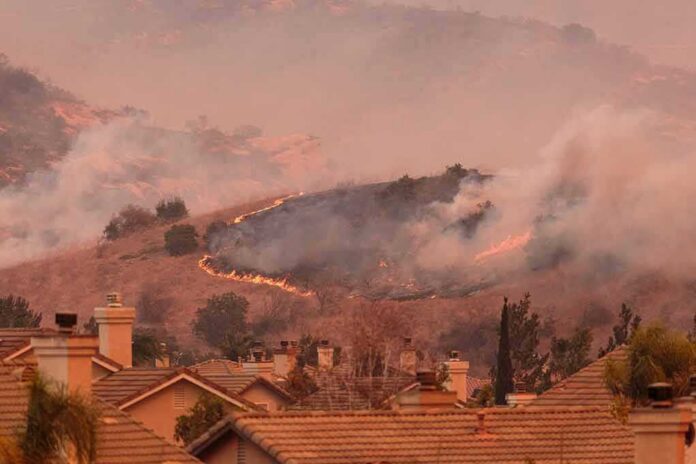
Officials say people sparked Reno’s fast-growing Hawk Fire, which has forced mass evacuations and burned more than 10,000 acres.
Story Highlights
- Authorities report a human-caused wildfire pushing toward Reno neighborhoods.
- About 90,000 residents faced “get set” or “go now” evacuation status.
- Strong winds, low humidity, and dry brush accelerated fire spread.
- Nevada’s governor declared an emergency and activated Guard support.
What Officials Confirm About Cause and Spread
Washoe County’s emergency update lists the Hawk Fire cause as human and places the origin near Hawk Meadow Trail by Somersett in northwest Reno. Reporters cite officials who said the fire was started by people, while investigators work to pin down the exact ignition source. Fire behavior experts separate cause from spread. Dry grass and brush, gusty winds, and very low humidity drove fast growth once the fire started, a common pattern in the Great Basin.
National data show people start most wildfires in many western regions, including Nevada, though each incident differs in intent and impact. This fire matches that broad pattern: a human spark met volatile fuels and bad weather. That mix turned a small start into a large, fast-moving threat. Investigators will determine the specific human activity involved. Until then, agencies focus on public safety and containment while keeping evacuation routes open and neighborhoods secure.
Evacuations, Closures, and Public Safety Actions
Officials placed roughly 90,000 residents in staged evacuation zones from “get set” to “go now,” covering parts of northwest Reno and nearby valleys. The Washoe County Sheriff’s Office pushed real-time zone updates and road closures to keep people moving away from danger. Local agencies opened a shelter at the Reno-Sparks Convention Center to support evacuees with basic needs and information, coordinating with aid groups on site for rapid intake and services.
Nevada Governor Joe Lombardo declared a state of emergency in Washoe County and deployed the Nevada National Guard. Two helicopter crews joined aerial firefighting, and sixty Guard members helped law enforcement protect evacuated areas and manage traffic near fire lines. These steps free up resources, speed mutual aid, and let agencies waive red tape to move crews and aircraft where they are needed most.
Why This Fire Grew So Fast Near a Major City
Truckee Meadows and the foothills hold large stretches of dry grass and brush after a hot, windy stretch. Those fuels ignite easily and carry flames fast across slopes and open lots next to homes. Weather reports describe strong, shifting winds and very low humidity, which push embers far ahead of the main front. That pattern brings spot fires near streets and campuses and makes lines hard to hold until winds ease and air moisture rises.
3 AM Top-of-the-Hour News
15 THOUSAND ASCRES BURNED IN A DASY…ZERO CONTAINMENT. THE HAWK WILDFIRE FORCING 45 THOUSDAND FROM THEIR HOMES IN THE RENO NEVADA AREAS. NEWS NATION REPORTER JULIETTE LEWIS IS THERE.: “800 fire personnel are on scene battling the flames. Now that is a… pic.twitter.com/wQLiCP16Ai
— Worldwide News Network (@WorldwideNNX) August 24, 2026
Recent wildfire statistics underscore the risk window. National Interagency Fire Center data show people cause a large share of fires nationwide. In many years, the Great Basin region sees thousands of human-caused starts, which can threaten towns along the wildland edge when weather turns extreme. That is why agencies warn residents to avoid outdoor sparks during red flag periods and to clear defensible space. One small mistake can place entire neighborhoods in harm’s way during wind events.
What Residents Need Now—and the Larger Message
Emergency managers urge residents to follow zone alerts, pack go-bags, and leave early if told. Early action reduces gridlock and helps firefighters access streets and hydrants. People who evacuate should register at shelters or online so families can reconnect. Officials will announce reentry only when crews secure hazards and confirm safe routes. Investigators will release the ignition details when they complete their work, which can take days or weeks.
This incident again exposes a shared worry across the political spectrum: systems built to protect communities still bend under predictable strain. Residents see repeat patterns—dry fuels, high winds, human ignition—and ask why nearby neighborhoods remain so exposed. Stronger prevention, faster alerts, and tougher rules on risky behavior near brush are not partisan ideas. They are basic promises a government should keep when lives and homes sit one spark away from disaster.
Sources:
facebook.com, cnn.com, rgj.com, en.wikipedia.org, ingest.abcnews.com, emergencywashoe.com, 2news.com, thenevadaglobe.com, fresnobee.com
© truetrendnews.com 2026. All rights reserved.