
Oil jumped past $100 as attacks spread beyond the Strait of Hormuz, exposing how one chokepoint can jolt prices and family budgets overnight.
Story Highlights
- Record tanker attacks and fewer crossings pushed Brent above $100 on supply fears
- International Energy Agency launched a 400-million-barrel emergency stock release
- Flows through Hormuz dropped sharply, while some exports shifted to other routes
- Costs to ship crude surged, squeezing margins and raising delivered oil prices
Attacks And Price Spike Put A Global Chokepoint Back In Focus
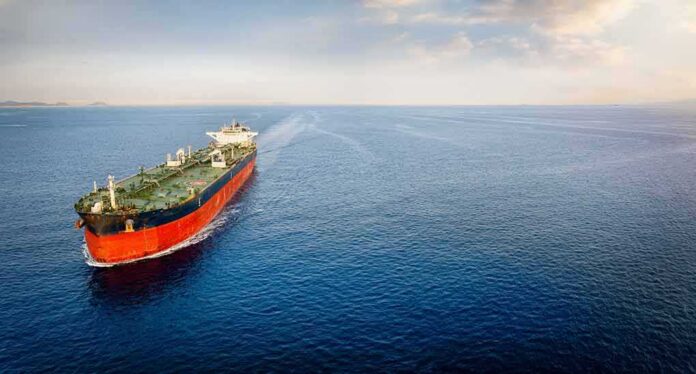
CNN reported that Brent crude rose more than five percent intraday to about $105 per barrel as tanker attacks surged and crossings through the Strait of Hormuz fell to a two-month low. Shipping trackers counted only seven transits on the reported Tuesday, a sharp drop for the world’s key oil artery. These numbers show how fast risk at a single chokepoint can hit pump prices and bills at home. Markets moved first, then governments scrambled to respond.
The International Energy Agency said member countries organized the largest emergency stock release ever, totaling 400 million barrels, to calm the shock from disrupted flows. The agency later said there was enough oil in the market and ruled out another coordinated release at that time. These moves signal two truths. First, the disruption was big. Second, governments judged that market adjustments and prior stock draws were starting to work.
What Is Happening On The Water
Kpler data cited by Iran International showed crude flows through Hormuz fell about 27 percent from the prior week’s wartime high to at least 10.1 million barrels per day, roughly 74 percent of prewar levels. Reuters reported that the United Kingdom Maritime Trade Operations agency recorded at least one attack per day in the Strait or the Gulf of Aden after October 2. Fewer crossings raise risks and costs for every ship that tries to move oil through.
Some traffic shifted to routes that avoid the narrowest waters. Radio New Zealand reported that exports from the Gulf of Oman coast and the Red Sea climbed to about 6.7 million barrels per day, offsetting part of the lost Hormuz supply. Reuters also noted several days when Middle East crude exports exceeded prewar levels thanks to these shifts. Rerouting helps, but it does not replace the scale or speed of normal Hormuz flows.
The Cost Squeeze From Sea To Station
Kpler estimates cited by Iran International showed the cost to charter a very large crude carrier from the Persian Gulf to China rose to the equivalent of about $24 per barrel, making freight roughly one-quarter of the oil’s value. OilPrice.com reported a shortage of available tankers as owners faced higher attack risk and tied up ships in ship-to-ship transfers, pushing physical delivery prices higher. Higher freight and risk premiums can trickle down to gasoline, diesel, and heating costs.
When shipping lanes get dangerous, insurance, fuel, crews, and time all cost more. That hits refiners and then drivers. People on the right see this as a lesson about energy security at home. People on the left see it as proof that fragile supply chains punish workers and families first. Both views meet at the same worry: distant crises and slow government fixes can make the basics of life more expensive for everyone.
Control Versus Disruption: Why Words Matter
The Congressional Research Service reported that after late February 2026, Iran tried to assert control over the Strait with threatened and actual attacks on commercial shipping, including efforts to redirect traffic. But disruption is not the same as legal control. Energy analysts note that the strait can remain open in principle while attacks and rerouting make it far less usable day to day. Markets price disruption, not claims.
The 1980s Tanker War offers a useful anchor. That conflict saw the most sustained attacks on merchant shipping since World War Two, yet it did not permanently close the Strait or end Gulf oil exports. Today’s pattern rhymes with that history. Violence cuts flows, raises costs, reroutes traffic, and sows fear. But oil still moves, just more slowly and expensively. Households feel that spread in higher prices and tighter budgets.
What To Watch Next For Your Wallet
Watch daily ship counts through Hormuz, not just price headlines. If crossings stay low and attacks continue, freight and insurance will stay high, and prices at the pump may remain firm. Watch emergency stock decisions by major economies; another draw could cap prices, but those barrels are finite. Finally, watch rerouted exports. If Red Sea and Gulf of Oman volumes keep rising, the market can breathe. If they stall, the strain returns fast.
Sources:
aljazeera.com, reuters.com, iea.org, businessday.ng, iranintl.com, oilprice.com, rnz.co.nz, time.com
© truetrendnews.com 2026. All rights reserved.