
As storms, extreme heat, and heavy security battered Washington’s July 4 “Salute to America 250,” the way the event was managed raised fresh questions about who our government really serves.
Story Snapshot
- Trump’s Freedom 250 team promised a massive, once‑in‑a‑lifetime National Mall celebration, but weather delays and evacuations scrambled the schedule and confused the public.
- Officials first delayed entry to protect people from record heat, then ordered a storm‑driven evacuation and late‑night reopening, undercutting the claim that festivities “continued as planned.”
- Democrats and watchdogs say diverting park maintenance money and turning the 250th into a Trump‑branded show proves Washington’s elites treat public resources like political stage props.
- Both conservatives and liberals see the 250th anniversary as another case where security theater, political ego, and poor planning pushed ordinary Americans to the sidelines.
What Was Supposed to Happen on the National Mall
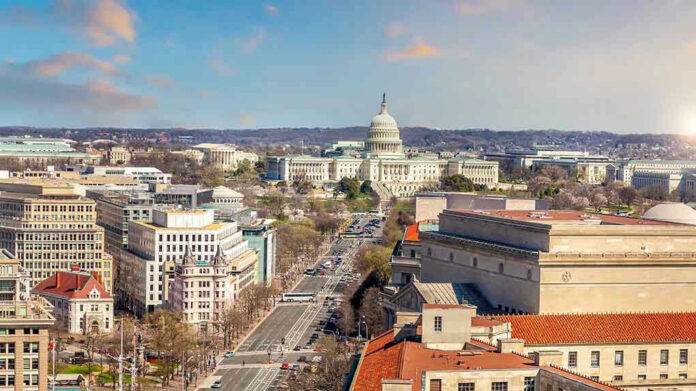
Freedom 250 planners sold the Salute to America 250 on the National Mall as a huge, all‑day birthday party for the country. The White House website said more than a million people would gather for state pavilions, music, military honors, and the “largest pyrotechnics display in the history of the world.” A detailed schedule shared with reporters put entry to the Washington Monument grounds at 5 p.m., the program start at 7 p.m., Trump’s speech at 9:45 p.m., and fireworks at 10:30 p.m. Organizers said the plan balanced spectacle with “safety and comfort” for families.
To many Americans, that pitch sounded familiar: big promises from Washington about unity and pride, with the president and his allies front and center. The Freedom 250 task force, created by Trump, had already pushed aside the older, bipartisan America250 commission as the lead brand for official celebrations. That shift worried people on both the right and left who fear that national events are less about citizens and more about boosting whichever party controls the federal government. They saw a risk that the nation’s 250th birthday would turn into a campaign‑style rally instead of a shared civic moment.
How Heat and Storms Turned the Day Upside Down
Reality hit hard when a dangerous heat wave pushed Washington temperatures toward 107 degrees on July 4. In response, organizers delayed opening the National Mall grounds until 5 p.m. and urged people to arrive no more than an hour before that, saying they wanted to limit time in the heat. That change already strained families who had planned to spend the day on the Mall, especially older Americans and those with kids who had to juggle travel, parking, and scarce shade under strict security rules.
Later, approaching severe storms forced security officials to order an evacuation of the Mall, sending tens of thousands off the grounds to seek shelter. National Public Radio reported that organizers, citing Freedom 250 and the United States Secret Service, told guests to leave due to lightning risks. After the storms passed, gates reportedly reopened around 9:45 p.m., and Trump’s speech was pushed back to about 11 p.m., with fireworks following afterward. This storm‑driven reset directly undercut the earlier claim that festivities simply continued under the revised heat schedule.
Clashing Narratives: Smooth Planning or Scramble and Spin?
Supporters of the administration point to the layered schedule as proof that planners took safety seriously all along. They note that the extreme heat delay, added water stations, and increased medical support were announced in advance, and that the later evacuation followed written National Park Service closure rules meant to protect people from storms. In their view, the day shows government agencies working together to keep a major gathering safe in tough conditions, even if it meant last‑minute changes.
Critics offer a very different story. They highlight how the National Independence Day Parade was canceled due to weather, even while Trump’s centerpiece event pushed on into the night. Media outlets also reported that White House aides feared low turnout and worried the Mall crowd would look thin on camera. For many Americans, those reports feed a familiar suspicion: that leaders will bend schedules, security rules, and even basic comfort to protect the image of a successful presidential show, not the needs of regular people standing in a field.
Money, Branding, and the Deep State Feeling
Beyond the weather chaos, the way this celebration was funded and branded stirred anger across the political spectrum. The Washington Post and ABC News reported that the National Park Service diverted about $2.5 million from entrance fees meant for park maintenance to help pay for the event. Democrats and advocacy groups called this a misuse of public funds. Conservatives who already resent Washington’s spending habits saw another example of money meant for everyday services being rerouted to a grand, elite‑designed spectacle.
This is President Trump.
With his powerful, confident and unapologetically proud speech on July 4, 2026, he transformed this historic day into something truly majestic – a celebration worthy of America’s 250th anniversary of independence. On the National Mall, before hundreds of…— OneMoreMe-ButAnother (@TheMiglena) July 5, 2026
At the same time, Trump’s Freedom 250 branding overshadowed the long‑planned America250 effort, which had been designed as a bipartisan, low‑key way to honor the nation’s history. For some on the left, that looked like a president hijacking a national milestone to promote his America First agenda. For many on the right, it looked like proof that there is no real difference between parties when big anniversaries come around: whoever is in power uses federal agencies, park land, and security rules to stage a made‑for‑television moment, while everyday citizens sweat in lines, lose long‑running traditions, and watch their trust in government drop even further.
Security Theater and Ordinary Americans Left Waiting
Security for the Salute to America 250 was elevated to the level used for high‑risk events, with the Independence Day celebration designated a National Special Security Event. Thousands of National Guard members and federal officers lined the Mall. Rules banned coolers, folding chairs, metal drink containers, and even aerosol sunscreen. For families and older attendees, those restrictions made the long waits in heat and storms even harder, and many simply stayed home. To people already frustrated with both parties, the scene once again looked like security theater protecting elites and optics more than citizens’ basic comfort.
Put together, the clashing timelines, money moves, and branding fights around Trump’s July 4, 2026 Salute to America show why so many Americans feel the system is rigged against them. The event did deliver a huge fireworks show and a late‑night presidential tribute. But the path there—heat delays, storm evacuations, canceled traditions, diverted funds, and a heavy political stamp on a national birthday—reinforced a deeper fear shared by many on the left and right: when it matters most, the federal government’s first priority is preserving its own power and image, not serving the people standing on the grass.
Sources:
facebook.com, nbcnews.com, thehill.com, washingtonpost.com, wtop.com, air.show, instagram.com
© truetrendnews.com 2026. All rights reserved.