

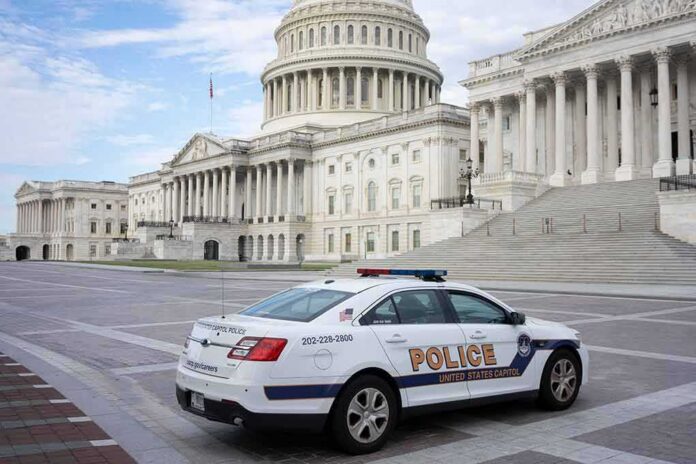
Federal agents are tracking more than 100 suspicious “white powder” letters sent to congressional and election offices nationwide, prompting evacuations and mail interceptions just weeks before midterms.
Story Highlights
- Federal Bureau of Investigation, U.S. Postal Inspection Service, and Capitol Police are running a joint probe.
- Some election offices evacuated after powder was found; one letter to Senator Susan Collins was intercepted.
- Reports link letters to dozens of congressional and state election offices across multiple states.
- Tests reported so far found no dangerous substances, and the sender and motive remain unknown.
Coordinated Federal Response Across Multiple Agencies
Senate security notified congressional staff that the Federal Bureau of Investigation (FBI), the United States Postal Inspection Service, and the United States Capitol Police are jointly investigating a wave of suspicious mail. The FBI confirmed it is examining a series of mailings to addresses across the country. The scope includes congressional offices and state election-related offices. The joint posture signals a single, national effort rather than scattered local checks.
Lawmakers from both parties reported incidents, including Republicans such as Senators Ted Cruz and Susan Collins. United States Capitol Police intercepted at least one letter addressed to Collins’s Washington office before delivery, showing layered screening is in place for Congress. Agencies urged staff to follow mail-handling rules and to isolate suspect envelopes. These steps aim to reduce exposure while investigators test materials and trace mailing routes.
Evacuations, Intercepts, and What We Know About the Substance
Local officials ordered evacuations at election offices in Louisiana and Oklahoma after powder was discovered in mailed packages. Those actions fit long-standing safety protocols that prioritize caution when unknown substances appear. Federal officials have described the material in general terms as an “unknown substance.” Reporting to date states that tested samples came back negative for known hazardous agents. Investigators have not named any suspect or motive yet.
In Connecticut, a staff member screening mail at Senator Richard Blumenthal’s office spotted a suspicious letter and immediately isolated it. The staffer then contacted local police, who coordinated with federal partners. That quick action reflects training that many offices adopted after past white-powder scares. It also shows how early detection can protect workers and preserve evidence for lab analysis.
Geographic Spread and Scale Point to a Pattern, Not Isolated Cases
The FBI described a series of mailings sent nationwide, and media reports tallied letters hitting congressional and election offices across several states. Law-enforcement sources told ABC News that more than 100 letters apparently containing white powder were moving through the mail stream. Counts varied across outlets as cases were logged, but the volume and spread justified a national probe rather than treating each letter as a one-off event.
🚨 SUSPICIOUS LETTERS TARGET ELECTION OFFICES NATIONWIDE
The FBI and U.S. Postal Inspection Service are investigating suspicious mailings sent to election offices and other recipients just weeks before the November 3 midterms.
✉️ MORE THAN 100 REPORTED
Votebeat reports that… https://t.co/Oxj2OAMGOe pic.twitter.com/UuMY9FOPhg— Gunnys Adventures (@DerrickSalas9) October 15, 2026
These events arrive in the run-up to midterm elections, when threats or hoaxes can strain already thin resources. After the 2001 anthrax attacks, white-powder scares surged for years. The FBI has documented thousands of such reports, most of which were hoaxes or harmless substances. That history explains why responders evacuate first and test second. It also explains why officials avoid early claims about toxicity until lab work is complete.
Why This Matters Beyond Capitol Hill
Election offices and congressional mailrooms sit at the heart of public trust. When they get hit with suspect letters, work stops, and voters see images of hazmat teams and closed buildings. Leaders on the right and left both worry about safety, disruption, and a system that seems reactive rather than resilient. Clear protocols, fast testing, and transparent updates can cut fear and limit downtime. Officials say they are following that playbook now while they hunt the sender.
What to Watch Next
Investigators will focus on the paper, envelopes, postage, handwriting, and printing to see if one source is behind the letters. Postal tracking data may connect intercepts to delivered items. Lab results will clarify what the powder is and whether batches match. Agencies will also refine the incident count as reports are confirmed. Until then, offices are urged to screen mail, isolate suspicious items, and contact authorities right away if something looks off.
Sources:
nypost.com, wtnh.com, cnn.com, politico.com, apnews.com, 9news.com, edition.cnn.com
© truetrendnews.com 2026. All rights reserved.