
A Yellowstone mechanic braked to avoid a lone bull bison on a dark road, and the animal charged straight into his truck.
Story Highlights
- Dashcam video shows a bull bison standing on the road before charging a stopped truck.
- The driver, Kyle Weber, says he halted near Mud Volcano around 2:45 a.m. to avoid the animal.
- Reports describe dents and a broken light consistent with a forceful impact.
- Yellowstone urges drivers to stay back and wait for wildlife to clear the road.
Nighttime encounter on a narrow Yellowstone road
Early on October 8, a Yellowstone National Park mechanic, Kyle Weber, was driving south from Canyon Village toward Fishing Bridge when he met a bull bison near Mud Volcano. He said he hit the brakes and stopped to avoid the animal. After a pause, the bison turned and rushed the truck, slamming its head into the front-left area. Weber said the hit jolted him and shoved his vehicle backward by about a foot and a half.
Local outlets reported that Weber’s dash camera recorded the moment. The clip shows a bison in the roadway, then a sudden charge into the truck’s front-left side. After the impact, Weber later encountered the same animal farther down the road. He waited again, kept his distance, and continued only after the bison moved away. No injuries were reported in the coverage reviewed, but the vehicle showed visible damage.
What the video and reports establish
The dashcam footage anchors the basic timeline: a still bison in the lane, a stopped truck, and a short rush ending in contact. Weber’s account adds time and place details that match common staff routes and the Mud Volcano area. Several outlets describe physical damage like a dented bumper and hood or a broken side-marker light, which fits a low, heavy head strike from a large bison. Exact parts listed differ by outlet, but all agree on a front-left impact consistent with the clip.
Weber’s quotes describe a quick, heavy hit that “definitely” jolted him and pushed the truck back. Those words line up with what viewers see in the video and what drivers often report after animal strikes. While the reports do not include a formal inspection or a ranger reconstruction, the visual record and the common-sense pattern of damage support the core facts: a stopped truck, a bull in the lane, a brief charge, and a hard hit.
How Yellowstone tells drivers to handle bison on roads
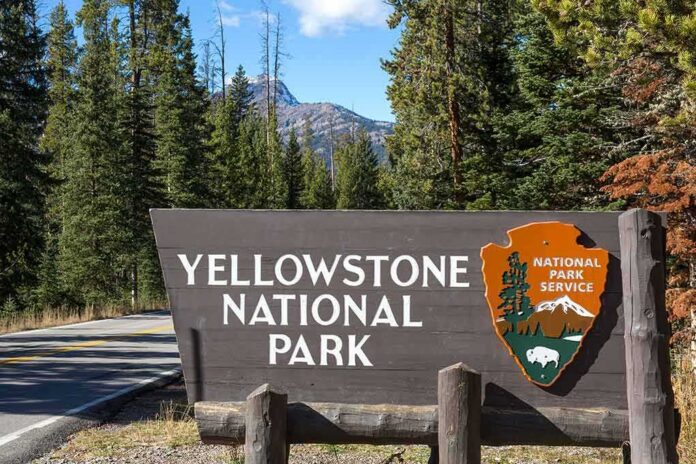
Yellowstone National Park warns visitors to give bison space at all times. Park guidance says to stay at least 25 yards from bison, remain in your vehicle, drive slowly, and wait for animals to leave the road. Honking, edging forward, or trying to slip past can stress wildlife and raise the risk of a charge. The safest move is patience: let the animal pick the moment to move, even if that takes longer than you want.
These rules exist because bison are powerful, fast, and unpredictable. The National Park Service has logged several bison-and-visitor injuries in recent years, mainly involving people on foot who got too close. Those events are not the same as vehicle strikes, but they show a pattern: when humans press the distance, bison may respond with bluff charges or real impacts. Staying back reduces the chance that an animal will feel cornered or provoked.
Why this small story resonates beyond a viral clip
This dashcam moment is dramatic, but it also points to a bigger road-safety truth. Rural roads and parks often lack lighting, staff, and quick response at night. Drivers shoulder the risk and the repair bills when wildlife crosses their path. Many readers on both the right and the left feel that government messaging can be heavy on slogans but light on real support, such as better signage, wildlife crossings, and clear, consistent enforcement that prevents close calls before they happen.
Terrifying moments caught on camera at Yellowstone National Park.
A driver said he came around a curve and saw bison standing in the road.
After he stopped, the bison rammed his truck. pic.twitter.com/ybB1IxcL4p
— ABC7 Eyewitness News (@ABC7) October 16, 2026
Practical fixes do not have to be partisan. Bright, well-placed signs near known wildlife zones help. Seasonal slow zones and roadside pull-offs create space. Public service alerts timed to migration or rut seasons remind drivers to expect animals in the lane. Yellowstone’s safety rules are clear and well published, but the Weber case underlines the human reality: at 2:45 a.m., on a dark curve, patience and distance are the best tools a driver has—and sometimes even that is not enough.
Sources:
wsbtv.com, cowboystatedaily.com, nps.gov
© truetrendnews.com 2026. All rights reserved.